The United States is calling for stronger protection of advanced artificial intelligence against misuse. But Washington’s own military use of Anthropic’s Claude AI in operations against Iran raises difficult questions about how the US defines responsible AI use — particularly when the technology is involved in military intelligence and target prioritisation.
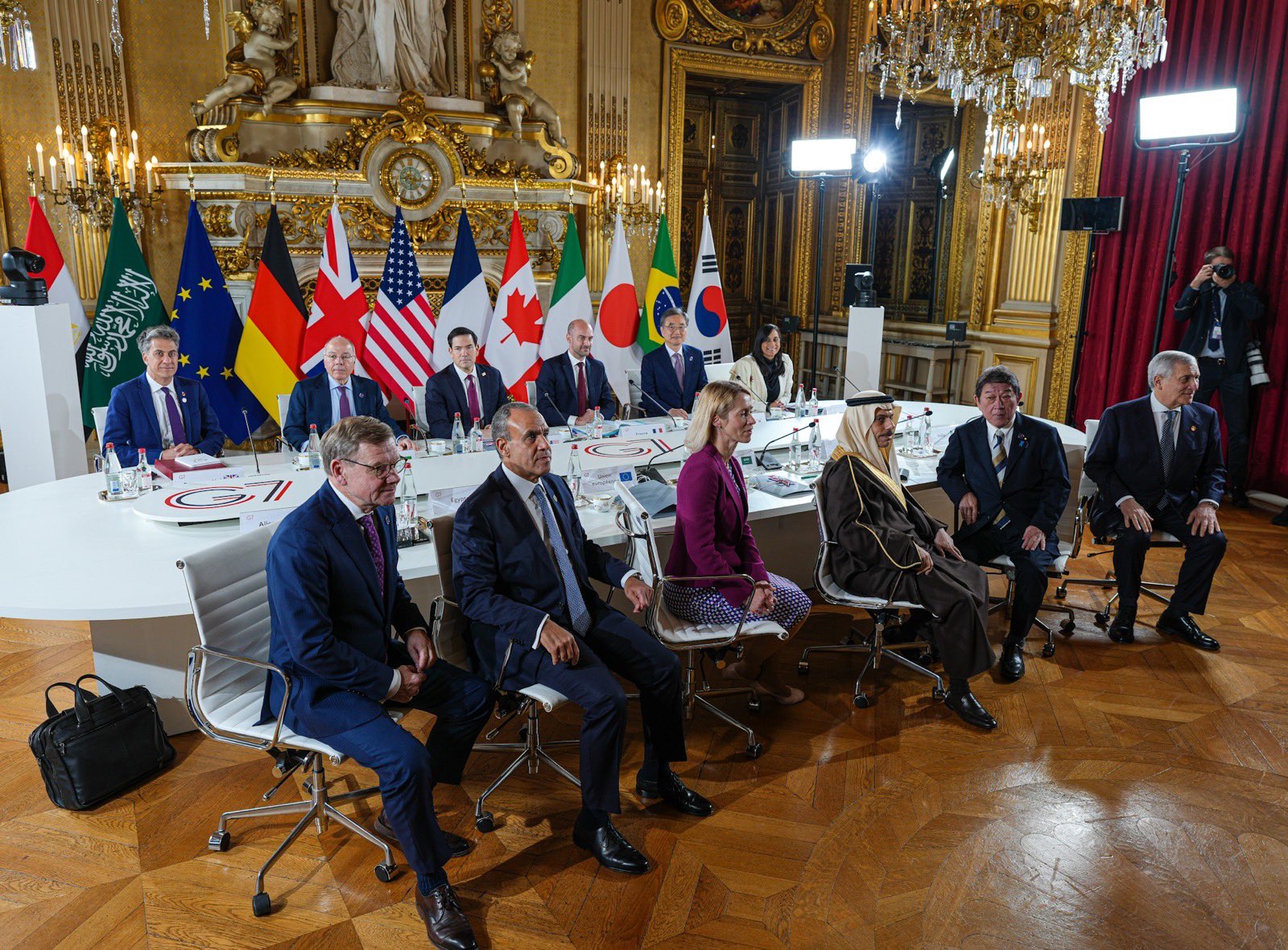
US Secretary of State Marco Rubio raised the issue during the G7 discussions in Paris. In a statement published on November 9, Rubio promoted President Donald Trump’s “innovation-first” approach and argued that G7 countries should protect frontier AI models against extraction and misuse.
He also called for industry-led partnerships rather than what he described as unnecessary regulation.
However, the debate cannot be separated from the Pentagon’s reported use of Anthropic’s Claude AI in military operations against Iran earlier this year.
Rubio calls for protection against AI misuse
In his November 9 statement on X, Rubio said the United States was keeping American developers at the forefront of advanced AI through its innovation-focused approach.
He argued that G7 countries shared an interest in protecting frontier AI models against extraction and misuse.
Rubio also favoured cooperation with technology companies over additional regulation.
His statement raises an important question: Who should be responsible for preventing AI misuse when governments themselves deploy these systems in military operations?
The issue is particularly relevant because the G7’s own May 2026 Digital and Technology Ministerial Declaration endorsed secure, responsible and trustworthy AI. It also recognised the importance of public-sector transparency and government accountability.
Anthropic’s Claude was used in US military operations against Iran
The Pentagon’s use of Anthropic’s Claude AI became a major issue in March 2026.
A Washington Post investigation published on March 4 reported that the US military’s Maven Smart System, developed by Palantir, incorporated Claude to process classified intelligence.
The system reportedly analysed information from satellites, surveillance and other intelligence sources. It supported military operations by generating insights, identifying potential targets and prioritising them.
According to people familiar with the system cited by the newspaper, Maven, powered by Claude, suggested hundreds of targets, provided location coordinates and ranked targets according to their importance during preparations for the Iran operation.
The report also said the technology helped accelerate military planning and operations.
Separately, CBS News reported on March 3 that two sources familiar with US military AI use confirmed Claude had been used during the attacks on Iran.
These reports establish that Claude was part of an AI-assisted military system. They do not establish that Claude independently made the final decision to attack any particular target.
The Minab school strike raises further questions
The use of AI in military targeting also attracted scrutiny following the deadly strike on the Shajareh Tayyebeh elementary school in Minab, Iran, on February 28, 2026.
At least 175 people were reported killed, many of them children.
A Washington Post investigation published on March 11 reported that the school building was on a US target list and may have been mistaken for a military site.
The newspaper reported that the US version of Palantir’s Maven system was powered partly by Anthropic’s Claude. It also described how the system could process intelligence, suggest targets and provide location coordinates.
However, the investigation did not establish that Claude itself identified the school as a target or caused the strike.
US military officials said human personnel retained final authority over decisions to strike. The investigation into the incident was still ongoing in the reporting cited here.
The distinction matters. AI-assisted targeting does not remove the responsibility of military commanders and governments for decisions that result in civilian deaths.
Anthropic and the Pentagon disagreed over military safeguards
The controversy also exposed a serious disagreement between Anthropic and the US Department of Defense.
Anthropic sought safeguards against the use of its technology for mass domestic surveillance and fully autonomous weapons.
The Pentagon, meanwhile, wanted access to the technology for what it described as all lawful purposes.
CBS News reported that the dispute centred on these restrictions and the military’s intended use of Claude.
On March 5, Reuters reported that the Pentagon had designated Anthropic a supply-chain risk following the dispute.
This raises a broader question about the relationship between technology companies and governments: should AI developers be able to impose limits on how their systems are used by the military, or should governments have the authority to deploy them for any purpose they consider lawful?
The question Washington must answer
Rubio’s warning about AI misuse deserves scrutiny alongside the United States’ own military record.
The reported use of Claude in the Iran campaign shows that advanced AI is no longer just a tool for commercial innovation, research or productivity. It is also being integrated into military intelligence and operational planning.
The Minab school tragedy makes the accountability question even more urgent. Although the available reporting does not prove that Claude caused the strike, it highlights the dangers of outdated intelligence, rapidly generated target lists and the pressure to accelerate military decisions.
If governments want stronger international safeguards against AI misuse, those standards must apply to their own military operations as well.
The issue is not whether AI innovation should continue. It is whether governments, technology companies and military commanders can be held accountable when AI-assisted systems contribute to decisions involving human lives.
For Washington, the test of responsible AI policy begins at home.
Standing with the oppressed. Speaking for the unheard. Seeking truth without fear.