Author, Writer & Editor: MD MOHMMAD ABBAS
Affiliation: THE WORLD’S UPDATE
Date: November 18, 2026
The Legal Mechanism
The International Criminal Court (ICC) has outlined the specific legal steps through which the UN Security Council can refer situations to the Court. According to a series of posts on X (@IntlCrimCourt), this process is designed to address threats to international peace and security.
Step 1: The Referral
The ICC stated that the UN Security Council, in order to address a threat to international peace and security, may formally refer a situation to the Court. This specific mechanism enables the Court to exercise its jurisdiction over a UN Member State, even if that state is not a party to the Rome Statute.
Step 2: The Investigation
Following a Security Council referral, the Office of the Prosecutor (OTP) is empowered to act. The ICC explained that the Office of the Prosecutor may open a formal investigation into the situation, provided that the legal criteria established by the Court are met.
Historical Precedents
The ICC also provided historical context regarding the use of this mechanism. To date, the UN Security Council has referred two specific situations to the International Criminal Court: the situation in Darfur (Sudan) and the situation in Libya.
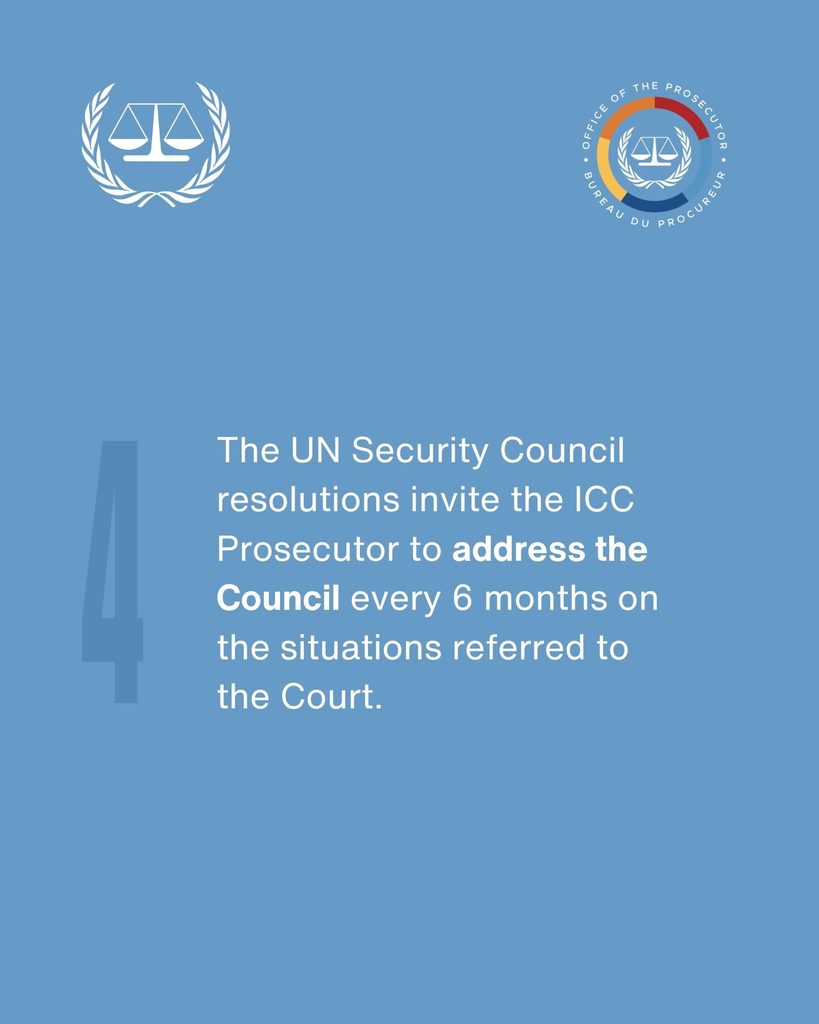
Step 4: Reporting to the Council
Furthermore, the ICC detailed the ongoing obligations tied to these referrals. The UN Security Council resolutions invite the ICC Prosecutor to address the Council every 6 months regarding the status and progress of the situations referred to the Court.
The Bottom Line
The International Criminal Court’s explanatory posts clarify the legal pathway for the UN Security Council to trigger investigations into international crimes. The process allows the Court to hold individuals accountable in UN Member States, even without that state’s consent, based on the Security Council’s assessment of global peace and security threats. The requirement for the Prosecutor to report every six months ensures ongoing oversight by the Security Council.
Source:
International Criminal Court (@IntlCrimCourt) on X.
Link: https://x.com/IntlCrimCourt/status/2122726332710748557
THE WORLD’S UPDATE
Standing with the oppressed. Speaking for the unheard. Seeking truth without fear.