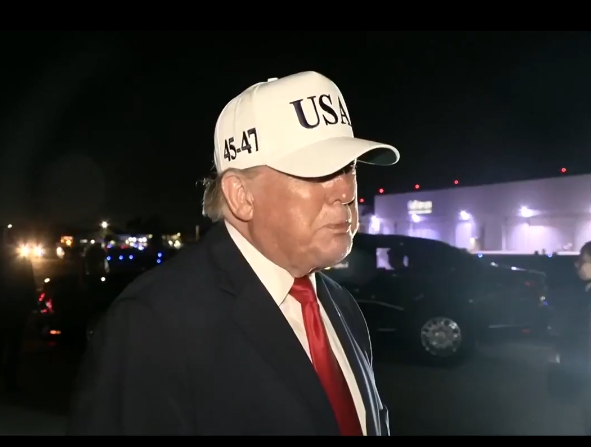
The US president says American forces control maritime movement through the Strait of Hormuz, while describing the conflict with Iran as a months-long confrontation with a shorter period of intense fighting.
US President Donald Trump has defended the American naval blockade targeting Iran, claiming that Iranian oil exports have been stopped and that US forces control which vessels can pass through the strategically important Strait of Hormuz.
Speaking to Fox News, Trump declared: “Nothing is going to Iran. No oil is going to Iran.”
He presented the blockade as a major instrument of American pressure on Tehran, arguing that Washington has control over maritime movement in the region.
Trump highlights American control over Hormuz
Trump’s remarks underline the importance his administration attaches to the Strait of Hormuz, a critical international shipping route connecting the Persian Gulf with the Gulf of Oman.
A significant share of global oil and liquefied natural gas shipments normally passes through this waterway.
The US administration has repeatedly claimed that its naval operations have restricted Iran’s ability to export oil and generate revenue.
In an August 28 statement, the White House claimed that Iran had exported no oil since the American blockade resumed in July. It also said US forces had turned back vessels attempting to break the blockade.
These are figures and claims published by the US administration. https://www.whitehouse.gov/releases/2026/08/president-trump-was-right-america-controls-the-strait-of-hormuz/
Iran and the United States dispute control of the waterway
The maritime situation remains contested.
In August, Reuters reported that Trump maintained the US blockade was in force and said the Strait of Hormuz was open. Iran’s chief negotiator, Mohammad Baqer Qalibaf, disputed Washington’s position and said the strait would remain closed until the United States fulfilled Tehran’s demands, including lifting the blockade of Iranian ports and oil sanctions.
The disagreement highlights the difference between Washington’s claims of maritime control and Tehran’s position on access to the waterway. https://www.reuters.com/world/middle-east/trump-says-no-talks-are-taking-place-with-iran-none-are-scheduled-2026-08-18/
Trump says intense fighting lasted for a shorter period
Trump also addressed the duration of the conflict, describing it as having continued for approximately seven months while arguing that the period of intense fighting was considerably shorter.
The conflict began with US and Israeli attacks on Iran on February 28, 2026. Since then, military confrontation, economic pressure and disruption to regional shipping have shaped the crisis.
On November 7, the Associated Press reported further limited US strikes against an Iranian air-defence system near Qeshm Island, alongside continuing pressure through the naval blockade. https://apnews.com/article/53ed5d271b9aef6f880aebc133ea6a55
A continuing confrontation with global consequences
The blockade and the dispute over Hormuz have implications far beyond the United States and Iran.
Any prolonged disruption to shipping through the waterway can affect international energy supplies, oil prices, maritime insurance and the economies of countries dependent on Gulf energy imports.
Trump’s latest comments signal that Washington intends to continue presenting the blockade as a central instrument of pressure against Tehran.
However, the competing claims over maritime access and the continuing military confrontation indicate that the crisis remains unresolved.
THE WORLD’S UPDATE
Standing with the oppressed. Speaking for the unheard. Seeking truth without fear.
Sources & References
- Fox News – Trump’s statement on the blockade and Iran
- The White House – US claims of control over the Strait of Hormuz, August 28, 2026
- Reuters – US and Iran dispute the status of the Strait of Hormuz, August 18, 2026
- Associated Press – New US strikes near Qeshm Island, November 7, 2026