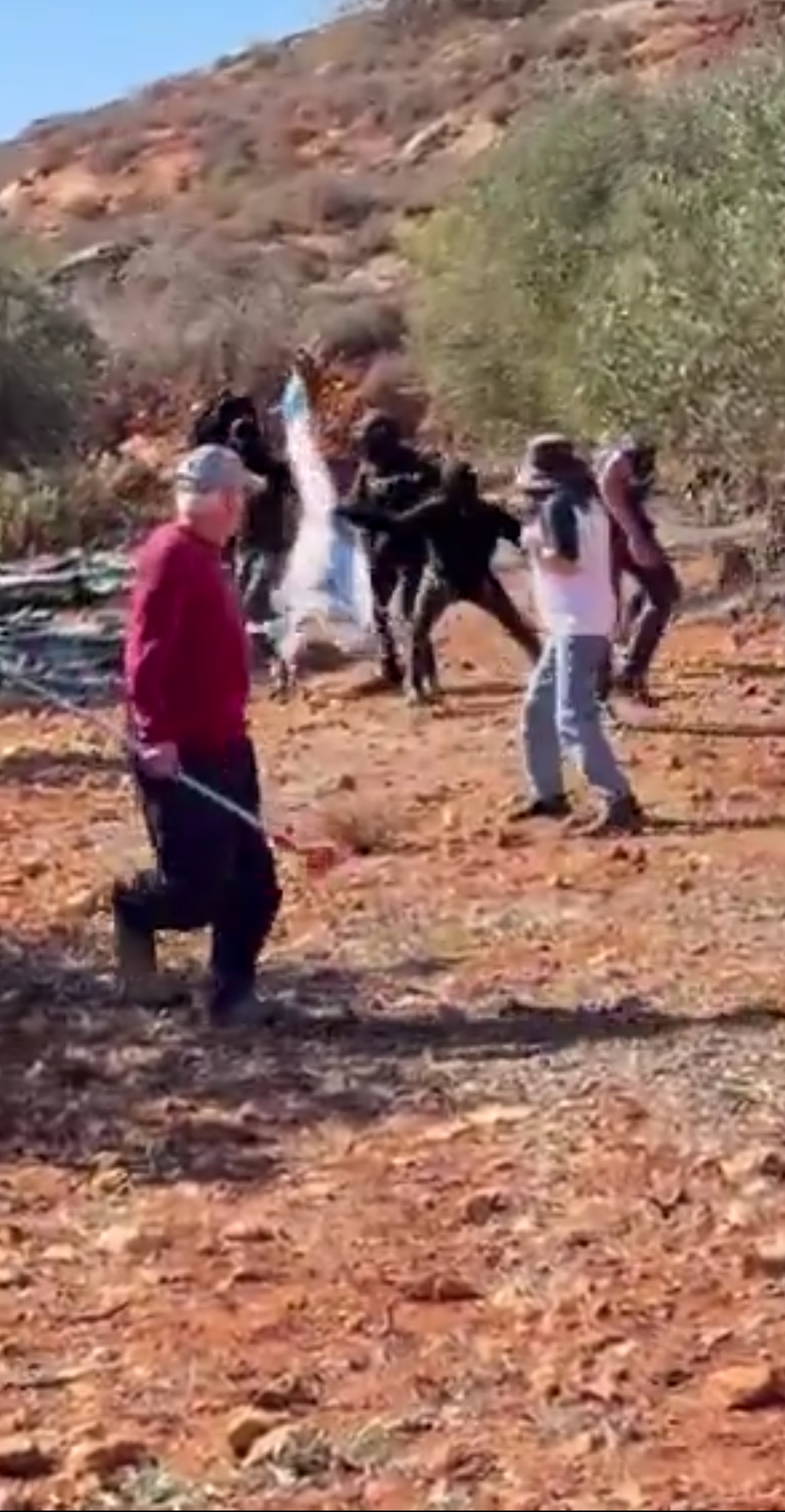
Israeli settlers attacked Palestinian olive harvesters and international solidarity activists near Qusra, south of Nablus. Meanwhile, questions are growing over the US-backed Board of Peace and who will control Gaza’s future.
Israeli settlers attacked Palestinian olive harvesters and foreign solidarity activists on November 10 in the area between Qusra and Jalud, south of Nablus in the occupied West Bank.
Reports said that several people were injured, including Palestinian photojournalist Alaa Badarneh and a foreign solidarity activist.
The Times of Israel, citing the Israeli organisation Rabbis for Human Rights, reported that six people were injured during the attack. Video footage reportedly showed masked assailants throwing stones and carrying slingshots.
The incident is another reminder of the risks faced by Palestinians and international activists documenting violence in the occupied West Bank.
Violence on the ground, political messaging abroad
The attack also raises questions about the gap between Israel’s international messaging and the situation experienced by Palestinians.
Israeli official communications frequently frame the conflict around Hamas, security and disarmament. Those issues are part of the conflict, but they do not erase the separate reality of settler violence against Palestinian civilians, farmers and activists.
The Israeli Foreign Ministry’s messaging should therefore be examined alongside independently reported incidents on the ground—not treated as a complete account of what is happening to Palestinians.
The allegations and footage from Qusra deserve investigation, accountability and a response from the relevant Israeli authorities.
Who will decide Gaza’s future?
The US-backed Board of Peace presents itself as an international body working towards stability, governance and reconstruction.
However, its role raises serious questions.
Who will make decisions about Gaza? Who will control reconstruction priorities and financial resources? Will Palestinians have meaningful authority over their own political future, or will decisions largely be made by external powers?
The Board’s own public material refers to financial, procurement and compliance structures. That makes transparency and independent oversight especially important.
The Financial Times has reported that the Board’s reconstruction efforts face major obstacles, including a lack of progress on key commitments and funding concerns.
Calling the Board a business-profit project is an editorial interpretation, not an established fact. But it is legitimate to question whether reconstruction will serve Gaza’s population or the strategic and economic interests of powerful outside actors.
Gaza cannot be rebuilt without Palestinian agency
Gaza’s future cannot be reduced to a discussion about disarming Hamas, changing its administration or attracting reconstruction investment.
The people who have lost homes, families, livelihoods and basic infrastructure must have a decisive voice in what happens next.
Reconstruction without meaningful Palestinian participation risks becoming another externally controlled political project.
The world should examine both realities: violence against Palestinians in the occupied West Bank and the political arrangements being proposed for Gaza.
Peace cannot mean rebuilding a place while denying its people the right to determine their own future.
THE WORLD’S UPDATE — Standing with the oppressed. Speaking for the unheard. Seeking truth without fear.