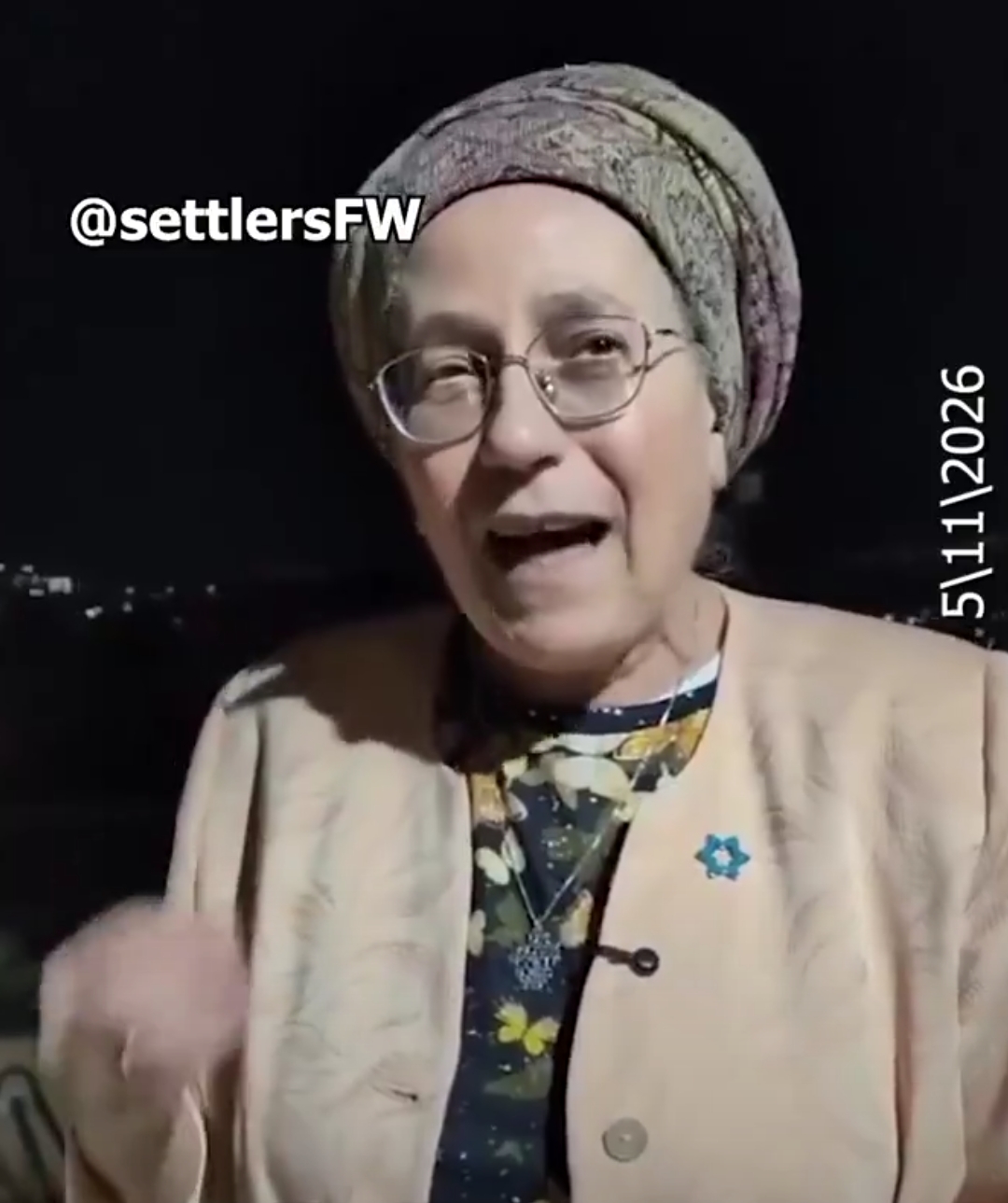
An Israeli minister has openly described the establishment of an Israeli settlement outpost near the Palestinian city of Jericho as a step towards reversing the Oslo Accords, while declaring that the next step is returning to Gaza.
Israeli National Missions Minister Orit Strock has publicly celebrated the entry of Israeli settlers into eight houses near Jericho in the occupied West Bank, describing the development as part of what she called the process of reversing the Oslo Accords.
Her remarks have drawn particular attention because she explicitly identified Gaza as the next destination for the settlement movement.
“The next step is returning to Gaza,” Strock said, according to her remarks reported by The Jerusalem Post.
The statement raises serious questions about the future of Palestinians in Gaza and whether Israeli political figures are seeking to re-establish illegal Israeli settlements in the territory.
Eight houses taken over near Jericho
On November 4, 2026, approximately 30 Israeli settlers moved into eight houses in the Ein al-Duyuk al-Tahta neighbourhood on the outskirts of Jericho.
The settlement organisation Nachala and the Binyamin Regional Council said they had coordinated the purchase of the properties. The settlers claimed that the transactions were legal.
However, the ownership and legality of the transactions have been disputed. Jericho Governor Hussein Hamayel told AFP that the land belonged to the Palestinian Authority and described the circulated sale documents as forged. Palestinian residents also reported being prevented from accessing homes and surrounding land.
The Israeli military initially said the entry had taken place without prior coordination or permission, while the circumstances surrounding the acquisition were being examined.
The development is therefore not simply a property transaction: it has become a serious dispute involving land ownership, the establishment of an Israeli settlement outpost and the rights of Palestinian residents.
United Nations reports displacement of Palestinian families
The consequences for local residents were immediate.
According to the United Nations, Israeli settlers reportedly used live ammunition, assaulted Palestinian residents and threw stones during the takeover. Families fled for their safety, and some displaced residents were left without adequate shelter.
The Israeli military subsequently declared the area a closed military zone, restricting access.
Al Jazeera, citing the United Nations and other sources, reported that dozens of Palestinians had been forced to leave their homes following the incident.
These reports demonstrate why settlement expansion in Palestinian communities raises concerns beyond the question of who occupies a particular building. It can affect residents’ security, freedom of movement, access to land and ability to remain in their homes.
Strock openly invokes the reversal of the Oslo Accords
Strock described the settlement development in Jericho as part of reversing what she called the damage caused by the Oslo Accords.
The Oslo process established arrangements for Palestinian self-governance and divided parts of the occupied West Bank into Areas A, B and C.
Jericho was among the first Palestinian cities handed over to the Palestinian Authority under the 1994 Gaza-Jericho Agreement.
The settlement movement’s public celebration of its return to the area, alongside statements about dismantling the Oslo framework, signals an effort to change the political and territorial arrangements established by those agreements.
This is not merely an interpretation imposed on the remarks: Israeli settlement leaders themselves have publicly described their actions as an effort to dismantle the Oslo Accords through developments on the ground.
Gaza: What does “the next step” mean?
Strock’s declaration that Gaza is next is particularly significant.
Israel removed its settlements and permanent military presence from the Gaza Strip in 2005. Her statement indicates support for bringing Israeli settlements back into Gaza.
It is important to distinguish between a minister’s political declaration and an officially approved government plan. Her remarks do not, by themselves, establish that an order has been issued to remove Gaza’s Palestinian population.
Nevertheless, rebuilding Israeli settlements in Gaza would raise fundamental questions about Palestinian land rights, self-determination, displacement and the future of the territory.
Any settlement project that involved transferring Israeli civilians into occupied Palestinian territory would also face the international legal prohibitions applicable to such settlements.
International law: Israeli settlements have no legal validity
The international legal position on Israeli settlements in occupied Palestinian territory is well established.
United Nations Security Council Resolution 2334, adopted in 2016, reaffirmed that Israeli settlements in Palestinian territory occupied since 1967, including East Jerusalem, have no legal validity and constitute a flagrant violation of international law.
In its July 2024 advisory opinion, the International Court of Justice reaffirmed that Israeli settlements in the occupied West Bank and East Jerusalem, and the associated regime, have been established and maintained in violation of international law.
The Court also said Israel must cease all new settlement activities and evacuate settlers from the occupied Palestinian territory.
The legal framework is therefore clear: settlement expansion in occupied Palestinian territory is not recognised as lawful under international law.
A warning about the future of Palestinian land
The events near Jericho and Strock’s remarks about Gaza connect two developments that deserve close international attention: the expansion of illegal Israeli settlements in the occupied West Bank and political calls to re-establish settlements in Gaza.
For Palestinians, the issue concerns more than the construction or occupation of houses. It concerns their homes, land, freedom of movement and right to determine their own future.
The international community must closely monitor any policy or action that could lead to further displacement or the transfer of Israeli civilians into occupied Palestinian territory.
Standing with the oppressed. Speaking for the unheard. Seeking truth without fear.