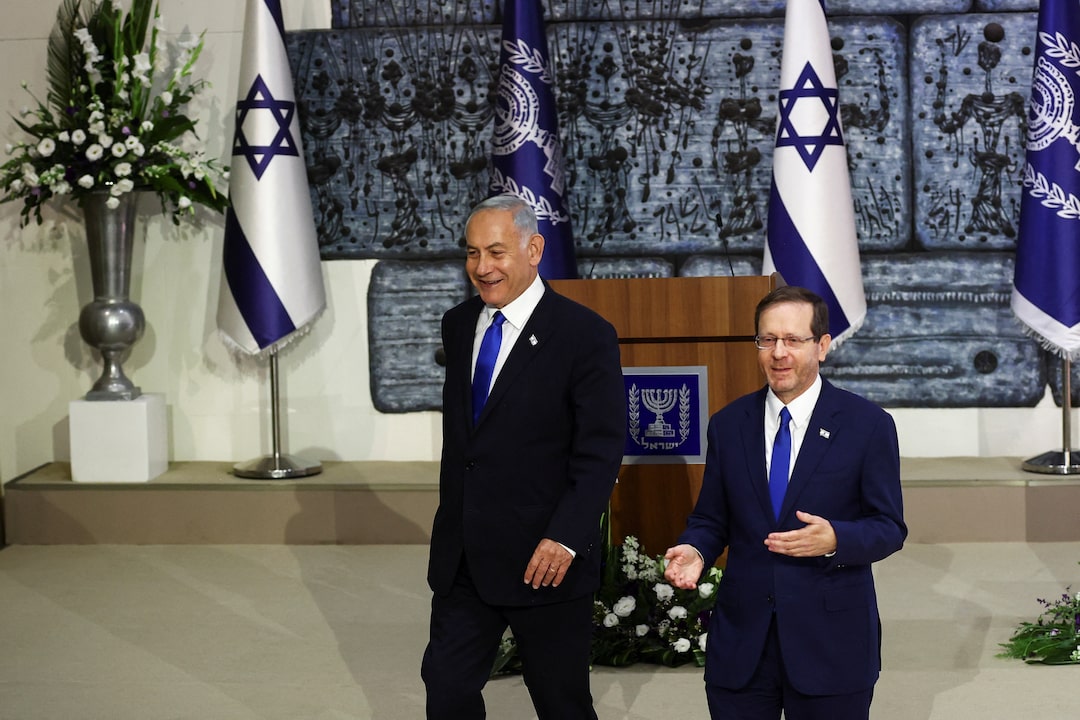
Israeli Prime Minister Benjamin Netanyahu is facing a major political challenge after opposition leader Gadi Eisenkot secured recommendations from 67 members of the Knesset, compared with 46 backing Netanyahu.
The result has raised the possibility of a change in government. If Eisenkot succeeds in forming a coalition, Netanyahu could lose the political influence and government authority he currently holds.
Such a change could also bring renewed attention to the criminal cases against Netanyahu, which have remained a major issue in Israeli politics.
Netanyahu’s political protection could weaken
Netanyahu’s position as prime minister gives him considerable political influence, including control over the government and the ability to shape its political priorities.
Leaving office would mean losing that position and the influence that comes with it.
His departure would not automatically lead to arrest or imprisonment. However, it could change the political environment surrounding his ongoing legal proceedings and reduce his ability to rely on support from a governing coalition.
The distinction is important: political power can influence the political environment, but it cannot determine the outcome of an independent court trial.
Three corruption cases remain before the courts
Netanyahu was indicted in 2019 in three cases, commonly known as Cases 1000, 2000 and 4000.
The charges include bribery, fraud and breach of trust.
The allegations involve claims that Netanyahu received expensive gifts from wealthy businessmen and sought favourable media coverage in exchange for political or regulatory benefits.
In Case 4000, prosecutors allege that regulatory decisions benefiting telecommunications company Bezeq were connected to favourable coverage of Netanyahu and his family by the Walla news website.
Netanyahu denies wrongdoing and has pleaded not guilty.
His testimony in the three cases concluded in June 2026 after 98 court hearings. The wider proceedings are continuing, and no final conviction has been established.
Did holding office affect the pace of the trial?
Netanyahu’s testimony was repeatedly delayed or hearings were shortened because of security and diplomatic responsibilities, official travel and other requests made by his defence team.
According to reporting by The Times of Israel, these interruptions stretched his testimony across approximately 18 months.
This does not establish that Netanyahu was legally protected from prosecution because he was prime minister. His trial continued while he held office. But it demonstrates how the demands of his position became part of the proceedings and their timetable.
A change of government could remove some of those official responsibilities from his schedule.
Could Netanyahu go to prison after losing power?
Yes, imprisonment remains a possible legal outcome if a court convicts him and imposes a prison sentence.
However, losing the premiership is not itself a criminal conviction. The courts must assess the evidence, reach a verdict and follow the applicable legal process.
Israeli law also contains specific provisions concerning criminal proceedings involving a serving or former prime minister. The existing cases, filed before Netanyahu began his current term, are already before the courts and do not automatically disappear if he leaves office.
The separate ICC arrest warrant
Netanyahu also faces a separate international legal matter.
On November 21, 2024, the International Criminal Court issued an arrest warrant for him over alleged war crimes and crimes against humanity connected to the situation in Palestine.
These allegations are separate from his domestic corruption trial. An ICC arrest warrant is not a conviction, and its enforcement depends on the cooperation of states.
The warrant remains listed on the ICC’s official website.
November 8 could mark a turning point
President Isaac Herzog is expected to announce on Sunday, November 8, whom he will task with forming the next government.
The recommendations currently stand at 67 for Eisenkot and 46 for Netanyahu. However, the ability to build a functioning coalition remains uncertain because some parties supporting Eisenkot have not committed to joining his government.
If Eisenkot receives the mandate and successfully forms a government, Netanyahu could move from being the head of government to a political figure facing opposition and continuing court proceedings.
The central question is no longer only whether Netanyahu can retain the premiership. It is also whether a change in political power will alter the political environment in which his legal cases continue.
For Netanyahu, losing office would not automatically mean prison. But it could mark a significant change in his political position while the legal process continues.
Sources & References
- Israeli President’s Office – Herzog confirms 67 recommendations for Eisenkot and 46 for Netanyahu
- Reuters – Netanyahu’s political position weakens as Herzog prepares to name a candidate
- The Times of Israel – Netanyahu completes testimony after 98 hearings
- Israel Democracy Institute – Legal position on Netanyahu’s pardon request
- International Criminal Court – Netanyahu case and arrest warrant
- Israel’s Basic Law: The Government
THE WORLD’S UPDATE Standing with the oppressed. Speaking for the unheard. Seeking truth without fear.