An investigative examination of civilian deaths in Iran and Yemen, Saudi Arabia’s alleged role in the Al-Shariya airstrikes, and Washington’s documented military support for Saudi operations.
Introduction: Two Places, One Urgent Question
The deaths of children in war should never become an ordinary headline.
In February 2026, a strike hit the Shajareh Tayyiba primary school in Minab, Iran. Months later, in November 2026, an airstrike hit homes in Yemen’s Al-Shariya village. The reported death toll there rose to 44, including 21 children.
The circumstances of the two attacks are different. The forces involved and the available evidence are also different.
But both incidents raise a critical question: when military operations kill civilians, who investigates the decisions behind the attacks, and who is held accountable?
The United States is directly implicated in the Minab school investigation. In Yemen, Saudi Arabia has been accused of carrying out the Al-Shariya strike, while American intelligence and targeting assistance to Saudi forces has been documented.
These connections demand scrutiny. They must also be examined through evidence, not assumptions.
1. Minab, Iran: A School Hit During the US-Israeli War
On February 28, 2026, the Shajareh Tayyiba primary school in Minab, southern Iran, was struck during the opening phase of the US-Israeli military assault.
CNN’s investigation, based on satellite imagery, geolocated videos, public statements and weapons analysis, found that the United States military was likely responsible for the strike.
Iranian state media reported that at least 168 children and 14 teachers were killed.
The issue went beyond the initial reporting.
In September 2026, a United Nations-mandated fact-finding mission concluded that there were reasonable grounds to believe that the United States acted recklessly when it struck the school. Investigators said the US had failed to take all feasible measures to verify that the target was a military objective.
The White House rejected the mission’s findings.
The UN investigation is significant because it moves the discussion beyond competing political statements. It identifies specific questions about target verification, outdated intelligence and precautions required under international humanitarian law.
A school is a civilian object unless it becomes a military objective under the law. Its proximity to a military facility does not automatically make it a lawful target.
2. Yemen: Al-Shariya Funeral and the 21 Children Reported Dead
On November 7, 2026, airstrikes hit homes in Al-Shariya village, east of Yemen’s capital, Sanaa.
The initial death toll was reported as at least 27. It subsequently rose to 44, according to Houthi-run health authorities.
The reported victims included:
- 21 children
- 10 women
- 40 injured people, including children and women
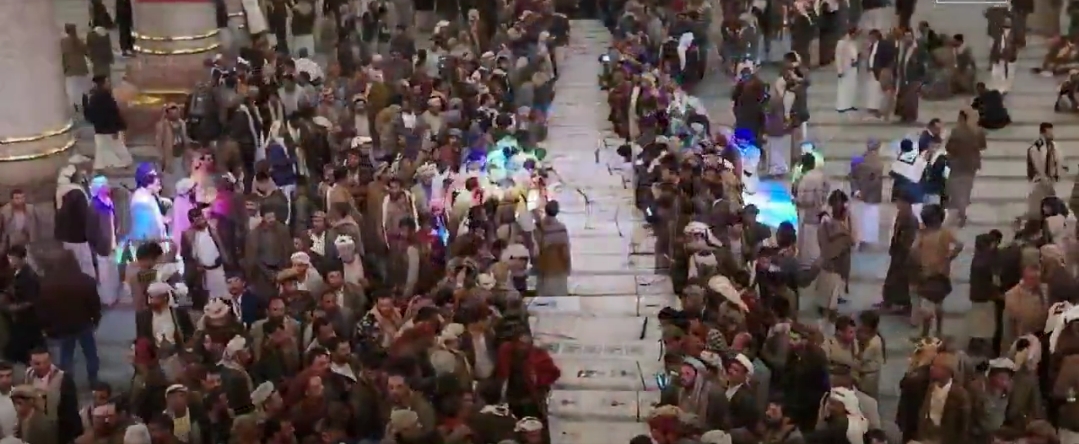
On November 11, large crowds gathered in Sanaa for the funeral. Coffins carrying photographs and names of the dead were displayed as families mourned their relatives.
The Houthis blamed Saudi Arabia for the attack.
The Saudi-led coalition said it had destroyed three Houthi facilities, including facilities it described as connected to missile production. It did not publicly establish that those facilities were the locations hit in Al-Shariya.
The Associated Press reported the increased death toll but said it could not independently verify the Houthi authorities’ account. AFP also reported the funeral and the allegations surrounding the strikes.
This distinction matters. The deaths and funeral have been reported by international news organisations. The precise responsibility for the strike and the circumstances of the targeting require an independent investigation.
3. America’s Role in Saudi Military Operations
The question of American responsibility in Yemen cannot be examined only by looking at which country’s aircraft carried out a particular strike.
For years, the United States has supplied Saudi Arabia with weapons, military equipment, training, intelligence and other forms of support.
Human Rights Watch has documented US-origin weapons in apparently unlawful attacks in Yemen. Its investigations have also examined the role of American intelligence, refuelling and military assistance in the Saudi-led campaign.
In September 2026, CNN published another important investigation.
CNN reported that more than 100 US military advisers were in Saudi Arabia providing intelligence and targeting support for the kingdom’s campaign against the Houthis. One US official described the number as approximately 200 personnel.
CNN also reported that American personnel were helping Saudi officers use targeting tools and providing geospatial targeting support.
However, CNN’s sources said that the United States was not directly participating in the strikes at that time and was not providing refuelling or other operational support as part of that particular arrangement.
This is important evidence of an active military-support relationship. It does not, by itself, prove that American intelligence was used to select the Al-Shariya target.
That question must be investigated.
4. American Weapons and the Record of Civilian Harm in Yemen
The US role in Yemen is not a new controversy.
Human Rights Watch documented multiple apparently unlawful coalition attacks involving US-manufactured weapons.
Its investigations raised questions about whether American arms transfers and military support continued despite repeated reports of civilian casualties.
The Washington Post has also examined the relationship between American military support and Saudi-led air operations.
These findings create an important accountability question:
If a country supplies weapons, provides targeting assistance and continues military cooperation with a partner whose operations have repeatedly caused civilian casualties, what steps does it take to prevent further unlawful attacks?
The answer cannot simply be that the weapons were manufactured in one country and fired by another.
The supply chain, intelligence sharing, maintenance, training and operational decisions all deserve examination.
But responsibility must be established through evidence connecting the assistance to the particular unlawful conduct. The country that manufactured a weapon is not automatically legally responsible for every use of that weapon.
5. Can the United States Be Held Legally Responsible Alongside Saudi Arabia?
International law does not give powerful countries or their allies automatic protection from accountability.
The International Law Commission’s Articles on State Responsibility address the responsibility of a state that knowingly aids or assists another state in committing an internationally wrongful act.
The legal test is not simply whether military assistance existed.
Investigators would need to examine matters such as:
- Whether an internationally wrongful act occurred.
- Whether the assisting state knew the relevant circumstances.
- Whether its assistance facilitated that wrongful act.
- Whether the legal requirements for state responsibility are satisfied.
International humanitarian law also requires parties to distinguish civilians from combatants, take feasible precautions and avoid attacks expected to cause excessive civilian harm in relation to the anticipated military advantage.
If the Al-Shariya attack was unlawful, investigators must establish who planned it, who approved the target, what intelligence was used, what weapons were deployed and whether civilian harm was foreseeable.
The same scrutiny should apply to any American assistance connected to the operation.
6. The Questions That Saudi Arabia and Washington Must Answer
The Al-Shariya funeral should not be the end of the investigation.
An independent inquiry should seek answers to the following questions:
- Which aircraft carried out the strikes?
- Which military unit operated those aircraft?
- What weapons and bomb components were used?
- Were the weapons manufactured in the United States?
- Who selected and approved the targets?
- Was American intelligence or geospatial targeting information used?
- Were civilian homes correctly identified before the operation?
- Were rescue workers or other emergency personnel struck in subsequent attacks, as alleged by Houthi authorities?
- What investigation has Saudi Arabia conducted, and will its findings be made public?
- What records will the United States release about its intelligence and targeting assistance to Saudi Arabia?
Without these answers, the public cannot properly assess the chain of responsibility.
7. Accountability Must Not Depend on Political Alliances
There is a dangerous double standard when civilian deaths are treated as a serious international issue in one conflict but receive less scrutiny when an allied government is involved in another.
The same legal standards must apply to the United States, Saudi Arabia, Iran, Israel and every other state.
The Minab school investigation has demonstrated why military target verification and the protection of children must be examined independently.
The Al-Shariya funeral now raises another urgent question about Saudi military operations and the American support behind them.
The victims should not be reduced to numbers in a military briefing. Their families deserve answers, evidence and justice.
The demand is not for political revenge. It is for an independent investigation, transparent findings and accountability wherever the evidence leads.
Sources & References
- Associated Press — Houthi rebels say at least 44 killed in airstrike near Yemen’s capital
- Agence France-Presse / Al-Monitor — Yemenis in Sanaa mourn dozens killed in strike blamed on Saudi Arabia, November 11, 2026
- CNN — Exclusive: US expands intelligence and targeting support for Saudi campaign in Yemen, September 10, 2026
- CNN — Analysis suggests US was responsible for deadly strike on Iranian elementary school
- Al Jazeera — United Nations says US may have committed war crimes in Iran: What it means, September 18, 2026
- CNN — US military has not conducted standard review of intelligence tied to Iran school strike, July 15, 2026
- Human Rights Watch — Hiding Behind the Coalition: The United States’ Role in Yemen
- International Committee of the Red Cross — Conduct of hostilities and protection of civilians
- International Law Commission — Articles on Responsibility of States for Internationally Wrongful Acts
THE WORLD’S UPDATE
Standing with the oppressed. Speaking for the unheard. Seeking truth without fear.