Subtitle: Thousands of defence-linked agencies reportedly helped Iran obtain military hardware, explosives, industrial components and heavy-duty trucks despite sanctions and a US naval blockade.
TEHRAN / WASHINGTON — October 30, 2026
Category: World News | Middle East | Investigation
Source: Reuters investigative report
Report by: THE WORLD’S UPDATE
A Network Spanning Thousands of Agencies
An investigation published by Reuters has revealed details of a vast network of Iranian defence-linked agencies involved in procuring military and dual-use equipment through international supply chains.
According to Reuters, the network comprises more than 5,000 agencies operating under names beginning with “MOD,” referring to Iran’s Ministry of Defence. The investigation found that Iran imported at least $2 billion worth of hardware, explosives and heavy-duty trucks between January 2025 and June 2026, despite Western sanctions and a US naval blockade.
The findings were based on thousands of Iranian banking and government records, corporate filings, import data and shipping documents.
Military Components and Industrial Equipment
Reuters reported that one agency, identified as MOD 346428, imported substantial quantities of equipment and materials during the period examined. These included chemicals used in rocket propellants, explosives, aircraft components, precision machinery and other goods with potential military applications.
Some of these materials have legitimate civilian and industrial uses but can also support missile and drone production, according to experts cited in the investigation.
The report highlights the challenges faced by governments seeking to enforce sanctions against complex international procurement networks.
Heavy-Duty Trucks Under Scrutiny
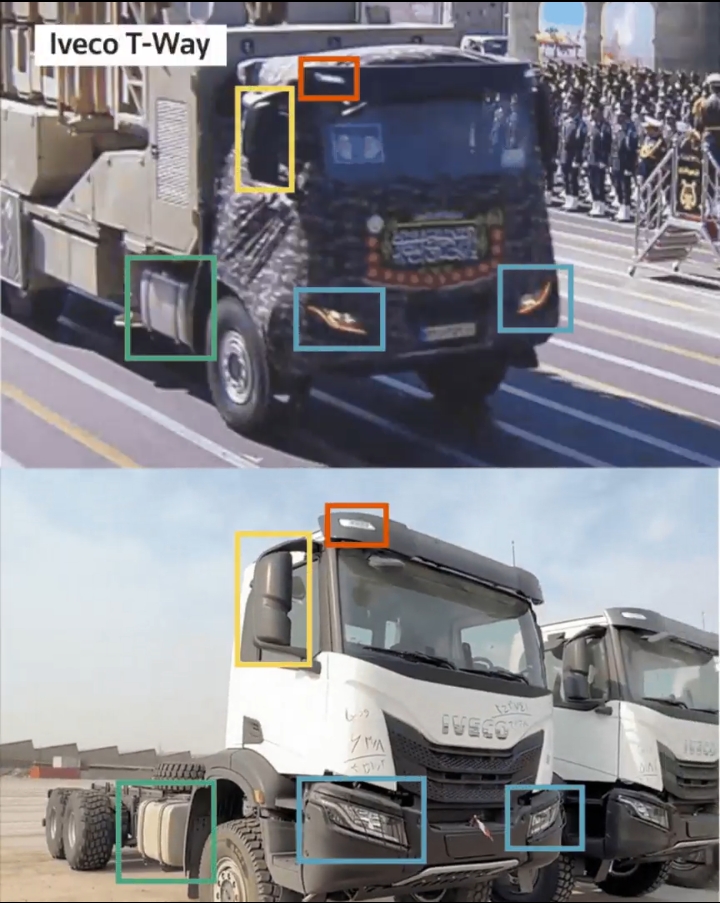
The investigation also examined imports of heavy-duty trucks, including vehicles manufactured by Iveco.
According to the reporting, import records identified hundreds of Iveco trucks entering Iran through the procurement network. Some vehicle models could potentially be adapted for military logistics or mobile missile-launching roles.
However, the presence of a particular truck model in import records does not, by itself, establish the military use of every vehicle or prove that its manufacturer knowingly supplied a prohibited end user.
Iveco has stated that it maintains safeguards concerning prohibited destinations and users, while noting that it cannot control every subsequent transfer of vehicles by third parties.
Questions Over International Sanctions Enforcement
The findings raise questions about the effectiveness of sanctions enforcement, the use of intermediary companies and the movement of dual-use goods through global supply chains.
The Reuters investigation provides evidence of reported procurement activity, but individual transactions and the ultimate use of particular products must be assessed in the context of the underlying records and responses from the organisations concerned.
The report also illustrates how banking records, shipping documents, corporate registrations and other data can help investigative journalists trace complex commercial networks.
THE WORLD’S UPDATE will continue to report on developments using documentary evidence, attributable sources and independent verification.
The report above is based on Reuters’ investigation. Reuters is the source of the underlying findings; THE WORLD’S UPDATE has edited and presented the information for its readers.
THE WORLD’S UPDATE
The World’s Update: Beyond Corporate Algorithms.
Sabse sach, sabse pahle | सबसे सच, सबसे पहले
© 2026 THE WORLD’S UPDATE. All Rights Reserved.
Source credit: Reuters investigative reporting, published October 29, 2026. Refer to the original report for the full investigation and responses from the parties involved.