
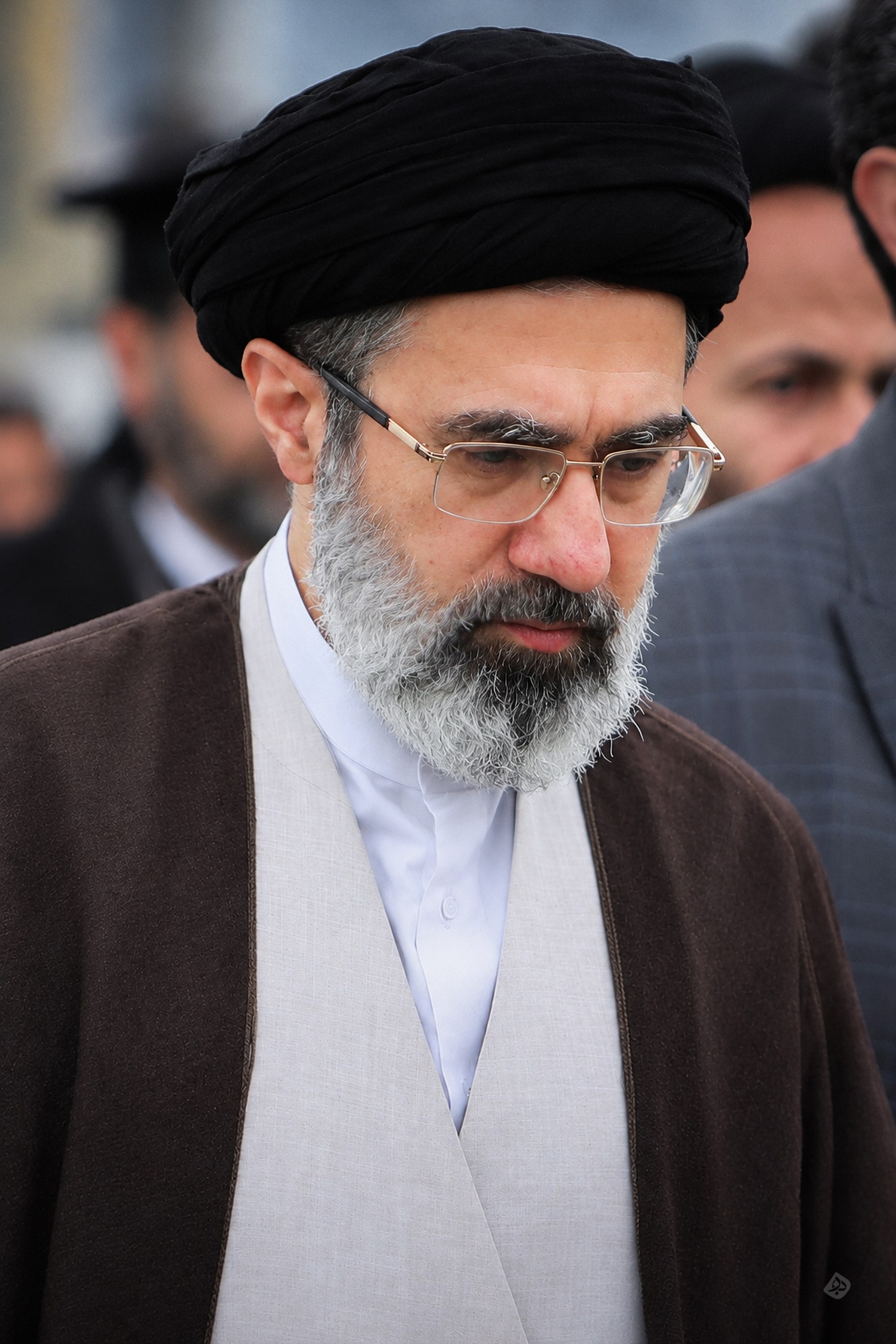
Tehran, October 31, 2026 — Iran’s Supreme Leader and Commander-in-Chief of the Armed Forces, Ayatollah Seyyed Mojtaba Khamenei, has directed the country’s senior military commanders to prepare for an immediate, effective and geographically unrestricted response to any level or type of enemy threat.
The directives were issued during a meeting with senior commanders of Iran’s Armed Forces, according to a statement published by the Supreme Leader’s official website, en.rahbar.ir, and reported by Iranian media.
Khamenei described intelligent combat readiness for a powerful confrontation with adversaries as a fundamental requirement for achieving maximum deterrence.
He warned that if Iran’s enemies resume military or terrorist attacks, the Iranian Armed Forces and the Iranian nation will determine when and under what conditions those hostilities end.
Military target database to include US-Israeli assets
In one of the most significant instructions, Khamenei ordered a comprehensive update of Iran’s military target database.
The statement said the objective was to ensure that all types of physical and non-physical assets belonging to what it described as the “US-Zionist enemy” would be within the reach of Iran’s Armed Forces.
The directive did not publicly identify specific targets or provide details about any planned military operation.
Strengthening intelligence, defence doctrine and technology
The Supreme Leader also called for:
- Strengthening Iran’s military intelligence architecture.
- Deepening indigenous defence capabilities in military doctrine and tactics.
- Modernising defence and security systems through emerging technologies.
- Strengthening the spiritual foundations and morale of military personnel.
- Ensuring that the livelihood needs and welfare of Armed Forces personnel are adequately addressed.
The statement presented these measures as part of a broader effort to maintain military preparedness and strengthen deterrence.
Commanders report readiness across strategic regions
During the meeting, senior military officials briefed Khamenei on the readiness of Iranian forces along the Persian Gulf coast, around the Strait of Hormuz and the Sea of Oman, as well as along the country’s northwestern and southeastern borders.
The commanders named in the statement were:
- Major General Ali Abdollahi, Chief of Staff of Iran’s Armed Forces.
- Major General Amir Hatami, Commander-in-Chief of the Iranian Army.
- Major General Ahmad Vahidi, Commander-in-Chief of the Islamic Revolutionary Guard Corps (IRGC).
They also reported a multi-fold increase in the production of various types of ammunition, reconnaissance equipment, support weapons and combat weapons.
These figures were presented by Iranian military commanders; the statement did not provide independently verifiable production data.
Eight months of public mobilisation and military support
Khamenei described nationwide public support for Iran’s Armed Forces as one of the pillars of deterrence against foreign adversaries.
Referring to what the statement described as eight months of public presence in Iran’s squares and streets, he compared the mobilisation to the country’s eight-year Iran-Iraq War, officially referred to in Iran as the “Sacred Defense.”
He credited the military, police and Basij forces, alongside public support, with protecting Iran’s territorial integrity and political system.
The Supreme Leader also expressed appreciation for the personnel of the Armed Forces, police, Basij and Ministry of Defence, asking commanders to convey his gratitude to them and their families.
Resistance Front and a proposed new security order in West Asia
The statement also addressed Iran’s regional policy.
Khamenei praised what he described as the steadfastness of the Resistance Front in various countries and called the “unity of operational domains” a decisive factor in shaping a new political and security order in West Asia.
He expressed hope that this emerging regional order would encourage greater unity among Muslim nations and governments and contribute to what he described as the formation of a “New Islamic Civilization.”
What the directives signal
The announcement outlines Iran’s stated military posture in the event of renewed attacks. Its language indicates that Tehran wants its commanders to prepare for responses that would not be confined by geographical boundaries.
However, the directives should not be interpreted as confirmation that Iran has launched a new military operation or that a specific strike has been authorised. The public statement does not disclose an operational timetable, named targets or details of an imminent attack.
The meeting and its directives come amid continuing tensions involving Iran, the United States and Israel.
THE WORLD’S UPDATE — Editorial Note
The latest statement is significant not only for its warning of a geographically unrestricted response, but also for its emphasis on military intelligence, domestic weapons production, strategic target planning and regional coordination.
For readers assessing the situation, it is important to distinguish Iran’s declared military doctrine and deterrence messaging from independently confirmed operational developments.
Primary source: Office of the Supreme Leader of Iran — en.rahbar.ir
Additional reporting: Press TV, Tasnim News Agency and Iran Press.
THE WORLD’S UPDATE
Sabse sach, sabse pahle.
Leave a Reply