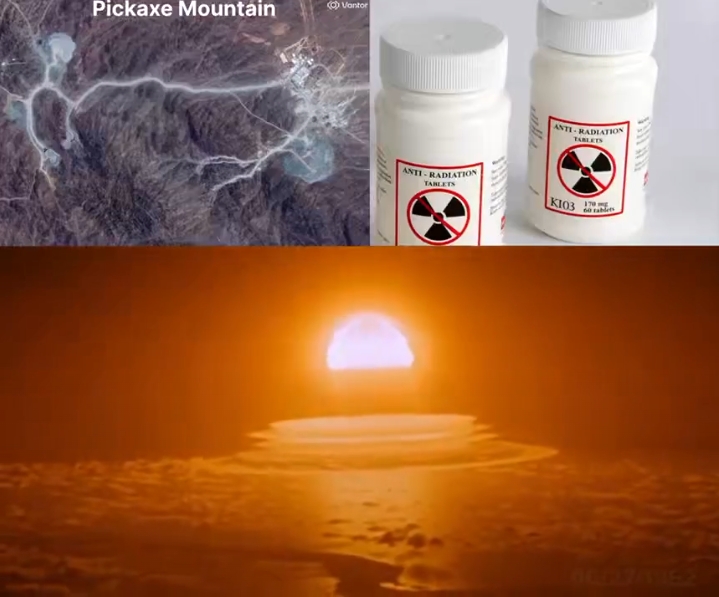
Iranian health officials are reportedly distributing iodine tablets to communities living near nuclear facilities as concerns grow over the possibility of another US military strike against the country.
The development was reported by British newspaper The Times and highlighted in footage shared by RT on 6 November.
According to the report, medical officials have been distributing iodine tablets to residents in areas close to nuclear installations, including communities around the Natanz region.
A medical official quoted by The Times said iodine distribution had been carried out during previous periods of conflict, with supplies provided within a two-to-three-kilometre radius of nuclear facilities.
Why are iodine tablets being distributed?
Potassium iodide tablets are used in certain nuclear or radiological emergencies. They provide stable iodine that helps prevent the thyroid gland from absorbing radioactive iodine.
However, their protection is limited.
The World Health Organization explains that potassium iodide does not protect against other radioactive substances or external radiation. It should only be taken when public-health authorities instruct people to do so.
The tablets are therefore a specific emergency-protection measure, not a general antidote to radiation exposure.
Mount Kolang and concerns over a possible attack
The reported distribution comes amid growing attention on Mount Kolang, also known as Pickaxe Mountain, a heavily fortified underground complex near Iran’s Natanz nuclear facilities.
The Times has reported that Iranian officials and residents are increasingly concerned about a possible US strike on the site. The report also describes public safety guidance addressing the possibility of a nuclear-related emergency and radioactive fallout.
The precise contents and operational status of the underground complex have not been independently established. Iran has described the facility as part of its nuclear infrastructure, while analysts have raised questions about its possible functions.
US President Donald Trump has previously threatened to target the mountain.
Precaution does not prove an imminent nuclear attack
Iran’s reported distribution of iodine tablets is significant, but it should not be interpreted as confirmation that Washington has authorised an attack or that a nuclear explosion is expected.
Iran has also distributed iodine tablets in other areas as part of emergency preparedness. In April 2026, Iran International reported that health authorities had distributed 180,000 tablets in Bushehr, home to the country’s nuclear power plant. The programme had begun before the June 2025 war.
A further distinction is necessary: damage to a nuclear facility could create a risk of radioactive contamination without any nuclear weapon being used.
The current reports therefore raise serious questions about civilian preparedness and the potential consequences of military action against nuclear-related infrastructure.
Sources & References
- RT report: https://x.com/RT_com/status/2118750711655932149
- The Times, 6 November 2026 — Iranians prepare for fire, fury and nuclear fallout at Pickaxe Mountain: https://www.thetimes.com/world/middle-east/article/iranians-prepare-us-nuclear-attack-pickaxe-mountain-9grz5mznq
- World Health Organization — Use of potassium iodide for thyroid protection during nuclear or radiological emergencies: https://www.who.int/news-room/questions-and-answers/item/use-of-potassium-iodine-for-thyroid-protection-during-nuclear-or-radiological-emergencies
- Iran International, 7 April 2026 — Iran distributes 180,000 iodine tablets to Bushehr residents: https://www.iranintl.com/en/202604076551
Standing with the oppressed. Speaking for the unheard. Seeking truth without fear.