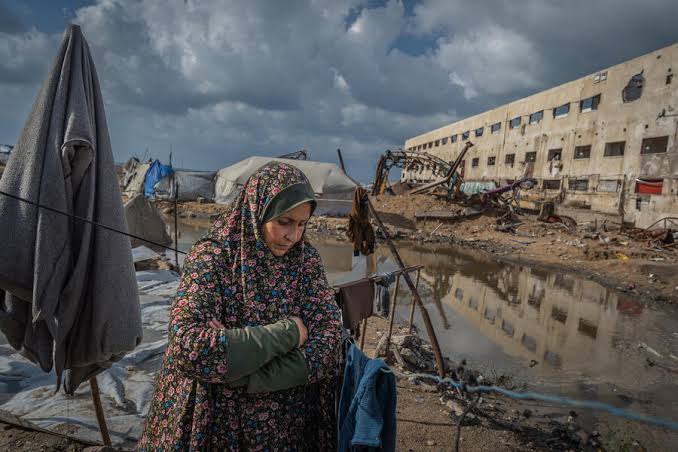
The United Nations has warned that displaced Palestinians in the Gaza Strip continue to face dangerous living conditions, with damaged buildings at risk of collapse and makeshift shelters affected by rats, insects and poor sanitation.
In a statement published on November 5, the United Nations Office for the Coordination of Humanitarian Affairs (OCHA) highlighted continuing attacks and deteriorating shelter conditions across Gaza.
“Ongoing attacks. Buildings at risk of collapse. Unsafe shelters infested with rats and insects,” OCHA said, stressing that people in Gaza deserve to live in safety and dignity.
The agency called for increased humanitarian funding and the lifting of Israeli restrictions on the entry of critical supplies as winter approaches.
Millions face shelter insecurity
The warning comes amid a wider humanitarian shelter crisis. The International Organization for Migration (IOM) reported in October that nearly two million people in Gaza needed shelter assistance.
According to IOM, more than half of the tents and makeshift shelters in use were in poor condition and required replacement. More than 3,600 structures were also identified in August as dangerous and at risk of collapse.
The agency warned that heavy rainfall, flooding and damaged drainage systems could further expose displaced families to serious risks during winter.
Restrictions and funding shortages hamper relief
Humanitarian organisations say restrictions on essential materials are limiting their ability to provide safer shelter.
IOM reported that approximately 8,600 emergency shelter kits, containing materials such as wood and tarpaulins, were positioned outside Gaza but had not been allowed to enter. Israeli authorities have classified certain construction and shelter materials as potentially dual-use, citing security concerns.
The Norwegian Refugee Council (NRC) separately warned in October that funding for the minimum winter shelter response remained far below the amount required. It estimated that only 34 per cent of the required funding had been provided or pledged at the time of its assessment.
These figures relate to different humanitarian assessments and should not be treated as the same funding measure.
Winter adds to the risks facing displaced families
For families living in damaged buildings or worn-out tents, winter brings additional exposure to cold, rain and flooding. Poor sanitation and pest infestations also create public-health concerns.
Humanitarian agencies are calling for more funding and reliable access to shelter materials, repair supplies and other essential assistance.
The immediate challenge is to ensure that displaced people have safe places to live before severe winter weather worsens conditions. Humanitarian organisations say aid must reach those in need at a scale that matches the crisis.
Sources & References
- OCHA – Original statement on conditions in Gaza, November 5
- International Organization for Migration – Nearly 2 Million in Gaza Need Urgent Shelter Assistance as Winter Looms
- Reuters – Almost all Gaza residents need shelter as El Niño threatens flooding, UN agency says
- Norwegian Refugee Council – Israeli restrictions mean entry of winter shelter materials will take over seven months
THE WORLD’S UPDATE
Standing with the oppressed. Speaking for the unheard. Seeking truth without fear.