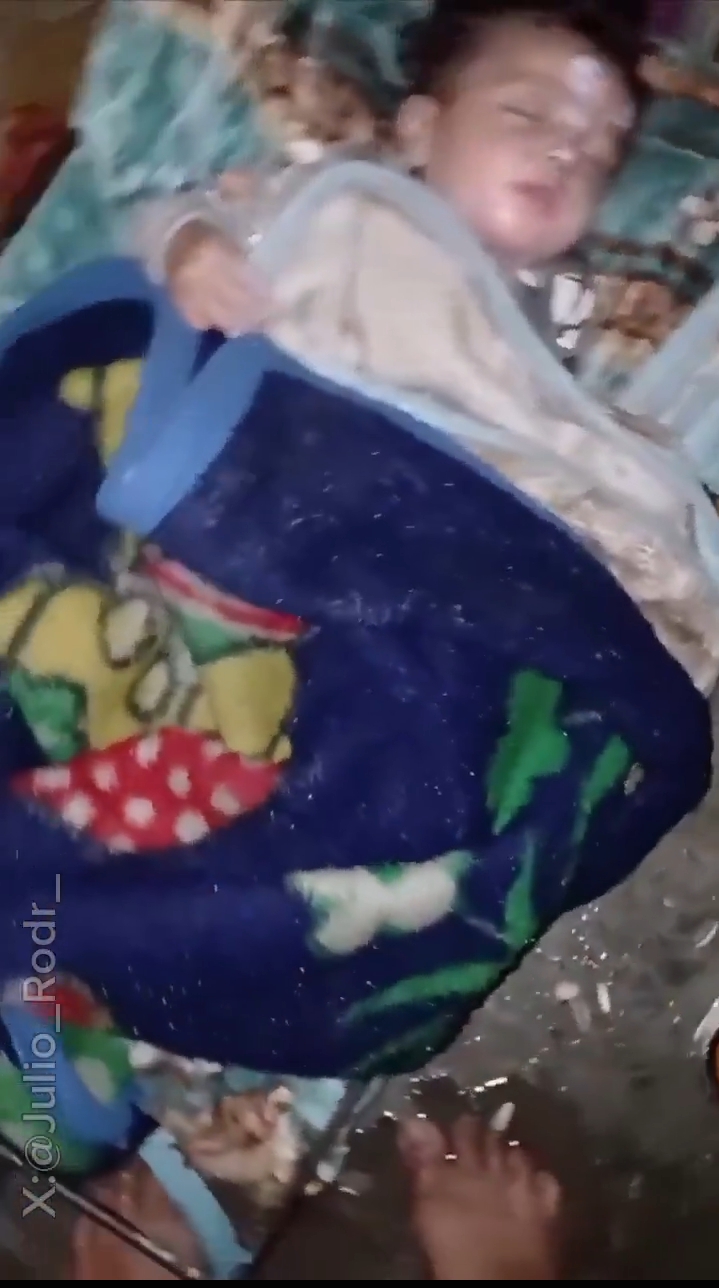
As thousands of displacement tents are flooded and children sleep in soaked beds, THE WORLD’S UPDATE demands accountability from the United Nations, UNICEF, Israel and governments supporting it.
The first major winter storm has exposed the desperate living conditions of displaced Palestinians in Gaza. Reports say approximately 70,000 tents were flooded within just 12 hours, leaving families struggling to protect their children from rain, cold and waterlogged shelters.
More than one million displaced Palestinians are reportedly affected by the storm.
Children are sleeping on wet mattresses. Families are losing what little protection they have. People who have already endured displacement, bombardment and the destruction of their homes are now facing another winter without adequate shelter.
This is not simply a humanitarian emergency. It is a test of international accountability.
UNICEF: Where Is the Emergency Protection?
UNICEF has warned about the dangers facing children in Gaza and launched a $97.5 million winter appeal to support vulnerable children and families.
But an appeal and a public warning are not enough.
UNICEF must publicly disclose:
- How much of its winter appeal has actually been received?
- How much assistance has reached children and displaced families?
- How many winter clothing kits, blankets and emergency shelters have been distributed?
- What obstacles prevented adequate preparations before the winter storm?
- What urgent measures are being taken to protect children whose shelters have already been flooded?
Children cannot wait for another fundraising campaign or another statement of concern.
United Nations: Who Will Enforce Your Demands?
The UN Office for the Coordination of Humanitarian Affairs (OCHA) has repeatedly warned about shortages of shelter materials and restrictions affecting humanitarian operations.
The UN Human Rights Office has also raised concerns about displacement and violations of international law.
But the world deserves answers about what happens after these warnings.
UN Secretary-General António Guterres must explain what concrete diplomatic steps the United Nations is taking to secure unrestricted humanitarian access and adequate protection for displaced Palestinians.
UN High Commissioner for Human Rights Volker Türk must explain how documented violations are being followed up and what accountability mechanisms are being pursued.
The UN Security Council must explain why repeated humanitarian warnings have not translated into effective protection for civilians.
The United Nations cannot replace enforcement with statements indefinitely.
Israel: Explain the Restrictions on Humanitarian Supplies
The Israeli government must answer direct questions about restrictions on humanitarian supplies entering Gaza.
Which shelter materials, tents, blankets, waterproof sheets, drainage equipment and other essential supplies have been restricted?
On what grounds were those restrictions imposed?
How many humanitarian shipments have been delayed or denied?
What steps are being taken to ensure that displaced families receive adequate shelter before further storms?
Israel, as the authority exercising control over relevant crossings and access arrangements, must meet its applicable obligations under international humanitarian law. Civilians must not be made to pay the price of political and military decisions.
The United States and European Governments: Where Is Your Leverage?
Governments that provide Israel with military assistance, diplomatic support or political protection must also answer questions.
What concrete conditions have they placed on their support to ensure compliance with international humanitarian law?
What diplomatic pressure have they applied to secure humanitarian access?
What consequences will follow if restrictions on essential civilian supplies continue?
Human rights cannot be defended selectively. Governments cannot demand accountability in one conflict while avoiding difficult questions in another.
International Courts: Accountability Must Not Stop at Documentation
The International Court of Justice and the International Criminal Court have distinct legal mandates.
The ICJ addresses disputes between states, including South Africa’s case against Israel under the Genocide Convention. The ICC investigates and prosecutes individuals for crimes within its jurisdiction.
Neither court is a substitute for immediate humanitarian assistance. But alleged violations must be investigated through lawful processes, evidence must be preserved, and those found responsible must face accountability.
THE WORLD’S UPDATE Demands Answers
We demand:
- Immediate and unrestricted humanitarian access for essential shelter materials, food, medicine and winter supplies.
- Public disclosure of UNICEF’s winter funding, expenditure and actual delivery figures.
- A transparent OCHA report identifying the supplies delayed, denied or prevented from entering Gaza and the reasons.
- An independent assessment of the impact of flooding on displaced children and families.
- Clear explanations from the Israeli government concerning restrictions on humanitarian supplies.
- Concrete action by the United States, European governments and other states with influence over Israel.
- Continued investigation and lawful accountability for violations of international humanitarian law.
Who will answer for the children sleeping in soaked beds?
UNICEF must answer for the delivery of its promised assistance. The United Nations must answer for the effectiveness of its humanitarian and diplomatic efforts. Israel must answer for restrictions under its control. Governments supporting Israel must answer for how they use their influence.
Human rights organisations must demonstrate that their work goes beyond issuing statements.
Gaza’s children do not need another expression of concern. They need dry beds, safe shelters, warm clothing, food, medicine and protection.
The world has heard enough warnings. It is time to demand answers.
Standing with the oppressed. Speaking for the unheard. Seeking truth without fear.