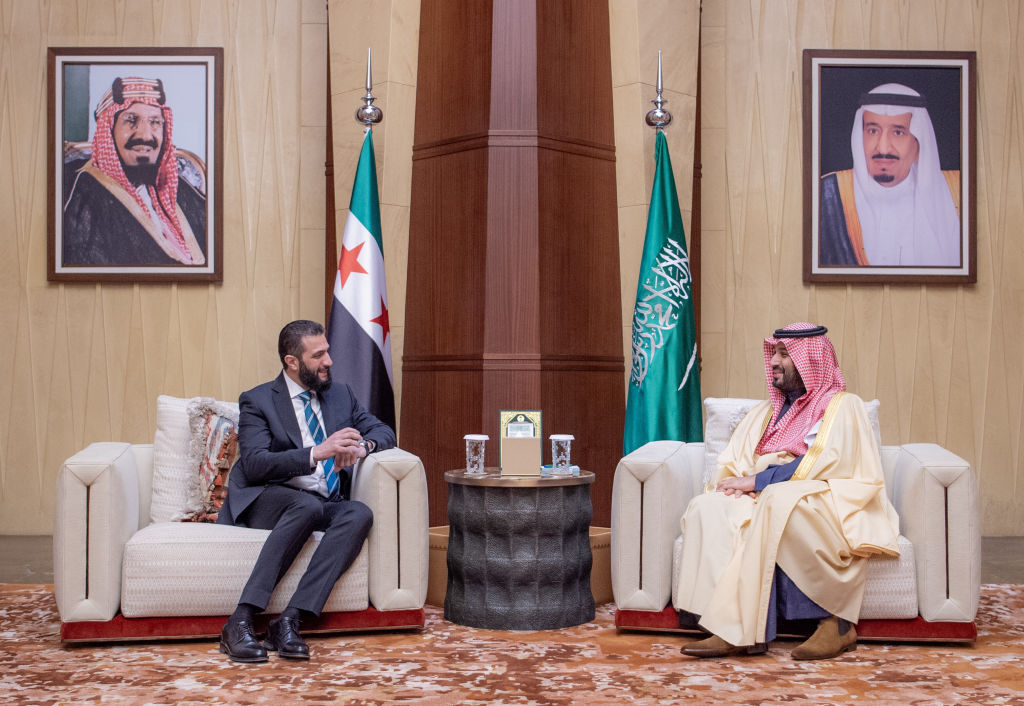
Riyadh, Saudi Arabia | November 4, 2026
Syrian President Ahmed al-Sharaa met Saudi Crown Prince and Prime Minister Mohammed bin Salman in Riyadh on Wednesday, discussing bilateral relations, regional developments and opportunities to strengthen cooperation between the two countries.
The meeting comes at a critical time for Syria, which continues to face Israeli military incursions and security challenges inside its own territory. At the same time, reports published in October indicated that Damascus was considering possible military assistance to Saudi Arabia amid its escalating confrontation with Yemen’s Houthi movement.
This raises an important strategic question: while Syria is still struggling to restore its territorial security and rebuild its military institutions, how much involvement can its new leadership realistically undertake in another regional conflict?
AL-SHARAA AND BIN SALMAN DISCUSS REGIONAL COOPERATION
According to the Saudi Press Agency and Syria’s official news agency, SANA, al-Sharaa arrived in Riyadh with a high-level delegation that included the ministers of foreign affairs, defence, finance and industry, as well as the head of Syria’s General Intelligence Directorate.
The meeting took place at Al-Yamamah Palace.
The Syrian presidency said discussions focused on developing bilateral relations, strengthening cooperation across different sectors and exchanging views on regional and international developments.
Both sides also emphasised the importance of regional security and stability.
The visit followed another meeting between the two leaders on October 6, when discussions included Syria’s reconstruction, infrastructure rehabilitation and opportunities for economic cooperation.
However, the official readout of the November 4 meeting did not confirm any agreement to deploy Syrian forces against the Houthis.
SYRIA’S OWN TERRITORY REMAINS UNDER ISRAELI MILITARY PRESSURE
While Damascus is strengthening diplomatic relations with Riyadh, Syria continues to face Israeli military activity inside its territory.
Following the fall of Bashar al-Assad’s government in December 2024, Israeli forces expanded their presence beyond the occupied Syrian Golan Heights and established positions in parts of southern Syria.
Israeli military operations have included ground incursions, patrols, raids, searches and the detention of Syrian residents.
On October 9, 2026, the Office of the UN High Commissioner for Human Rights reported that approximately 280 incidents involving armed Israeli incursions into Syria had been recorded during September alone through open-source monitoring.
The UN also reported concerns about raids on homes, restrictions on civilian movement, arbitrary detention and damage to livelihoods. It said that 49 Syrians were believed to remain in Israeli custody, although it had not independently verified a comprehensive current total.
Earlier, on September 8, the UN Independent International Commission of Inquiry on Syria warned that certain Israeli military actions, including the detention of civilians, could amount to war crimes.
Israel has defended its military presence on security grounds, while the UN has called for respect for Syria’s sovereignty and territorial integrity.
These developments underline the security challenges facing Syria’s new leadership as it attempts to restore control over its territory and rebuild state institutions.
REPORTED SYRIAN MILITARY ASSISTANCE TO SAUDI ARABIA AGAINST THE HOUTHIS
The question of Syria’s potential military involvement in another regional confrontation emerged prominently in October.
In a report published on October 7 and carried on October 8, Reuters reported that Syria was considering providing military assistance to Saudi Arabia amid an escalating conflict involving the Houthis in Yemen.
Citing a US official and a Syrian military official briefed on the matter, Reuters reported that the options under consideration included defensive assistance to protect Saudi Arabia against missile and drone attacks, as well as the possible deployment of Syrian forces to support Saudi-backed Yemeni troops fighting the Houthis.
However, the report also contained an important qualification.
The US official said Saudi Arabia had requested a Syrian troop deployment, but Syrian presidential media adviser Ahmed Zaidan rejected that claim, describing reports of a Saudi request to send Syrian forces to Saudi Arabia or Yemen as false.
The Syrian government subsequently reiterated that its priority remained domestic recovery, reconstruction and strengthening state institutions.
Therefore, the reported military assistance discussions should not be confused with a confirmed Syrian decision to send troops to Yemen.
THE STRATEGIC CONTRADICTION: SYRIA’S SECURITY FIRST?
The developments raise a significant question about the priorities of President Ahmed al-Sharaa’s government.
Syria is still dealing with the consequences of more than a decade of conflict. Its armed forces and state institutions require reconstruction, while Israeli military operations continue to affect communities in southern Syrian territory.
Despite these challenges, Damascus has expressed solidarity with Saudi Arabia against Houthi attacks and has been reported to have considered possible military cooperation.
The central question is whether Syria can realistically take on additional regional military responsibilities before addressing its own territorial and security challenges.
If Syrian forces were to become involved in the Yemen conflict, such a move could create additional military, political and diplomatic complications for a country already facing major reconstruction demands.
It could also expose Syria to further regional tensions involving the Houthis, Iran and other actors.
For now, no confirmed Syrian troop deployment against the Houthis has been announced, and the November 4 official meeting readout did not disclose such an agreement.
SYRIA’S REGIONAL ROLE AND THE ROAD AHEAD
Saudi Arabia is an important economic and diplomatic partner for Syria’s new leadership. Riyadh has supported efforts relating to reconstruction, investment and Syria’s return to regional diplomatic engagement.
For Mohammed bin Salman, closer relations with Damascus could also strengthen Saudi Arabia’s regional partnerships at a time of heightened security concerns.
For al-Sharaa, however, the challenge is more complicated: rebuilding Syria, protecting its sovereignty, restoring national institutions and deciding how far the country should become involved in conflicts beyond its borders.
The continuing Israeli military presence and the reported discussions over possible assistance to Saudi Arabia against the Houthis place these competing priorities into sharp focus.
Syria’s ability to protect its own territory and rebuild its institutions remains a central test for its new leadership. Before taking on additional military responsibilities abroad, Damascus faces the challenge of securing its own future at home.
SOURCES & REFERENCES
- Saudi Press Agency – Syrian President Arrives in Riyadh, November 4, 2026
- Anadolu Agency – Syrian President and Saudi Crown Prince Discuss Bilateral Cooperation, November 4, 2026
- Reuters – Syria Weighs Military Aid for Saudi Arabia Amid Yemen War, October 7, 2026
- The National – Syrian Official Denies Saudi Arabia Asked Damascus to Deploy Troops Against Houthis, October 8, 2026
- United Nations OHCHR – Israeli Incursions and Detentions in Syria, October 9, 2026
- Reuters – UN Probe Says Some Israeli Actions in Syria May Amount to War Crimes, September 8, 2026
THE WORLD’S UPDATE
Standing with the oppressed. Speaking for the unheard. Seeking truth without fear.