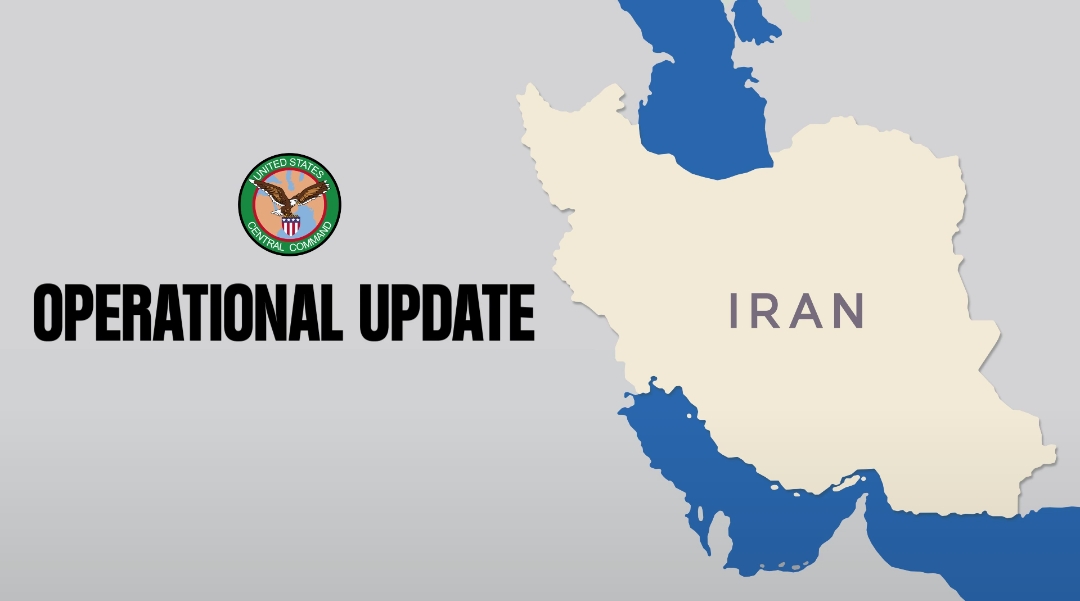
US Central Command says American forces are maintaining commercial shipping access through the Strait of Hormuz while enforcing a naval blockade against Iran. Washington is also expanding its campaign to restrict Iranian weapons and technology supply routes through land borders and the Caspian Sea.
The United States is expanding its pressure campaign against Iran beyond maritime routes.
In a statement published on November 11, 2026, US Central Command (CENTCOM) said American forces were working continuously to maintain commercial shipping access through the Strait of Hormuz while enforcing the naval blockade against Iranian ports.
CENTCOM also said it was working with other US government agencies to prevent Iran’s Islamic Revolutionary Guard Corps (IRGC) from using land routes and the Caspian Sea to move advanced weapons systems, dual-use technologies, sanctioned materials and what Washington describes as illegal revenue streams.
The statement signals a broader effort to restrict Iran’s access to military supplies, technology and financial resources.
Task Force Iron Gate: The land-based pressure campaign
On November 7, CENTCOM announced the establishment of Task Force Iron Gate.
According to the US military, the approximately 20-member team consists of civilian and military personnel based in Tampa, Florida.
Its stated responsibilities include coordinating with other US government agencies to prevent the movement of:
- Advanced weapons systems.
- Dual-use technologies with civilian and military applications.
- Sanctioned materials.
- Financial resources Washington describes as illegal revenue.
The initiative specifically identifies Iran’s land borders and the Caspian Sea as routes requiring greater attention.
CENTCOM Commander Admiral Brad Cooper said the initiative would strengthen the existing naval blockade and restrict Iran’s ability to replenish its military and rebuild weapons production facilities.
However, CENTCOM has not publicly detailed the specific operational methods the task force will use to disrupt shipments through these routes.
Why the Caspian Sea matters to Iran
The Caspian Sea is strategically important because it provides Iran with access to Russia and other neighbouring countries without requiring shipments to pass through the Persian Gulf or the Strait of Hormuz.
Iran also has land-based trade connections with countries across Central Asia.
These routes matter because restrictions on maritime trade can encourage businesses and governments to explore alternative transportation networks.
A November 8 report by Stars and Stripes, citing research by the Center for Strategic and International Studies, identified Pakistan, Central Asia and Caspian shipping as possible alternative supply routes for Iran.
The Caspian Sea also presents a different challenge for Washington.
It is a landlocked body of water bordered by five countries: Iran, Russia, Azerbaijan, Kazakhstan and Turkmenistan. Any effort to disrupt commercial or military-related shipments there would involve complicated regional and diplomatic considerations.
The creation of Task Force Iron Gate does not mean American naval forces have entered the Caspian Sea. Its announced role is coordination with US government agencies.
The naval blockade and commercial shipping are two different issues
CENTCOM says it is working to keep the Strait of Hormuz open for commercial shipping while enforcing a blockade against Iranian ports.
These statements describe two separate objectives.
First: Commercial shipping access
Washington says it wants commercial vessels travelling through regional waters to continue operating, provided they are not violating the blockade.
Second: Restrictions on Iranian ports
The US blockade targets maritime traffic entering or leaving Iranian ports and coastal areas covered by the restrictions.
In its July 13 announcement, CENTCOM said the blockade would resume on July 14, 2026.
The command reported that its earlier enforcement operations had redirected more than 140 compliant vessels and disabled nine non-compliant ships.
These are figures published by the US military and have not been independently audited in this article.
The economic consequences for Iran
The pressure campaign is not limited to weapons supplies.
CENTCOM said the naval blockade had prevented Iran from exporting more than $25 billion in crude oil in recent months.
The figure represents the US military’s assessment of lost export revenue, rather than an independently verified calculation of Iran’s total economic losses.
If the restrictions continue, Iran could face additional difficulties in exporting energy, importing industrial equipment and obtaining components required for domestic manufacturing.
The wider consequences may also affect commercial networks and countries trading with Iran.
Iran rejects Washington’s expanded pressure
Iran’s military has dismissed the new US initiative.
According to reporting by CBS News, Iranian military officials described Task Force Iron Gate as political wordplay and questioned Washington’s ability to achieve its objectives.
Iran has also maintained contacts with neighbouring countries as it faces growing restrictions on trade and military supplies.
The disagreement highlights the limits of the US announcement: establishing a task force is not the same as physically controlling every land border or Caspian shipping route.
A wider strategy against Iran’s supply networks
The latest CENTCOM statement shows that Washington is attempting to address more than Iran’s maritime activity.
Its strategy now publicly identifies three connected areas:
- Sea: Enforcing restrictions on vessels entering and leaving Iranian ports.
- Land: Working with government agencies to monitor and disrupt prohibited shipments across Iran’s borders.
- Caspian Sea: Restricting the movement of weapons, technology and sanctioned materials through alternative maritime networks.
This approach could increase pressure on Iran’s military supply chains and its ability to generate revenue.
But it also raises questions about the role of neighbouring countries, freedom of navigation, international trade and the potential consequences for civilian economic activity.
The question Washington must answer
The United States describes its campaign as an effort to prevent Iran from rebuilding its military capabilities and financing activities Washington considers threatening.
But the international community also needs clarity about how these restrictions are being enforced.
Which shipments are being stopped? What evidence establishes that particular goods are military-related or sanctioned? How are civilian businesses and legitimate humanitarian trade being protected?
Those questions matter because restrictions on military supplies and restrictions that damage an entire civilian economy can have very different consequences.
The Strait of Hormuz is now only one part of the wider strategic contest. Washington is attempting to restrict Iran’s maritime, land-based and Caspian supply networks. Whether this strategy achieves its military objectives without creating wider economic and regional instability remains to be seen.
THE WORLD’S UPDATE
Standing with the oppressed. Speaking for the unheard. Seeking truth without fear.
Sources & References
- US Central Command – Original statement on Hormuz, the naval blockade and Iran’s land and Caspian routes, November 11, 2026
- US Department of Defense / DVIDS – CENTCOM launches Task Force Iron Gate, November 7, 2026
- Stars and Stripes – CENTCOM launches task force to disrupt Iran’s weapons supply routes, November 8, 2026
- Al Jazeera – US launches task force to disrupt Iran’s land-based supply routes, November 8, 2026
- CBS News – Iran downplays new US task force aimed at disrupting ground transport routes, November 8, 2026
- US Central Command – US Forces to Resume Naval Blockade Against Iran, July 13, 2026