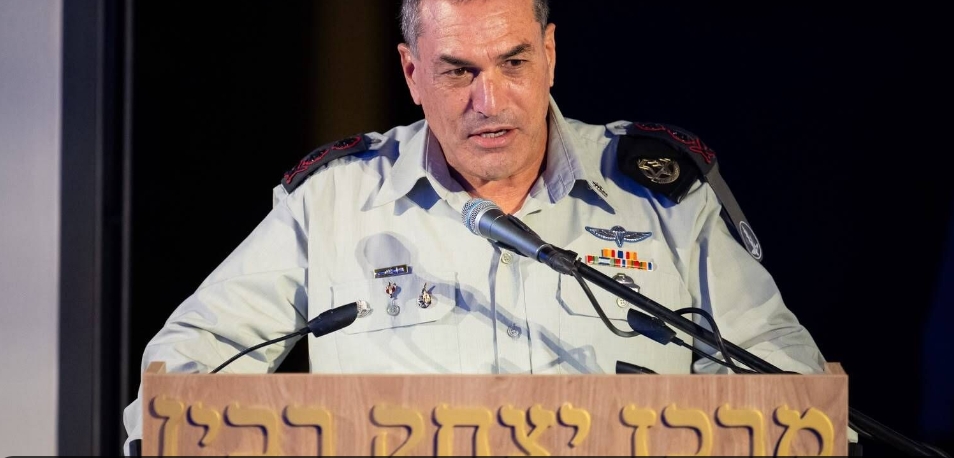
Speaking at a memorial marking the anniversary of Yitzhak Rabin’s assassination, Israel’s military chief Eyal Zamir warned that a culture of complacency contributed to the failures surrounding the October 7, 2023 attack. His remarks bring renewed attention to questions about intelligence warnings, military assumptions and institutional accountability.
Israel Defense Forces (IDF) Chief of Staff Lieutenant General Eyal Zamir has warned that a “culture of complacency” contributed to the failures that preceded the October 7, 2023 Hamas-led attack on southern Israel.
According to i24NEWS, Zamir made the remarks at a memorial ceremony for former Israeli Prime Minister Yitzhak Rabin.
The statement highlights an important issue surrounding October 7: how an attack of such scale was able to take Israeli military and intelligence forces by surprise.
October 7 exposed serious military failures
On October 7, 2023, Hamas-led fighters crossed the Gaza border and attacked Israeli communities and military positions.
The assault resulted in approximately 1,200 deaths in Israel, according to widely reported Israeli figures. Around 250 people were taken hostage into Gaza.
The attack exposed major failures in Israel’s intelligence assessments, border security, military preparedness and command response.
Israeli military investigations subsequently examined how warning signs were assessed, why existing security assumptions remained in place and why the military was not prepared for an attack of that scale.
What does ‘culture of complacency’ mean?
Zamir’s reported reference to a “culture of complacency” points to a wider institutional problem: becoming too confident in existing security assessments and failing to respond adequately to warning signs.
In military and intelligence organisations, complacency can develop when established assumptions are treated as facts and alternative assessments are not given sufficient attention.
In the context of October 7, the issue includes whether Israeli security officials underestimated Hamas’s capabilities and intentions.
The warning is particularly significant because military investigations have identified problems beyond a single operational mistake.
Intelligence warnings were reportedly ignored
Earlier investigations and reporting have highlighted warnings that Hamas was preparing for a large-scale attack.
One important example involved the Hamas operational plan known as “Jericho Wall”.
The plan described a possible large-scale assault against Israeli military positions and communities. It had been identified by Israeli intelligence before October 7, but its significance was not adequately understood or incorporated into military planning.
In October 2026, Zamir honoured a female intelligence officer from Unit 8200 who had warned before the attack that Hamas had a clear plan to invade Israel. Her warnings were reportedly dismissed by senior officers.
Zamir used the occasion to stress the importance of independent thinking and the need to prevent a culture in which critical voices are suppressed.
Responsibility goes beyond one military decision
The October 7 failures have raised questions about the responsibilities of military commanders, intelligence officials and political leadership.
Zamir has previously said that the IDF failed in its mission to protect Israeli citizens on October 7.
He has also argued that the failure was not exclusively a military matter and called for an independent state commission of inquiry to examine the wider political and military decision-making process.
Such an investigation would need to examine the intelligence assessments, warnings received by senior officials, strategic assumptions and the responsibilities of different institutions.
The distinction matters: acknowledging military failure does not, by itself, establish the individual responsibility of every official involved. That requires a thorough investigation.
A continuing question for Israel’s security establishment
Zamir’s warning about complacency adds to the debate over how Israel’s military and intelligence institutions should change after October 7.
The central questions remain: Were warning signs taken seriously? Why were established assumptions not challenged? And what changes are necessary to prevent a similar failure in the future?
The answers require more than public statements. They depend on transparent investigations, examination of the evidence and meaningful institutional reforms.
Sources
- i24NEWS — Eyal Zamir’s remarks at the Rabin memorial
- The Times of Israel — IDF chief honours intelligence officer whose warnings before October 7 were ignored
- Ynet — Zamir calls for an independent state inquiry into October 7 failures
- i24NEWS — Zamir acknowledges the IDF’s failure to protect Israeli citizens
THE WORLD’S UPDATE
Standing with the oppressed. Speaking for the unheard. Seeking truth without fear.