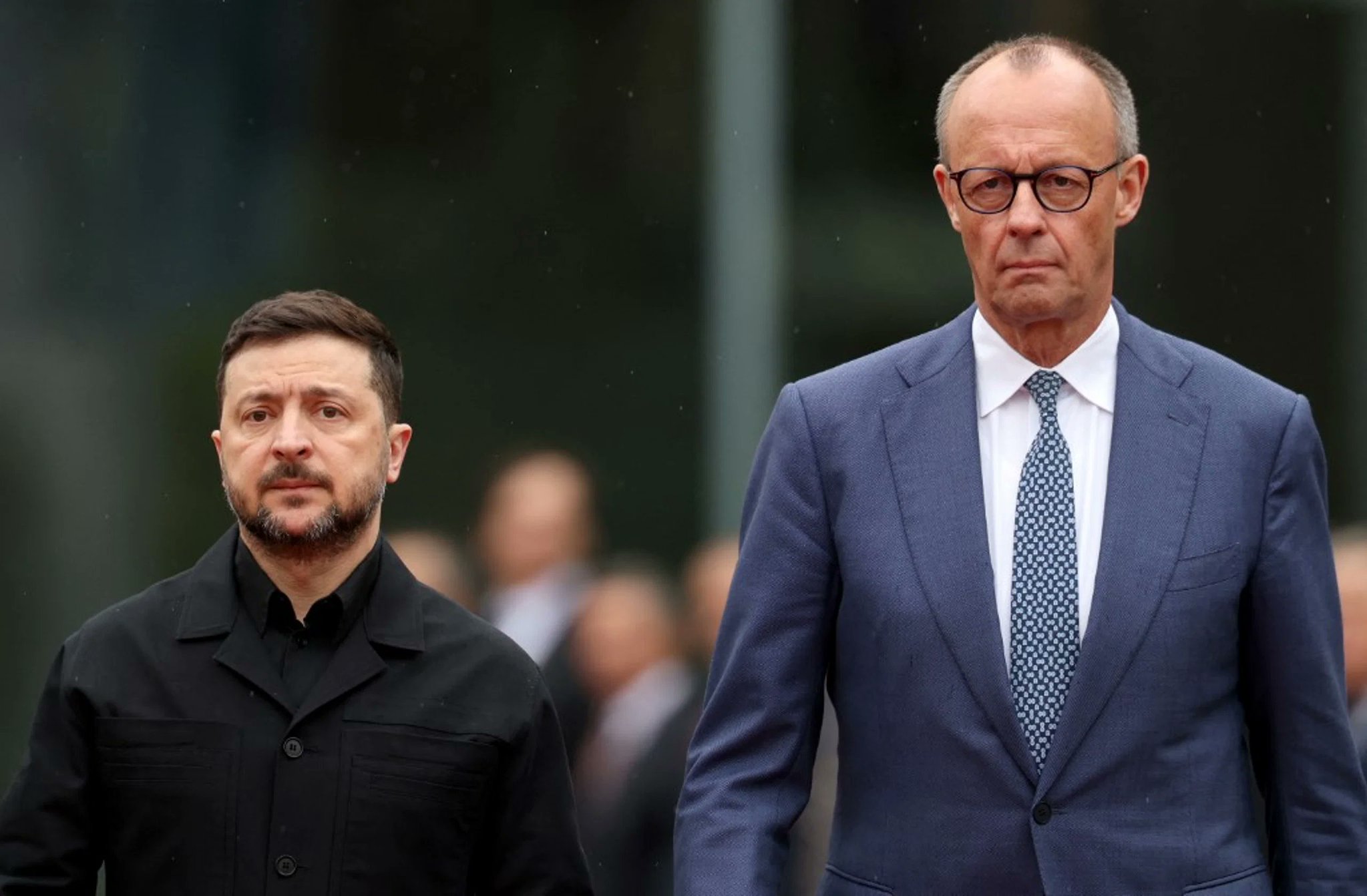
German Chancellor Friedrich Merz has threatened to block the European Union’s next long-term budget unless all 27 member states commit to financing Ukraine in 2027 and beyond.
The move links negotiations over the EU’s 2028–2034 budget directly to Kyiv’s wartime financial needs. It also exposes divisions among European governments over how much they should contribute and who should have the power to block future funding decisions.
The Financial Times reported on November 9 that Merz made the demand in a letter to European Council President António Costa.
The warning comes as Ukraine faces an estimated €70 billion funding gap in 2027, with the EU expected to cover approximately €45 billion.
Merz links the EU budget to Ukraine’s financial support
According to the Financial Times report, Merz has made Germany’s support for the EU’s 2028–2034 budget conditional on a commitment from every member state to help finance Ukraine.
In his letter, Merz argued that all member states must contribute fairly to closing Kyiv’s funding gap.
He also called for a reliable, multi-year financing arrangement for Ukraine from 2028 onwards, including the interest liabilities associated with existing support loans.
Germany is the EU’s largest net budget contributor. Berlin is therefore using its influence in negotiations over the bloc’s next long-term budget to press other governments to share the financial burden.
Ukraine faces a €70 billion funding gap
Ukraine’s financial requirements remain a major challenge as Russia’s war continues.
Kyiv estimates that it will face a €70 billion shortfall in 2027. The EU has indicated that it intends to cover around €45 billion, approximately two-thirds of the gap.
However, the financing mechanism has not yet been finalised. Options under discussion include additional joint borrowing backed by the EU.
The European Commission is examining possible financing arrangements, while EU governments are discussing how to secure the money.
The proposed €45 billion contribution would therefore require further agreement on how the funding is raised and distributed.
Hungary, Slovakia, Bulgaria and the Czech Republic resist further contributions
The dispute reflects differences among EU member states over continued financial support for Kyiv.
The Financial Times report identifies Hungary, Slovakia, Bulgaria and the Czech Republic as countries signalling opposition to further contributions.
Hungary, Slovakia and the Czech Republic had already secured exemptions from certain obligations linked to the previous €90 billion support loan.
Their position creates a challenge for governments seeking a collective financing arrangement.
Germany and several other Ukraine-supporting countries argue that the financial burden should not fall disproportionately on a limited number of member states.
Berlin wants to reduce the risk of vetoes
Merz is also pushing for future Ukraine funding decisions to be approved through a qualified majority rather than requiring unanimity.
Under qualified majority voting, a proposal can pass without every EU member state agreeing, provided it meets the applicable voting thresholds.
This could reduce the ability of individual governments to block future financial assistance.
However, changing the decision-making approach for Ukraine funding could itself become politically contentious.
Poland’s deputy minister for European affairs has warned that linking the EU’s long-term budget to Ukraine funding could make negotiations more difficult. Slovak Prime Minister Robert Fico has also criticised the approach.
Euronews has reported on these disagreements and the competing positions among EU governments.
A wider test for European unity
The dispute puts two major European policy questions into the same negotiation: how to finance Ukraine’s continued needs and how to agree on the EU’s next seven-year budget.
For Germany, the central demand is that all member states share responsibility for supporting Kyiv.
For governments resisting further contributions, the issue involves financial commitments and the extent to which EU-wide decisions should bind countries that disagree.
The outcome could affect not only Ukraine’s funding outlook but also future negotiations over the EU budget and the bloc’s decision-making process.
The immediate challenge is to find an arrangement that can secure sufficient funding for Ukraine while maintaining agreement among member states.
Standing with the oppressed. Speaking for the unheard. Seeking truth without fear.