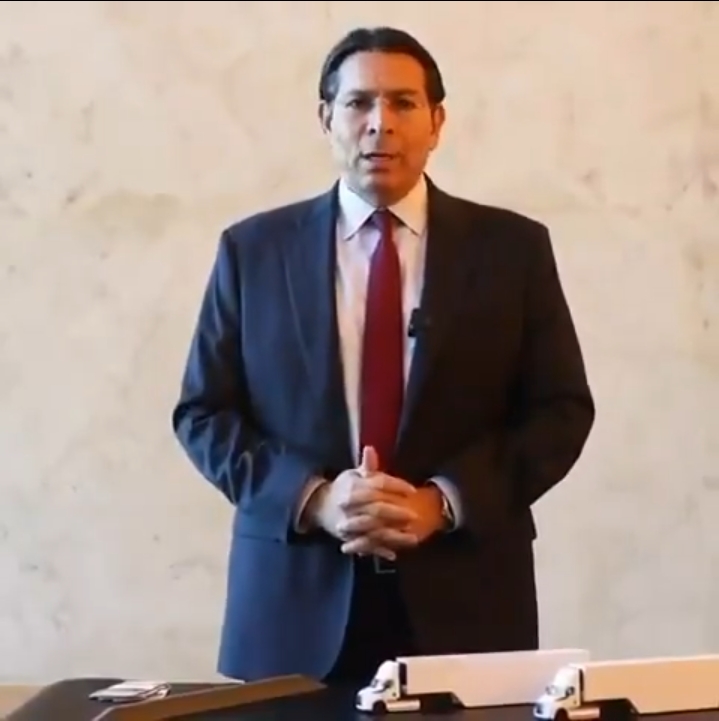
Israel’s Ambassador to the United Nations, Danny Danon, has defended Israel’s humanitarian aid policy, claiming that more than 600 trucks carrying humanitarian assistance and essential supplies are allowed to enter the Gaza Strip every day.
In remarks circulated on 6 November, Danon argued that Gaza requires approximately 250 trucks daily and that Israel permits considerably more than that number to enter through its checkpoints.
However, reports from United Nations agencies and international humanitarian organisations describe a very different picture of the practical difficulties facing aid operations in Gaza.
WHO: Aid is not reaching people when and where it is needed
On 2 October, the World Health Organization (WHO) highlighted repeated delays in bringing essential medicines, prosthetics and other lifesaving supplies into Gaza.
Dr Reinhilde Van De Weerdt, WHO Representative in the Occupied Palestinian Territory, stressed that the issue is not simply how much cargo crosses the border, but whether the right supplies reach medical workers and patients at the right time.
She said that approved aid could enter through Kerem Shalom, while several other main entry points remained closed.
WHO also called for an end to restrictions affecting essential medical supplies, warning that humanitarian operations continued to be impeded by unreliable and delayed access.
Restrictions on shelter supplies remain a major concern
The Norwegian Refugee Council (NRC), in a report published on 5 October, warned that restrictions on essential shelter materials could leave 1.65 million people in Gaza facing another winter in damaged buildings and worn-out tents.
The organisation reported that Israeli authorities were allowing only 15 trucks carrying items classified as “dual-use” to enter from Jordan each week across all humanitarian sectors.
These materials include tents and tarpaulins. NRC estimated that at least 500 truckloads of such shelter supplies were awaiting entry and that, at the reported rate, bringing them in could take more than seven months.
The difference between truck numbers and humanitarian access
Danon’s statement raises an important question: what exactly is being counted?
There is a difference between trucks being authorised, trucks physically entering Gaza, cargo being collected by humanitarian agencies, and supplies reaching families in need.
A headline figure for permitted trucks cannot, on its own, establish that humanitarian needs are being met.
The United Nations has also warned that Gaza’s humanitarian access remains severely constrained by logistical and security obstacles. In a Security Council briefing on 28 September, the UN said that only one crossing was open for the passage of goods and that severe shortages of clean water, medical care, fuel, health supplies and shelter continued.
The humanitarian question remains unanswered
Israel’s claim that it allows hundreds of trucks into Gaza deserves examination against independently documented delivery figures, the types of supplies permitted, crossing capacity and the ability of aid agencies to distribute those supplies.
The presence of aid trucks at a crossing is not the same as food reaching a hungry family, medicine reaching a hospital or shelter materials reaching displaced people.
For Palestinians in Gaza, the real measure of humanitarian access is whether essential supplies arrive consistently, in sufficient quantities, and without unnecessary restrictions or delays.
Sources & References
- Eye on Palestine — Danny Danon’s remarks: https://x.com/EyeonPalestine/status/2118708517385216358
- Israel National News, 6 November 2026 — Danon claims more than 600 trucks enter Gaza daily: https://www.israelnationalnews.com/news/435757
- UN Geneva / WHO, 2 October 2026 — Gaza aid delays and restrictions on medical supplies: https://www.unognewsroom.org/story/en/3284/gaza-aid-appeal-who/0
- Norwegian Refugee Council, 5 October 2026 — Restrictions delay entry of winter shelter materials: https://www.nrc.no/news/2026/gaza-israeli-restrictions-mean-entry-of-winter-shelter-materials-will-take-over-seven-months
- UN Special Coordinator for the Middle East Peace Process, 28 September 2026 — Security Council briefing: https://unsco.unmissions.org/en/news/security-council-briefing-28-september-2026-unscr-2334
Standing with the oppressed. Speaking for the unheard. Seeking truth without fear.