
Dhaka, Bangladesh | November 1, 2026
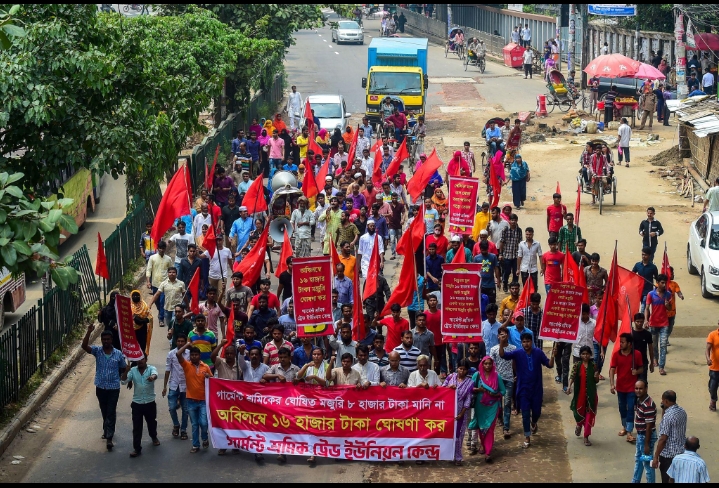
Bangladesh’s garment industry is facing widespread disruption as workers demand a substantial increase in the minimum monthly wage, with protests spreading across Dhaka, Gazipur and other major industrial areas. The unrest has disrupted operations at 529 garment factories and left approximately 987,190 workers away from their workplaces, according to figures reported by the Bangladesh Garment Manufacturers and Exporters Association (BGMEA).
Workers are demanding a minimum monthly wage of Tk 30,000, more than double the existing minimum of Tk 12,500. They say rising costs of food, housing, transport and healthcare have made it increasingly difficult to support their families on current earnings.
Wage demand puts pressure on government and factory owners
The government announced the formation of a six-member minimum wage board on November 1 to review pay in the garment sector and recommend revised wages.
The board includes two representatives each from workers and employers, alongside a government representative and an independent member. Labour and Employment Minister Ariful Haque Choudhury urged workers to return to their workplaces, saying the board had been established to address their demand.
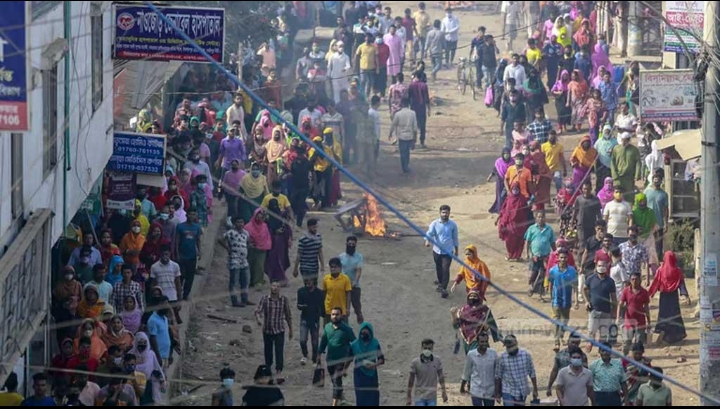
However, the announcement did not immediately end the demonstrations. Workers continued to gather in industrial areas, block roads and disrupt transport.
Clashes and damage reported during demonstrations
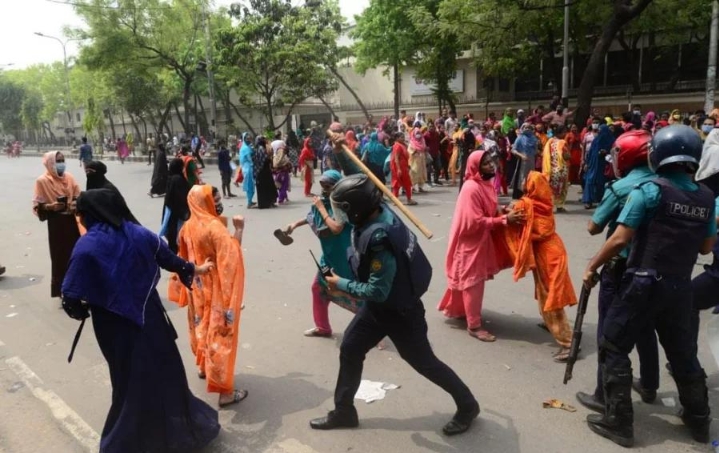
Protests in Dhaka and Gazipur turned violent in several locations. Reuters reported that police used tear gas and water cannon after some demonstrators threw bricks at officers.
A police vehicle and a police box were set on fire in separate incidents. Authorities deployed Border Guard Bangladesh personnel to help maintain order.
These incidents have added to concerns over public safety and the impact of the continuing unrest on workers, local residents and businesses. Responsibility for individual acts of violence should be established through evidence and proper investigation rather than attributed collectively to all workers taking part in demonstrations.
Nearly one million workers affected
According to BGMEA figures cited by Reuters, 529 garment factories were shut down amid the unrest, leaving 987,190 workers out of work across major industrial areas.
The figures reported earlier in the day were lower. The Business Standard reported that 318 factories had remained closed and 702,255 workers had left their workplaces, based on data collected up to 11:30 a.m. on November 1. The difference reflects the changing situation and reporting time.
Bangladesh’s ready-made garment sector employs around four million people, generates more than 80 per cent of the country’s export earnings and contributes approximately 10 per cent of its gross domestic product. Prolonged disruption could therefore affect workers’ incomes, factory operations, export shipments and payments from international buyers.
Factory owners warn of financial pressure
Manufacturers argue that a sudden increase to Tk 30,000 would be difficult to absorb because of rising production costs, energy shortages and competition from other garment-producing countries.
The industry’s concerns are significant, but so are workers’ demands. Any sustainable solution must consider the financial realities of factories without leaving workers unable to meet basic living costs.
A wage structure that workers cannot live on risks deepening labour unrest. At the same time, a solution that does not account for the industry’s ability to remain operational could threaten employment.
The question Bangladesh must answer
The formation of a wage board is an important administrative step, but it is not itself a settlement. Workers will be looking for a transparent process, meaningful representation and a wage recommendation that reflects the actual cost of living.
The government, factory owners and workers’ representatives now face a difficult task: reach a credible agreement, protect workers’ rights, prevent further violence and keep the industry functioning.
The central question is no longer simply how many factories have closed. It is whether the people whose labour sustains one of Bangladesh’s most important industries can earn enough to live with dignity.
Sources & References
- Reuters — Bangladesh sets up wage board as garment workers’ unrest shuts factories (November 1, 2026)
https://www.reuters.com/business/world-at-work/bangladesh-form-wage-board-after-garment-protests-shut-factories-2026-11-01/ - The Daily Star — BGMEA reports disruptions at 529 garment factories amid wage protests (November 1, 2026)
https://www.thedailystar.net/news/news/bgmea-reports-disruptions-529-garment-factories-amid-wage-protests-4312936 - The Business Standard — 318 garment factories closed amid labour unrest (November 1, 2026)
https://www.tbsnews.net/bangladesh/318-garment-factories-closed-amid-labour-unrest-over-7-lakh-workers-leave-workplaces - Al Jazeera — Bangladesh forms wage board as garment workers protest (November 1, 2026)
https://www.aljazeera.com/amp/news/2026/11/1/bangladesh-forms-wage-board-amid-garment-worker-protests
THE WORLD’S UPDATE
Standing with the oppressed. Speaking for the unheard. Seeking truth without fear.
Leave a Reply