
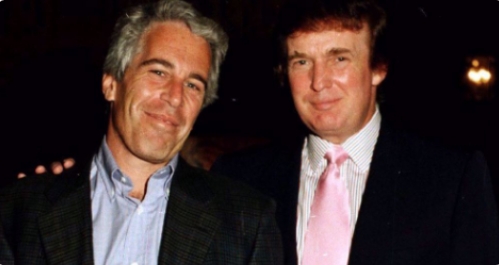
WASHINGTON, October 31, 2026 — A federal judge in the United States has dismissed President Donald Trump’s $10 billion defamation lawsuit against The Wall Street Journal, its parent company and media mogul Rupert Murdoch over the newspaper’s reporting on Trump’s alleged connection to Jeffrey Epstein.
US District Judge Darrin Gayles, based in Miami, dismissed the amended lawsuit with prejudice on Saturday, meaning Trump cannot refile the same claim.
The lawsuit concerned a July 2025 Wall Street Journal report about a sexually suggestive letter and drawing bearing Trump’s name, which the newspaper reported had been included in an album compiled for Epstein’s 50th birthday in 2003.
Trump denied writing the letter and described the newspaper’s report as false, malicious and defamatory. He subsequently filed a lawsuit seeking $10 billion in damages.
Court says Trump failed to establish actual malice
In his ruling, Judge Gayles concluded that Trump’s amended complaint failed to plausibly demonstrate that the defendants published the report with “actual malice”.
Under the US legal standard established by the Supreme Court’s 1964 decision in New York Times Co. v. Sullivan, public figures bringing defamation claims must show that a publisher knowingly published false information or acted with reckless disregard for whether it was false.
The judge found that the allegations in Trump’s amended complaint were vague, conclusory and, in some instances, inconsistent with the newspaper’s reporting.
The court also noted that the Journal’s article had included Trump’s denial of writing the letter.
What the ruling does — and does not — establish
The dismissal represents a legal victory for the Wall Street Journal and its parent company, Dow Jones.
However, the ruling does not establish that Trump personally authored the disputed letter. The court’s decision focused on whether Trump’s legal complaint sufficiently demonstrated actual malice under the applicable defamation standard.
Trump has denied the allegations, while the Journal has defended its reporting.
The case also highlights the legal protections afforded to media organisations in the United States when reporting on public figures, while reinforcing the demanding legal standard that public figures must meet to win defamation claims.
Sources: Reuters, Associated Press, The Wall Street Journal court coverage and ABC News.
Leave a Reply