
THE WORLD’S UPDATE | Independent Geopolitical Analysis
The diplomatic signals emerging between Washington and Tehran raise a question that goes beyond a letter exchanged between senior officials. Is the United States reconsidering its approach towards Iran solely because of pressure on its own interests, or is it also responding to the growing economic, political and strategic challenges facing Israel and its international partners?
The answer may involve a wider network of pressures: disruptions around the Strait of Hormuz and Bab el-Mandab, rising energy and shipping costs, opposition to arms transfers, and growing public discontent in countries that maintain military, economic or diplomatic relationships with Israel.
These developments do not establish a single explanation for Washington’s diplomatic outreach. However, together, they provide a framework for examining why the costs of continued confrontation may be increasing.
1. Rezaei’s Statement and Washington’s Diplomatic Outreach
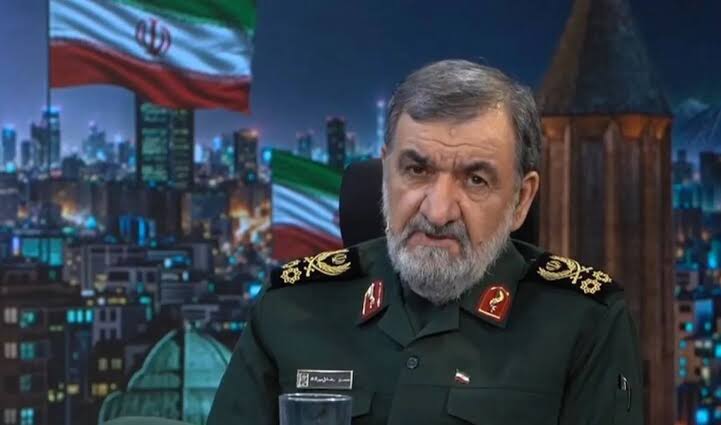
Iranian security official Mohsen Rezaei has indicated that the American side’s tone has changed, while also stating that he has not yet responded to the letter sent by US Vice President JD Vance.
The reported letter is significant because it represents a high-level channel of communication between Washington and Tehran amid continuing confrontation. Its complete text has not been made public. Media reports have described a possible framework for negotiations, including discussions about Iran’s nuclear programme.
The important question is not simply whether Washington wants to negotiate. It is why diplomacy is becoming relevant again while military confrontation and economic pressure continue.
2. The Strait of Hormuz: Pressure on Global Energy and Shipping
The Strait of Hormuz is one of the world’s most important maritime energy routes. A significant share of internationally traded oil and liquefied natural gas normally passes through it.
Disruptions in this narrow passage can affect far more than the countries directly involved in the conflict. They can increase shipping costs, insurance premiums and energy prices, with consequences for import-dependent economies.
The UK House of Commons Library has documented the dramatic decline in shipping activity during the 2026 crisis. Reuters reporting in October has also described a severe slowdown in vessel movements following attacks and heightened security risks.
Iran does not legally own or control the Strait of Hormuz. However, its geographical position and military capabilities give it considerable strategic leverage over maritime security in the area.
The economic consequences can extend to the United States, Europe, Asian economies and other countries that depend on stable energy supplies.
3. Bab el-Mandab: A Second Maritime Pressure Point
The Strait of Bab el-Mandab connects the Red Sea with the Gulf of Aden and is a major route for international trade moving between Europe and Asia through the Suez Canal.
Houthi attacks and threats against commercial shipping have demonstrated how insecurity around Yemen can force vessels to reconsider their routes, increase insurance costs and create delays.
The Houthis’ position along Yemen’s Red Sea coast gives them the ability to threaten shipping around this strategic passage. This does not mean that they legally control the strait, nor does it establish that Iran exercises direct control over every Houthi decision.
For Israel, the Red Sea route has particular importance because of its connection to the port of Eilat and Israeli-linked maritime trade. For the wider international economy, the consequences extend to shipping between Europe and Asia.
When the risks around Hormuz and Bab el-Mandab are considered together, the result is a wider maritime-security challenge rather than an isolated regional disruption.
4. The Pressure Is Not Limited to America: Israel’s International Supply Partners
A major part of this story is the international network supporting Israel.
According to the Stockholm International Peace Research Institute (SIPRI), the United States accounted for approximately 66% of Israel’s imports of major arms during 2020–24, while Germany accounted for approximately 33%. Italy accounted for a much smaller share. These figures concern major arms transfers during that period, not every military component or shipment.
This matters because military relationships are not isolated transactions. They involve defence industries, transport infrastructure, export licences, political decisions and government-to-government cooperation.
When a conflict continues, these relationships can become politically sensitive within the countries supplying military equipment or providing logistical support.
The governments involved may face difficult questions from their own citizens: Should their ports handle military cargo? Should arms exports continue? What responsibilities do they have when those weapons are used in an ongoing conflict?
The pressure on Israel’s international partners can therefore become a wider challenge for the alliance network in which the United States plays a central role.
5. Protests Are Moving Beyond the Cost of Living
Economic pressure is one part of the picture. Public opposition to military policy and arms shipments is another.
On 30 October 2026, dockworkers and unions in multiple countries organised strikes and actions against the use of ports for arms shipments to conflict zones and the militarisation of port infrastructure.
The participating unions included organisations from France, Italy, Greece, Spain, Turkey and Morocco, alongside wider international support. The actual scale of disruption varied, and the extent of its impact on individual shipments requires separate verification.
This is an important development: the protests were not solely about fuel prices or household expenses. They also raised direct questions about the role of civilian ports in transporting weapons and supporting military operations.
At the same time, several European countries have experienced protests over inflation, fuel prices, wages, housing and public services. Reports from October 2026 have documented demonstrations and industrial action in countries including France and Italy.
These movements should not be treated as one coordinated political campaign. Their demands differ, and not every protest is connected to Israel or the Iran war. Nevertheless, economic hardship and opposition to arms transfers can create overlapping political pressure on governments.
6. Why This Matters to Washington
The United States does not make foreign-policy decisions in isolation from its allies.
Israel depends heavily on American military support. European partners are important to the wider diplomatic, economic and security architecture surrounding the United States. Some of these countries also have defence-industrial relationships with Israel and maintain ports and transport networks used for international trade.
If these partners face growing public opposition, labour action, economic difficulties or political disputes over military cooperation, Washington has additional interests to consider.
The issue is not necessarily that European governments will abandon Israel or end their cooperation with the United States. Rather, the political and economic costs of maintaining existing policies may become increasingly difficult to manage.
A government facing pressure from its citizens may reconsider arms-export licences, port access, military cooperation or diplomatic support. Such decisions can affect the wider strategic environment in which Washington operates.
7. EDITOR’S ARGUMENT: America May Be Changing Its Tone for Its Wider Alliance Network
The central argument of THE WORLD’S UPDATE is that Washington’s diplomatic calculations may be influenced by more than direct pressure on the United States itself.
The disruption around Hormuz and Bab el-Mandab creates maritime and economic risks. Higher energy and transport costs can affect countries far beyond the Middle East. At the same time, Israel’s international supply partners face questions about their military cooperation, while sections of their populations are protesting against arms shipments and the wider consequences of war.
This creates two connected forms of pressure:
Economic pressure: Rising energy prices, shipping insecurity, insurance costs and trade disruption can affect businesses, households and governments.
Political pressure: Citizens, unions and civil society groups can challenge their governments over military support, arms transfers and the use of national infrastructure for conflict-related shipments.
From this perspective, Washington may have reasons to reconsider the costs of continued confrontation with Tehran—not only for the United States itself, but also for Israel and the wider network of countries whose cooperation is important to American strategic interests.
The argument is not that every European protest is directed against Israel, or that every partner government is preparing to withdraw its support. Rather, the point is that a prolonged conflict can make managing these alliances increasingly difficult.
If the United States wants to preserve its strategic relationships, it must also take into account the domestic political and economic pressures facing its partners.
These pressures may be one factor behind the renewed importance of diplomatic communication with Iran.
8. What Is Established—and What Remains to Be Proven?
Established by the available evidence:
- Shipping activity through the Strait of Hormuz has been severely disrupted during the 2026 crisis.
- Houthi threats have created significant security risks for commercial shipping in the Red Sea.
- According to SIPRI’s 2020–24 dataset, the United States and Germany were the two largest suppliers of major arms to Israel.
- Dockworker unions in several countries organised strikes and protests against arms shipments and the militarisation of port infrastructure in October 2026.
- Several European countries have experienced protests over the cost of living, wages, housing and public services.
- Washington has established a high-level channel of communication with Iranian officials.
What Remains to Be Proven:
- Whether these protests directly influenced Washington’s decision to change its diplomatic tone towards Iran.
- Whether the letter sent by US Vice President JD Vance was specifically intended to protect Israel’s supply routes or reassure its international partners.
- Whether the Iran war was a direct cause of all the protests taking place across Europe.
- Whether Washington’s diplomatic outreach represents a lasting shift in its policy towards Iran.
These distinctions are essential. A credible geopolitical investigation must distinguish documented facts from analytical interpretations and clearly identify what still requires further evidence.
Conclusion: The Cost of War Extends Beyond the Battlefield
The consequences of the confrontation involving Iran, Israel and the United States cannot be measured solely through military operations or statements made by political leaders.
They also extend to strategic maritime routes, global energy markets, international supply chains, defence industries, port workers and the domestic politics of countries connected to the conflict.
Washington may be weighing not only the direct costs of continued confrontation with Iran, but also its wider consequences for Israel and the international partners whose cooperation supports American regional strategy.
Whether these pressures are directly responsible for Washington’s changing diplomatic tone remains unproven. Nevertheless, their potential influence deserves serious investigation.
The central question is no longer simply what the conflict is costing the United States. It is also what the conflict is costing the countries and partners whose cooperation helps sustain America’s strategic position in the region.
THE WORLD’S UPDATE — Sabse sach, sabse pahle.
Leave a Reply