
Iran, the Houthis, Saudi Arabia and the struggle over two of the world’s most important maritime chokepoints
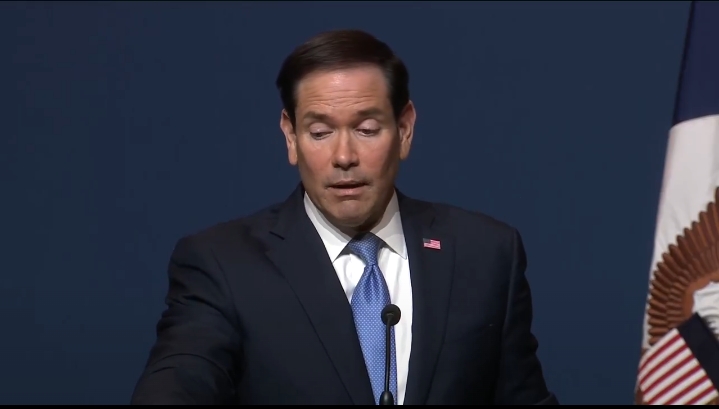
US Secretary of State Marco Rubio has reiterated Washington’s defence commitments to Saudi Arabia while blaming Iran for strengthening the military capabilities of Yemen’s Houthi movement.
In his remarks, Rubio said that the United States had defence agreements and understandings with Saudi Arabia and intended to honour those commitments, particularly in matters of a defensive nature. He also said that decisions concerning military objectives ultimately rested with the US President and Commander-in-Chief.
Rubio further argued that the Houthis would not possess their current military capabilities without what he described as direct support from the Iranian government.
His remarks raise a wider geopolitical question: Is the confrontation with the Houthis also part of a broader struggle over access, influence and security around the Bab el-Mandeb Strait and the Strait of Hormuz?
Bab el-Mandeb: A strategic maritime gateway
The Bab el-Mandeb Strait connects the Red Sea with the Gulf of Aden and the wider Indian Ocean. Its position makes it essential for commercial shipping travelling between Europe and Asia through the Suez Canal.
The Houthis’ control of significant territory in northwestern Yemen, combined with their military presence along parts of the Red Sea coast, has given the movement the ability to threaten commercial shipping.
Their attacks on vessels have affected international maritime traffic and increased the strategic importance of the conflict beyond Yemen’s borders.
For Saudi Arabia, the security of the Red Sea is particularly important because the kingdom relies on western ports and energy-export infrastructure as part of its wider economic and strategic planning.
Saudi Arabia, Washington and the campaign against Houthi influence
Rubio’s remarks come amid renewed military confrontation involving Saudi-backed Yemeni forces and the Houthis.
The Associated Press reported on 5 October 2026 that Saudi-backed Yemeni forces had recaptured several areas near Bab el-Mandeb as part of a wider offensive. AP also reported that US assistance included intelligence sharing, target identification and planning support, according to American and regional officials.
These developments demonstrate that the struggle around Bab el-Mandeb is not merely a question of military confrontation inside Yemen. Control of territory near the strait has direct implications for regional security and international shipping.
Iran and the Strait of Hormuz
The second major maritime chokepoint is the Strait of Hormuz, which connects the Persian Gulf to the Gulf of Oman and the Arabian Sea.
Iran’s geographical position along the northern side of the strait gives it considerable strategic leverage. Its military capabilities and proximity to major shipping lanes mean that tensions involving Iran can have consequences for international energy markets.
However, the strait is not legally owned or exclusively controlled by Iran. It is bordered by Iran and Oman and is an international maritime passage.
The importance of Hormuz and Bab el-Mandeb together is that pressure on either route can affect energy supplies, shipping costs and international trade.
EDITOR’S ANALYSIS: Is the objective also about limiting Iran’s regional leverage?
The editor argues that the Houthi conflict should be examined in the wider context of regional maritime power.
If Houthi military influence near Bab el-Mandeb is reduced and Saudi-backed forces regain control of strategic coastal areas, Saudi Arabia and its security partners could gain a more favourable position around the southern entrance to the Red Sea.
Such a development could reduce the Houthis’ ability to threaten shipping and limit one channel through which Iran can exert indirect regional pressure.
This raises an important question: Are Washington and its regional partners seeking not only to defend Saudi Arabia against attacks, but also to reduce the strategic leverage available to Iran-aligned forces around critical maritime routes?
That question deserves investigation. However, the claim that the United States intends to remove the Houthis solely to obtain control of Bab el-Mandeb, or to gain control over both Bab el-Mandeb and Hormuz through Saudi Arabia, has not been established by the available public evidence.
The distinction matters. Strategic benefits can be identified and analysed without automatically treating them as proof of a secret master plan.
The wider geopolitical picture
The United States has long regarded freedom of navigation, protection of energy infrastructure and the security of its regional partners as important interests.
Saudi Arabia also has its own national security interests and its own reasons for seeking to reduce Houthi military threats.
Iran, meanwhile, has developed relationships with regional armed movements that can provide strategic depth and influence beyond its borders. The extent and nature of Iranian support to the Houthis must be assessed through independent investigations, weapons evidence and credible reporting rather than accepted solely on the basis of statements by opposing governments.
The conflict therefore involves several overlapping interests: Saudi security, Iranian regional influence, American defence commitments, Houthi military strategy and the protection of international shipping.
The central question is not simply who supports whom. It is who gains strategic influence over the maritime routes on which global trade and energy supplies depend.
THE WORLD’S UPDATE — Independent Historical and Geopolitical Analysis
Sabse sach, sabse pahle.
Leave a Reply