THE WORLD’S UPDATE | PALESTINE REPORT
Author, Writer & Editor: MD MOHMMAD ABBAS
Affiliation: THE WORLD’S UPDATE
Date: November 22, 2026
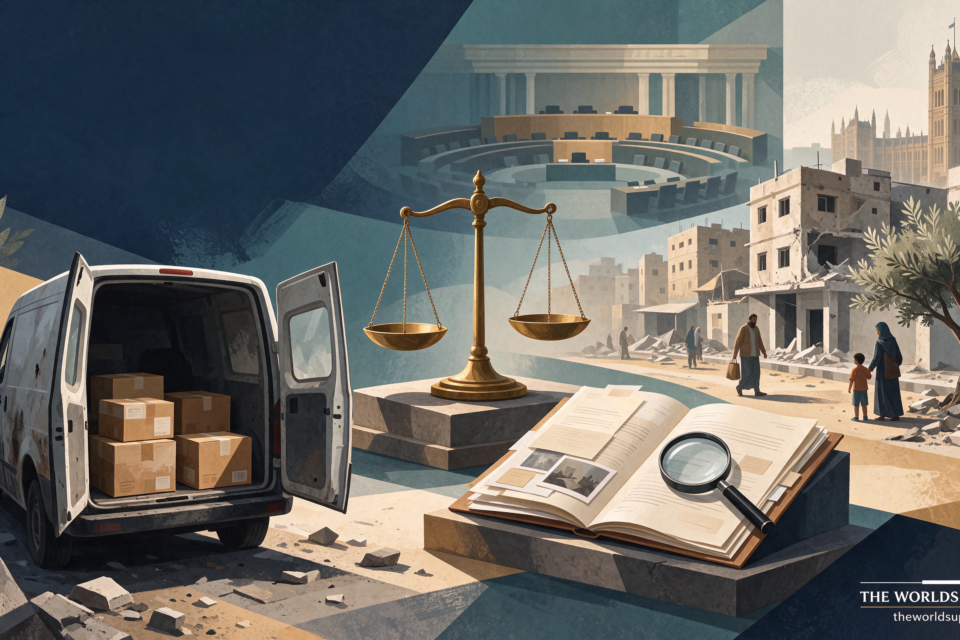
An Israeli airstrike killed three Palestinians in Gaza City on November 21 after striking a vehicle carrying food, according to Palestinian health authorities and eyewitnesses cited by Reuters. The Israeli military subsequently claimed that the three men were Palestinian Islamic Jihad operatives transporting food and logistical supplies for members of armed groups.
The strike has raised questions over the evidence supporting Israel’s allegation, the killing of Palestinians travelling with food, and the use of terrorist labels following military attacks.
Food Found in the Vehicle
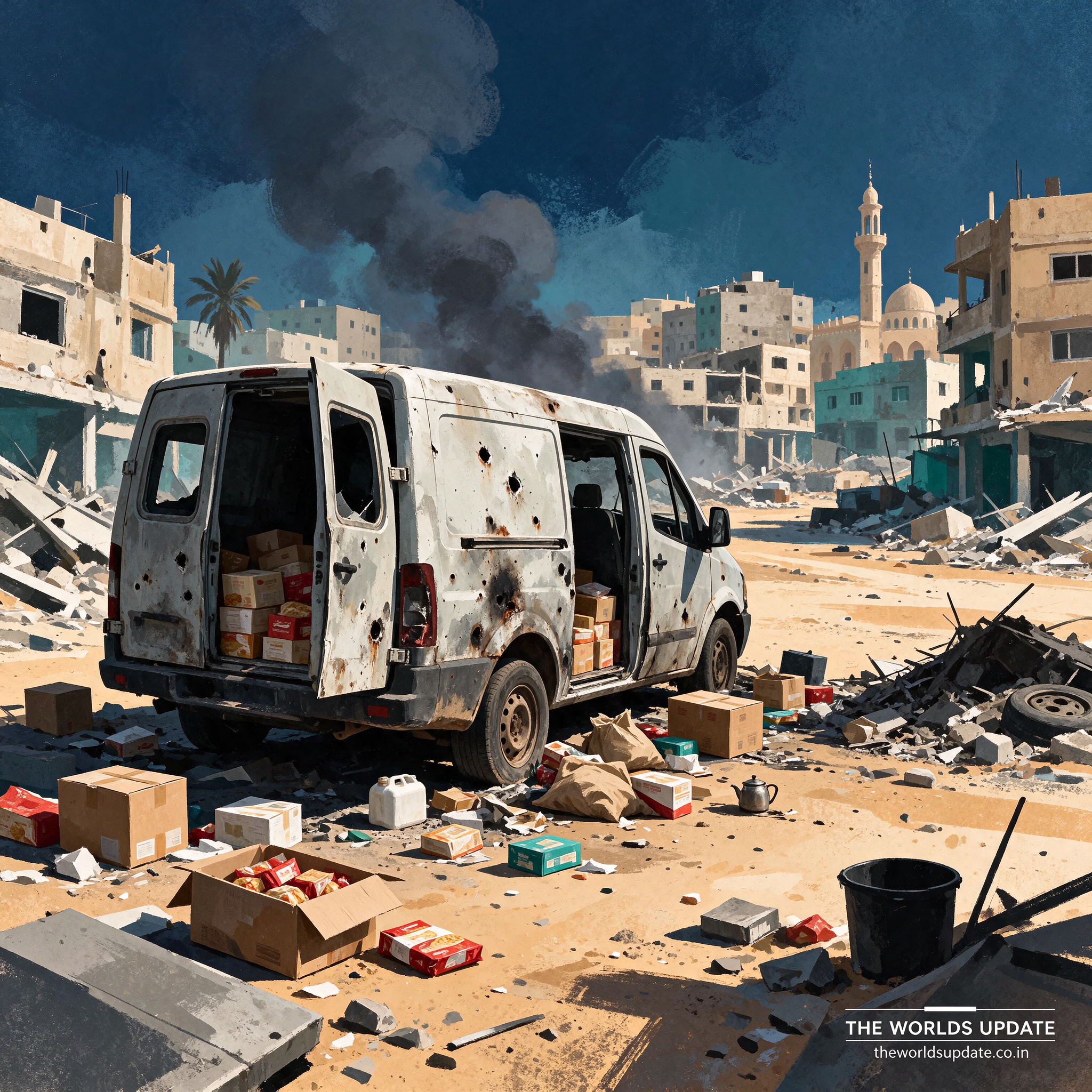
Witnesses reported that the vehicle was carrying packaged food. A Reuters witness said papers inside the vehicle carried the logo of World Central Kitchen (WCK), while food was scattered around the wreckage following the strike.
One eyewitness said the vehicle was about to stop to distribute food and drinks to children when it was hit.
The Gaza Health Ministry reported three deaths. The vehicle was struck in Gaza City’s Tel al-Hawa area.
World Central Kitchen clarified that the vehicle was not affiliated with the organisation. It said the driver had previously worked for WCK, while the other two people killed were not its employees.
The clarification regarding WCK affiliation does not establish that the vehicle was not carrying food or that the people inside were members of an armed organisation.
Israel’s Terrorist Allegation
The Israeli military claimed that the three Palestinians were Islamic Jihad operatives and that they had been travelling in a vehicle used to transport food and logistical supplies to members of armed groups.
The IDF also alleged that the men had advanced attacks against Israeli civilians and soldiers and were involved in rebuilding the capabilities of armed organisations.
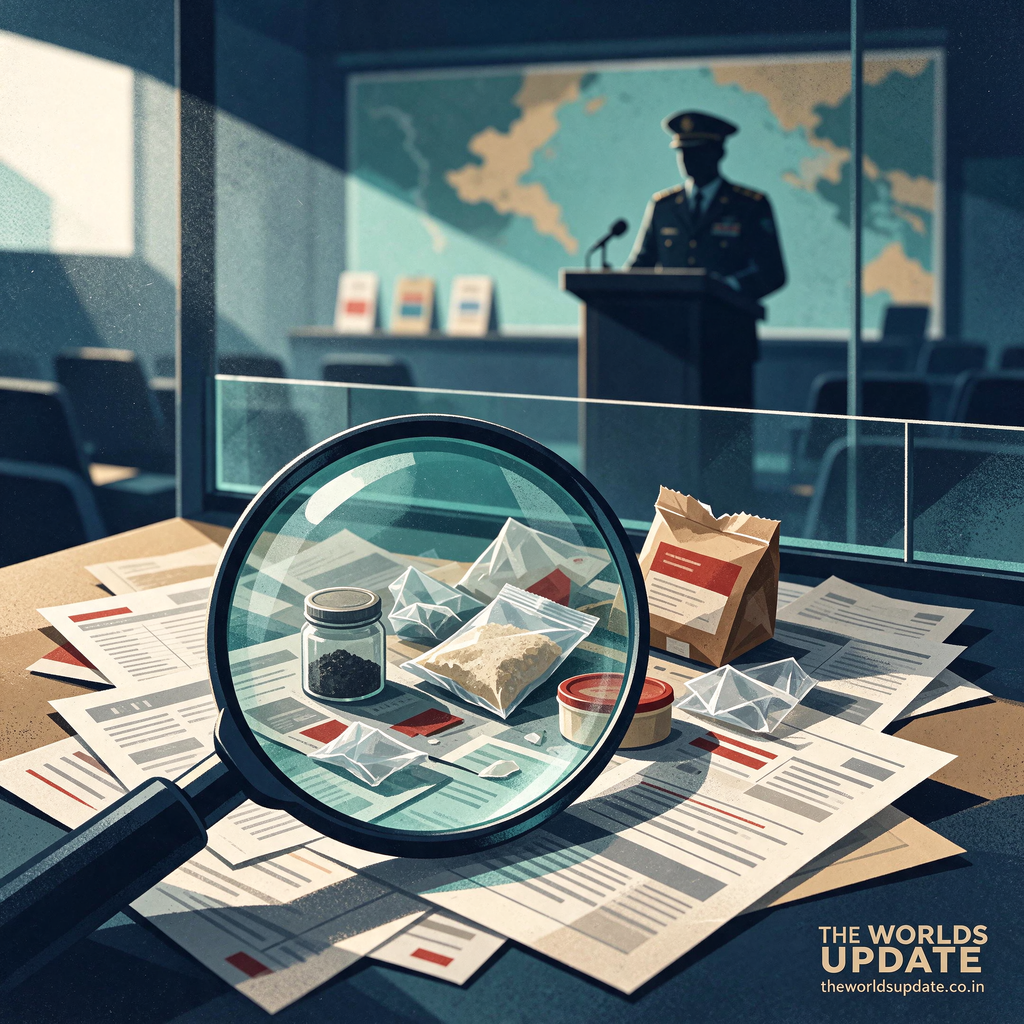
However, Reuters reported that it could not independently verify the Israeli military’s claims.
The Israeli military’s allegations should therefore be presented as its claims—not as independently established facts. The public evidence available in the reporting includes the strike, the deaths, the presence of food and witness accounts. The allegations about the identities and activities of the three men require independent verification.
Food Distribution Does Not Require International Organisation Membership
Palestinians do not need to be employees, contractors or officially affiliated workers of the United Nations, UNICEF, World Central Kitchen or another international organisation to distribute food to their own people.
People in Gaza can organise food distribution through local communities, families, volunteers and independent initiatives.
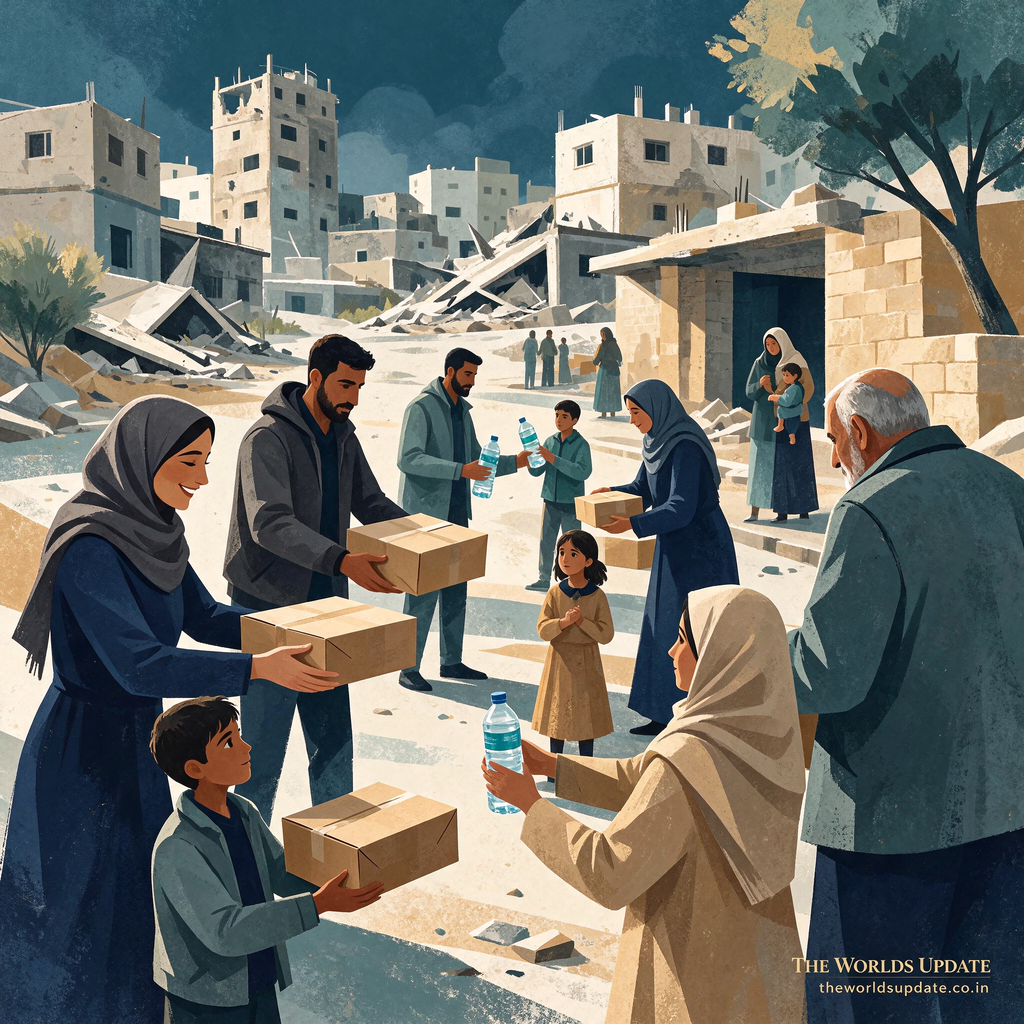
The absence of an international organisation’s official affiliation does not make food distribution illegitimate, nor does it prove that the people carrying food were terrorists.
The food reportedly found in and around the struck vehicle remains an important part of the incident. Israel’s allegations about the intended recipients of the supplies do not erase that fact.
Terrorism Labels Cannot Replace Evidence
The Israeli military has described the three Palestinians as Islamic Jihad terrorists. Such terminology is an allegation about specific individuals—not a description of the Muslim community as a whole.
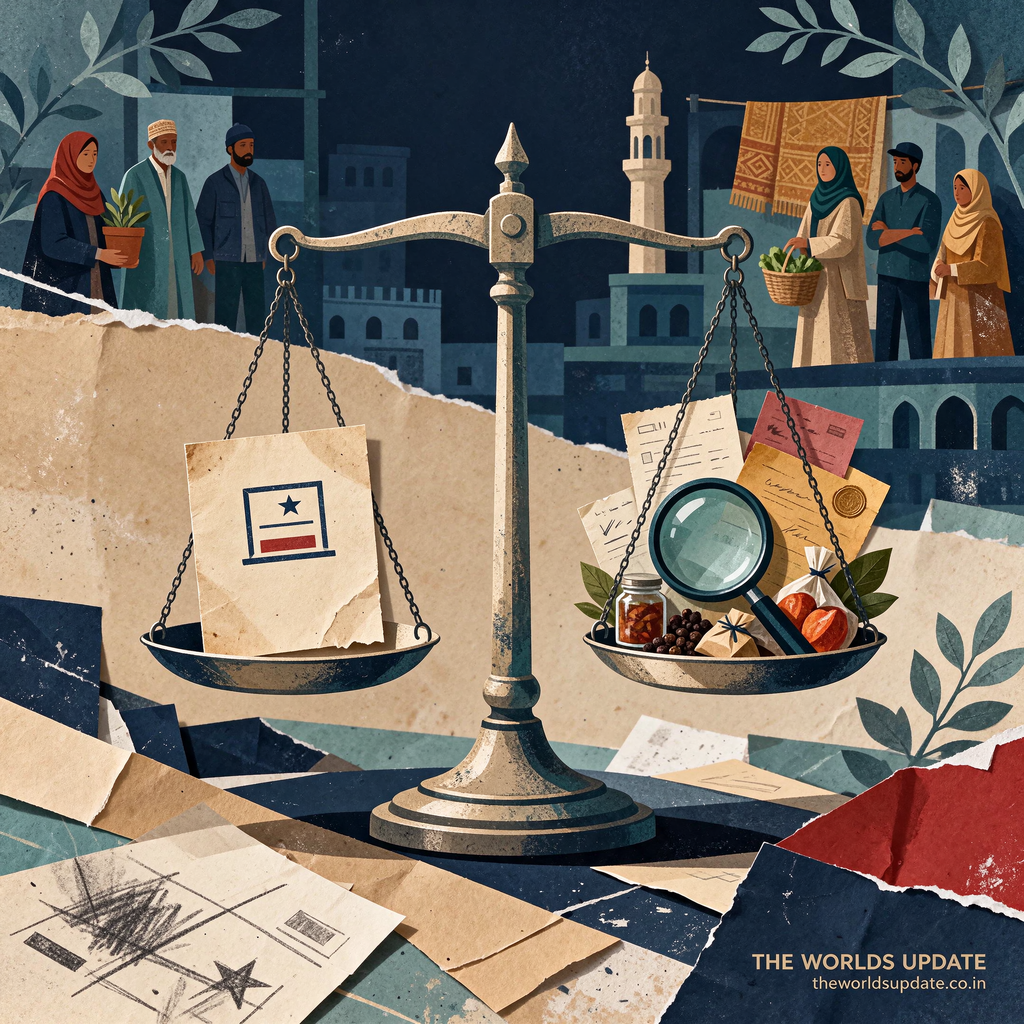
An armed organisation, its alleged members and Muslims worldwide are not synonymous. The use of the word “Islamic” in the name of an organisation must never become a justification for collective suspicion, prejudice or blame against an entire religious community.
The Israeli military’s claims about the three men must be examined independently. A statement issued by the military responsible for the strike cannot, by itself, constitute independent proof of the identities, activities or threat posed by those killed.
Palestinians in Gaza Continue to Face Destruction and Displacement
Palestinians who remain in Gaza have endured mass displacement, destruction of homes and infrastructure, severe shortages of food and basic necessities, and repeated attacks.
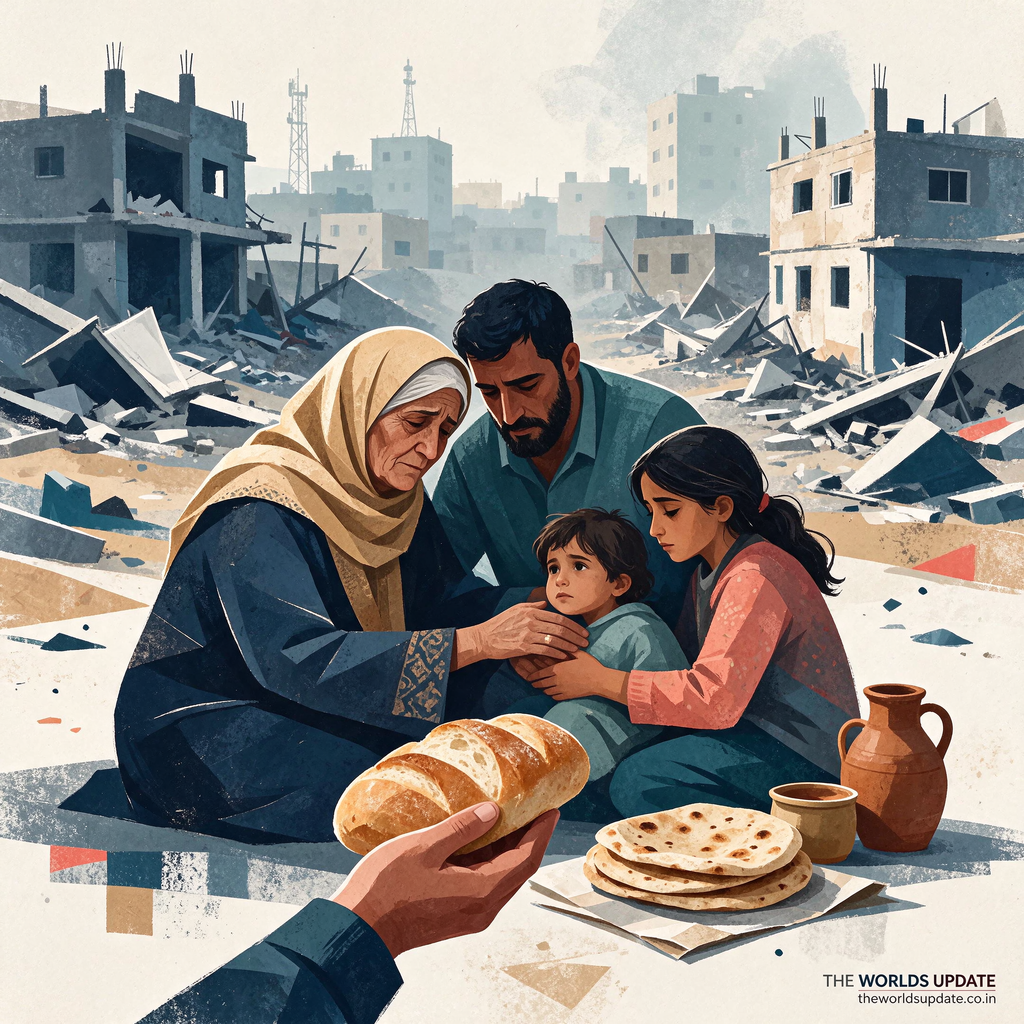
The killing of three people in a vehicle reportedly carrying food raises further concerns about the safety of those trying to help people survive under these conditions.
For families struggling to find food, every local effort to provide meals matters. Palestinians should not be forced to live in fear that those transporting food or helping their neighbours may be killed and subsequently labelled terrorists without publicly verifiable evidence.
Palestine’s History Predates the State of Israel
Palestine’s history and the Palestinian people’s presence in their homeland did not begin with the establishment of the modern State of Israel in 1948, nor with today’s Israeli political leadership.
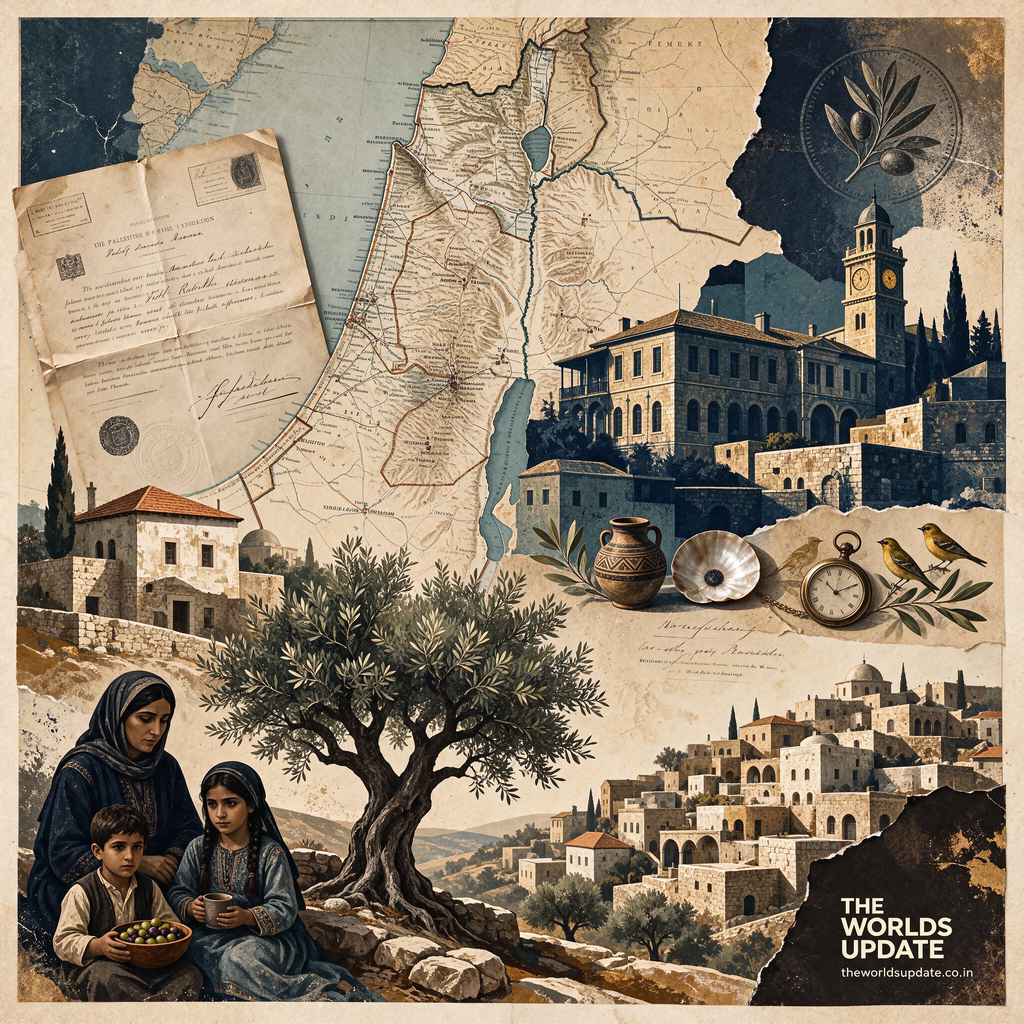
Palestine was under British administration following the First World War. The 1917 Balfour Declaration expressed British support for establishing a national home for the Jewish people in Palestine, while also stating that the civil and religious rights of existing non-Jewish communities should not be prejudiced.
The British Mandate, confirmed by the League of Nations in 1922 and formally entering into force in 1923, incorporated the Balfour Declaration. During British rule, large-scale immigration took place, while Palestinian Arab demands for independence and opposition to immigration remained central to the political conflict.
In 1947, Britain transferred the Palestine question to the United Nations. The following year, the establishment of Israel and the war resulted in the mass displacement of Palestinians—an event Palestinians remember as the Nakba.
Palestinian history, homes, communities, culture and identity cannot be erased or made irrelevant by the establishment of a state, military occupation, territorial control or political claims.
Britain’s Historical Responsibility
Britain played a documented and significant role in shaping the political framework that led to the establishment of Israel.
Its Balfour Declaration, administration of Mandatory Palestine and decisions during the Mandate period remain central to the history of the Palestine question.

The historical record establishes Britain’s role in supporting the Zionist national-home project through its policy and Mandate administration. It also documents the failure of Palestine to emerge as an independent state following British rule.
This history raises questions about Britain’s continuing political and diplomatic responsibilities toward Palestinian rights, self-determination and justice.
A Question to Britain: Would You Accept the Same Treatment on Your Own Soil?
Britain played a major role in shaping the political framework that led to Israel’s establishment in Palestine. Palestinians have since endured displacement, occupation, destruction of homes and communities, and continuing violence.

An important question must therefore be asked of the British government:
If people in Britain were subjected to the same killings, displacement, destruction of homes and military policies that Palestinians face in their own homeland, would the British government accept the same treatment for its own population?
Would Britain tolerate its own people being killed, their homes destroyed, their land taken and their communities displaced under the justification of security?
Would it accept the same military policies that Palestinians have endured for decades?
If the answer is no, why should Palestinians be expected to accept such suffering?
Human rights cannot depend on geography, nationality or political alliances. Palestinian lives deserve the same protection, dignity and justice that Britain demands for its own citizens.
Britain must confront its historical role in Palestine and its present political responsibility. Silence and selective responses to Palestinian suffering raise serious questions about the consistency of its commitment to human rights and international law.
The United Nations and Genocide Accountability
The UN Independent International Commission of Inquiry concluded in September 2025 that Israeli authorities and security forces had committed and were continuing to commit genocide against Palestinians in Gaza. The Commission identified genocidal acts and concluded that genocidal intent was established based on its assessment of statements and the pattern of conduct.
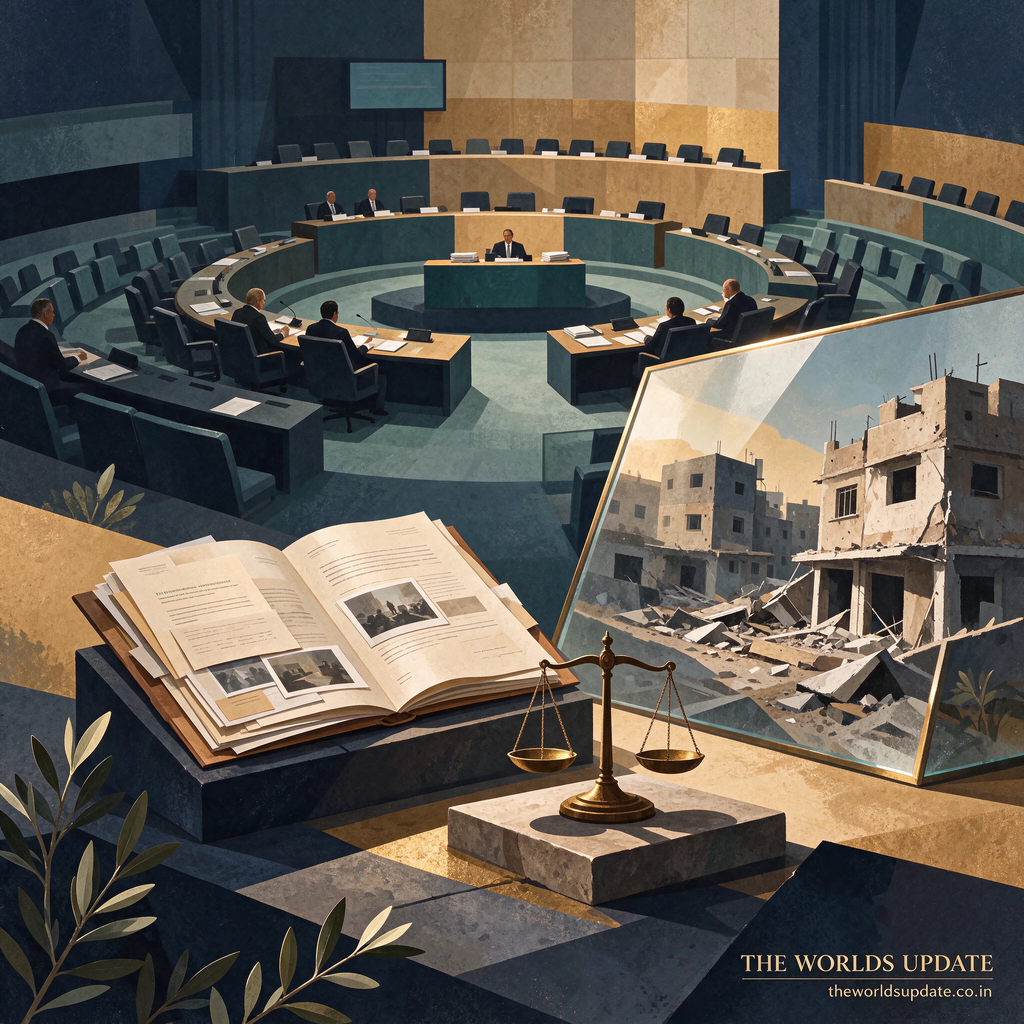
In a report published in October 2026, the Commission reiterated that genocidal acts continued in Gaza and also documented grave crimes in the occupied Palestinian territory.
These are findings of the UN Commission of Inquiry—not merely accusations made by Palestinians or media organisations. Israel rejects genocide allegations.
The international community must take these findings seriously and pursue accountability under international law.
Accountability, Not Labels
Three Palestinians were killed in an Israeli strike on a vehicle reportedly carrying food. Israel claims they were Islamic Jihad operatives. Witnesses reported food inside the vehicle, and Reuters could not independently verify Israel’s allegations.
The evidence and circumstances must be independently examined.
Palestinian lives cannot be dismissed through military labels. Food distribution cannot be automatically treated as terrorism. Occupation and Palestinian history cannot be erased from the discussion.
A label is not evidence. A military statement is not an independent investigation. Palestinian lives are not disposable.
THE WORLD’S UPDATE calls for transparent investigation, accountability and protection of Palestinians.
Author, Writer & Editor: MD MOHMMAD ABBAS
Affiliation: THE WORLD’S UPDATE
SOURCES
1. Reuters — Israeli strike kills three in vehicle carrying food in Gaza, witnesses say
https://www.reuters.com/world/middle-east/israeli-strike-kills-three-vehicle-distributing-aid-gaza-witnesses-say-2026-11-21/
2. Israeli Defence Forces — Official statement on the strike
https://x.com/IDF/status/2124182309993652528
3. World Central Kitchen — Organisation’s clarification as reported by Reuters
https://www.reuters.com/world/middle-east/israeli-strike-kills-three-vehicle-distributing-aid-gaza-witnesses-say-2026-11-21/
4. United Nations — History of the Question of Palestine
https://www.un.org/unispal/history/
5. United Nations — Independent Commission of Inquiry, genocide findings (September 2025)
https://www.un.org/unispal/document/israel-has-committed-genocide-in-the-gaza-strip-un-commission-finds-16sep25/
6. United Nations — Commission of Inquiry report, October 2026
https://www.un.org/unispal/document/coi-report-2026-14oct26/
Standing with the oppressed. Speaking for the unheard. Seeking truth without fear.