Author, Writer & Editor: MD MOHMMAD ABBAS
Affiliation: THE WORLD’S UPDATE
Date: November 18, 2026
The Regional Conflict Dynamics
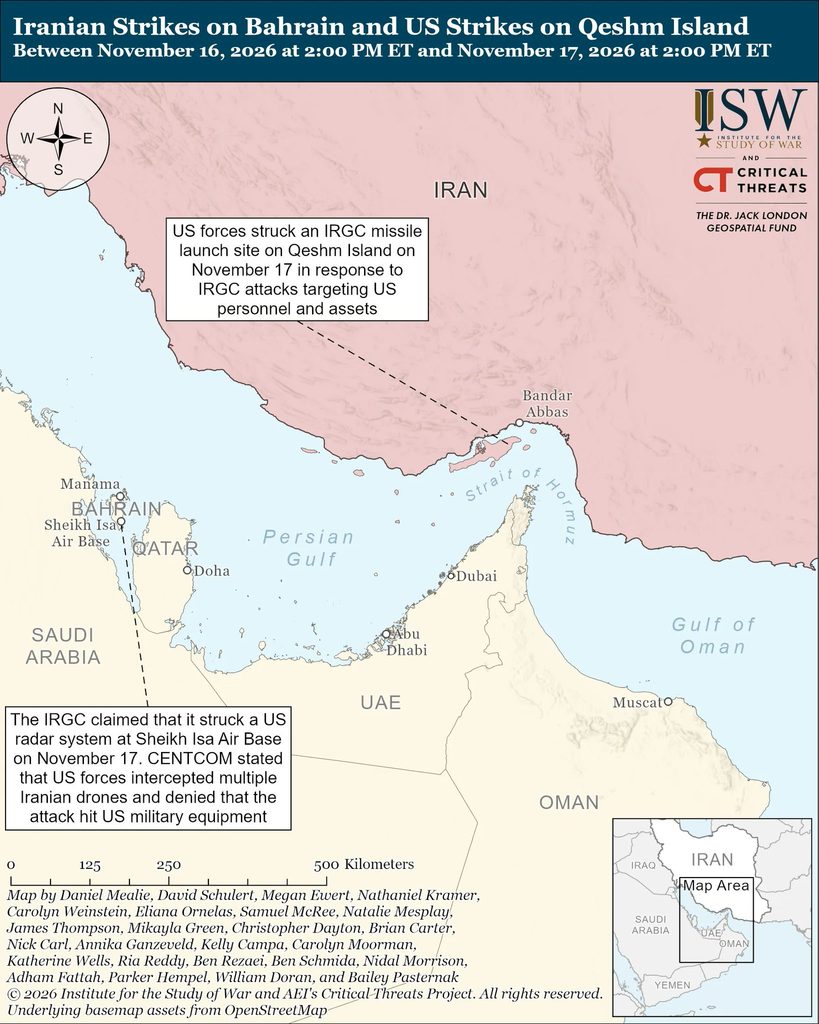
The Institute for the Study of War (ISW) has released its latest key takeaways regarding the security situation in the Middle East, highlighting ongoing military engagements across multiple fronts. According to a post on X (@TheStudyofWar), the assessments cover developments in Iran, Iraq, and the Arabian Peninsula.
Iranian Strike Campaign and US Response
The ISW reports that Iran has continued targeting US military radar systems in Bahrain. This comes amid US strikes on Iranian air defense infrastructure on Qeshm Island. The report also noted that US forces intercepted multiple Iranian drones and denied that an attack hit US military equipment at Sheikh Isa Air Base, despite IRGC claims.
Houthi Territorial Gains and Attacks
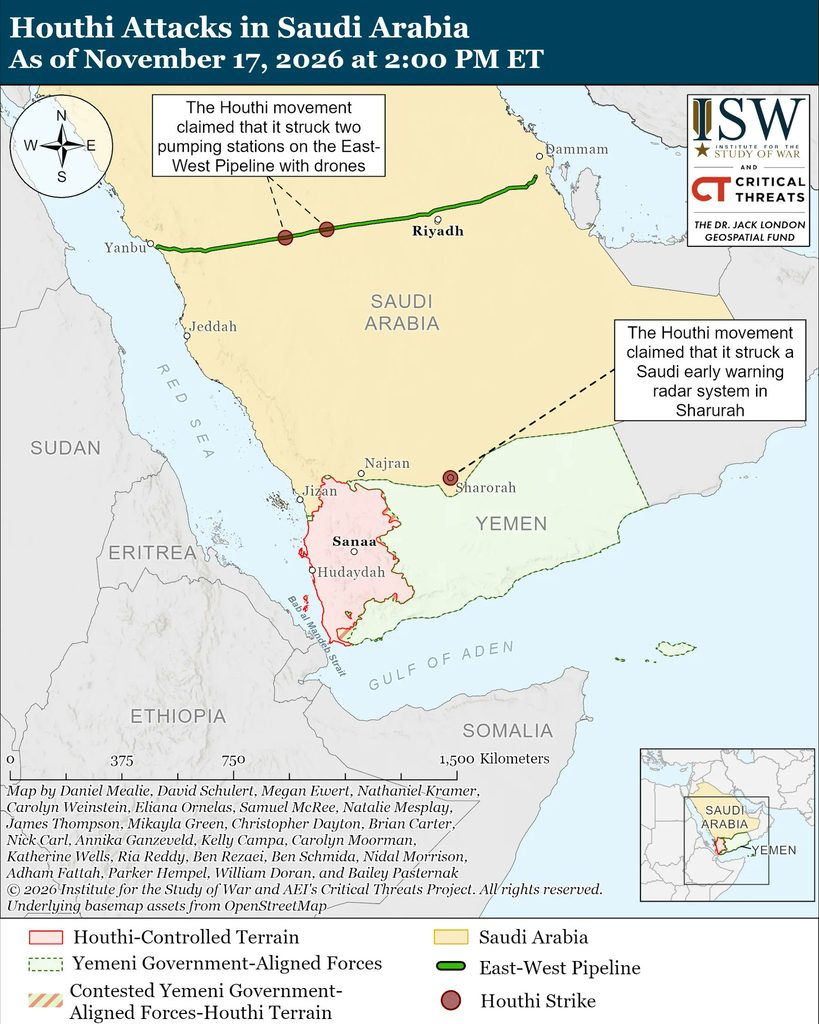
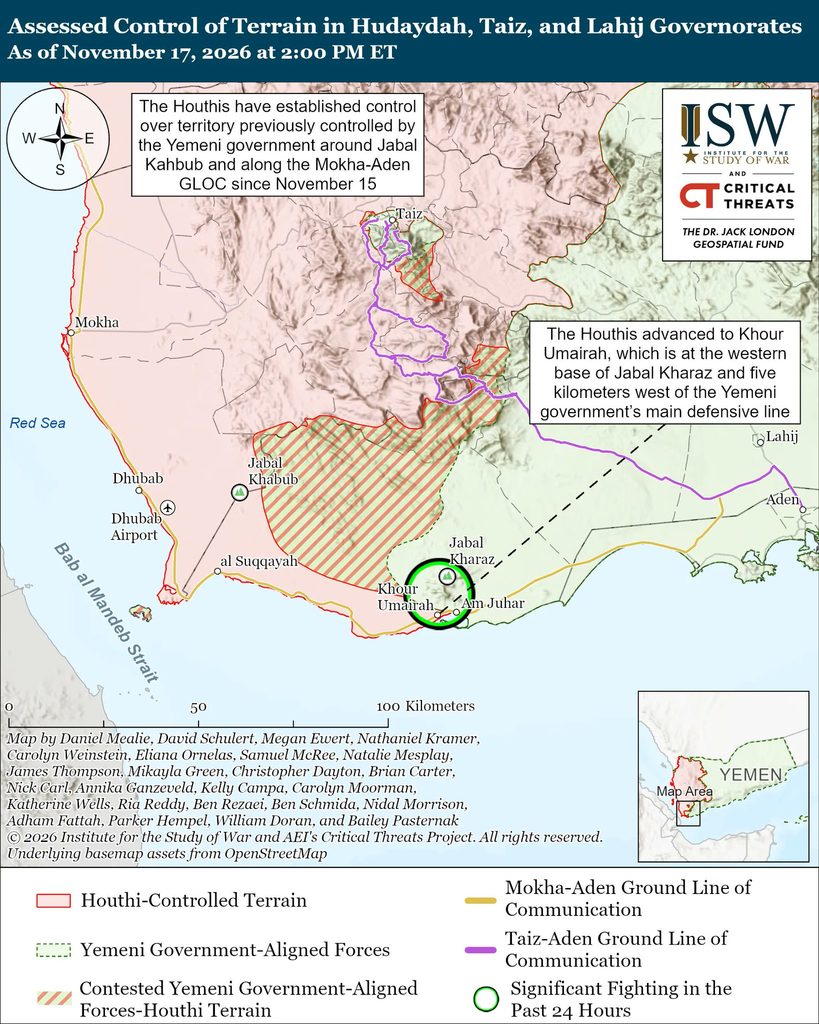
In the Arabian Peninsula, the Houthis are continuing to claim that the Bab al Mandeb Strait remains open to international traffic. However, ISW assesses that Houthi territorial gains along Yemen’s Red Sea coast and the Gulf of Aden since November 15 could allow them to more easily target international shipping. The Houthis have also claimed to strike Saudi critical infrastructure and an early warning radar on November 16-17.
Yemeni Government Advances and Internal Iraqi Dynamics
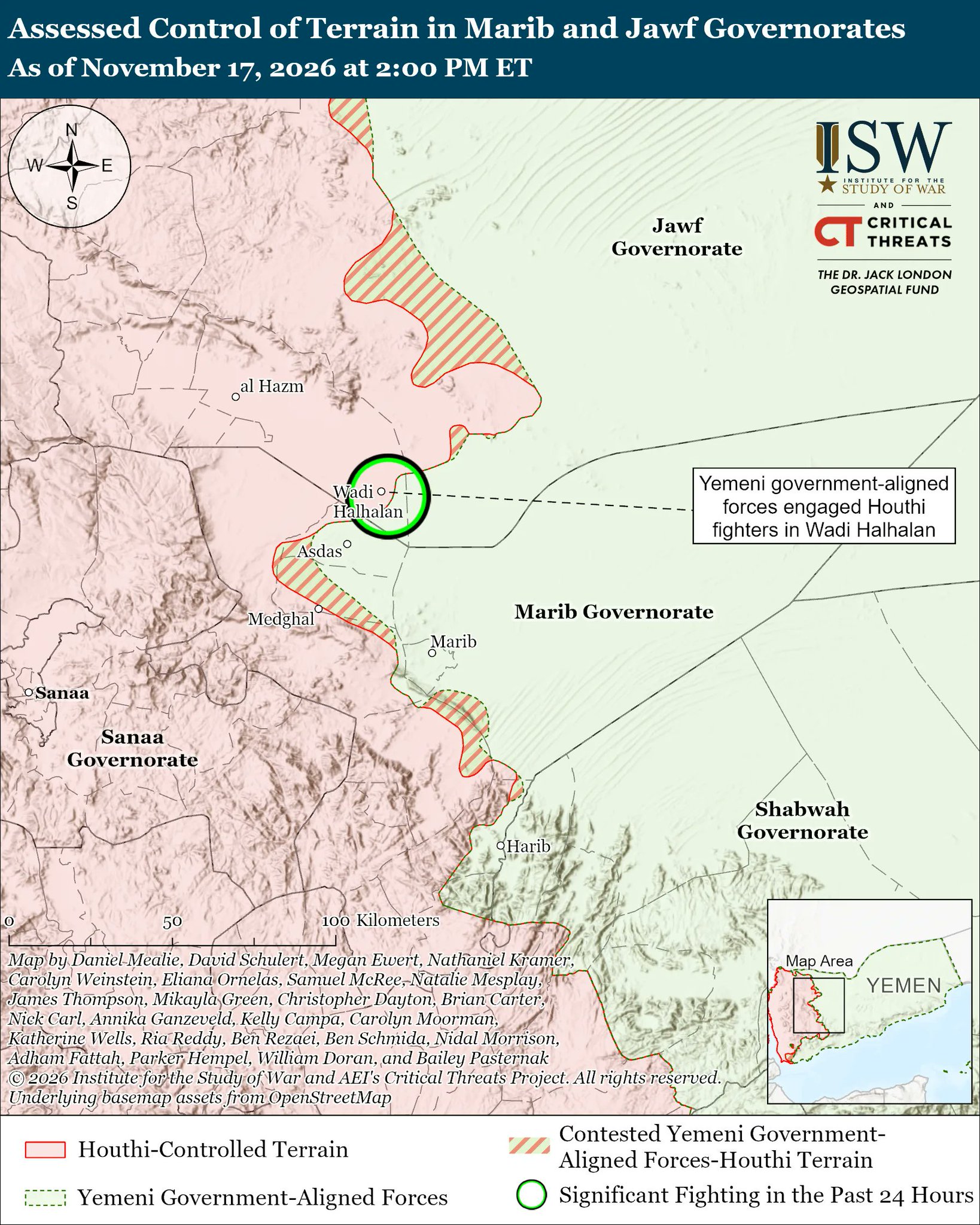
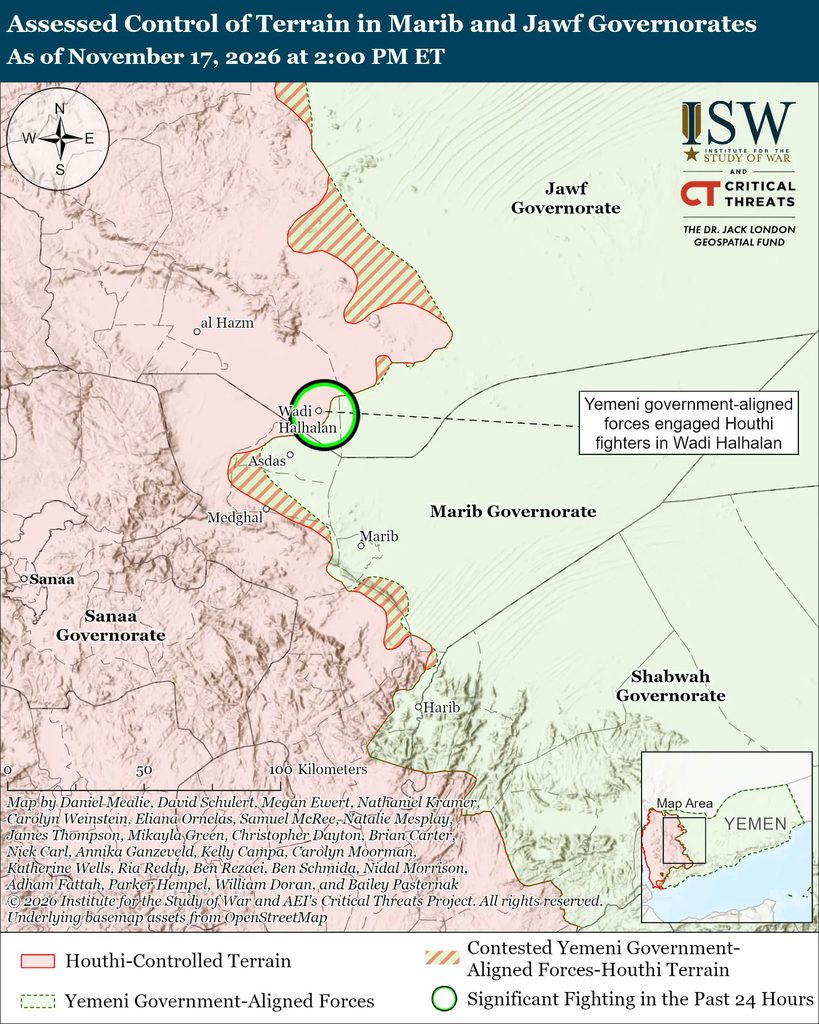
Yemeni government-aligned forces have continued to claim advances in Jawf and northwestern Marib governorates toward the capital city of al Hazm. Meanwhile, in Iraq, ISW suggests that Iraqi Prime Minister Ali al Zaydi likely aimed to reach an agreement with IRGC Quds Force Commander Esmail Ghaani to force Kataib Hezbollah’s withdrawal from Jurf al Sakhr to avoid armed conflict.
[YAHAN IMAGE 4 ADD KAREIN – Map of Terrain Control in Marib and Jawf]
(Image Credit: Institute for the Study of War / X)
The Bottom Line
The ISW report highlights an intensifying and interconnected regional conflict, characterized by direct exchanges between Iran and the US, Houthi territorial advances threatening maritime security, and complex internal political maneuverings in Iraq and Yemen. The situation remains highly volatile across the region.
Source:
Institute for the Study of War (@TheStudyofWar) on X.
Link: https://x.com/TheStudyofWar/status/2122917723013525744
THE WORLD’S UPDATE
Standing with the oppressed. Speaking for the unheard. Seeking truth without fear.