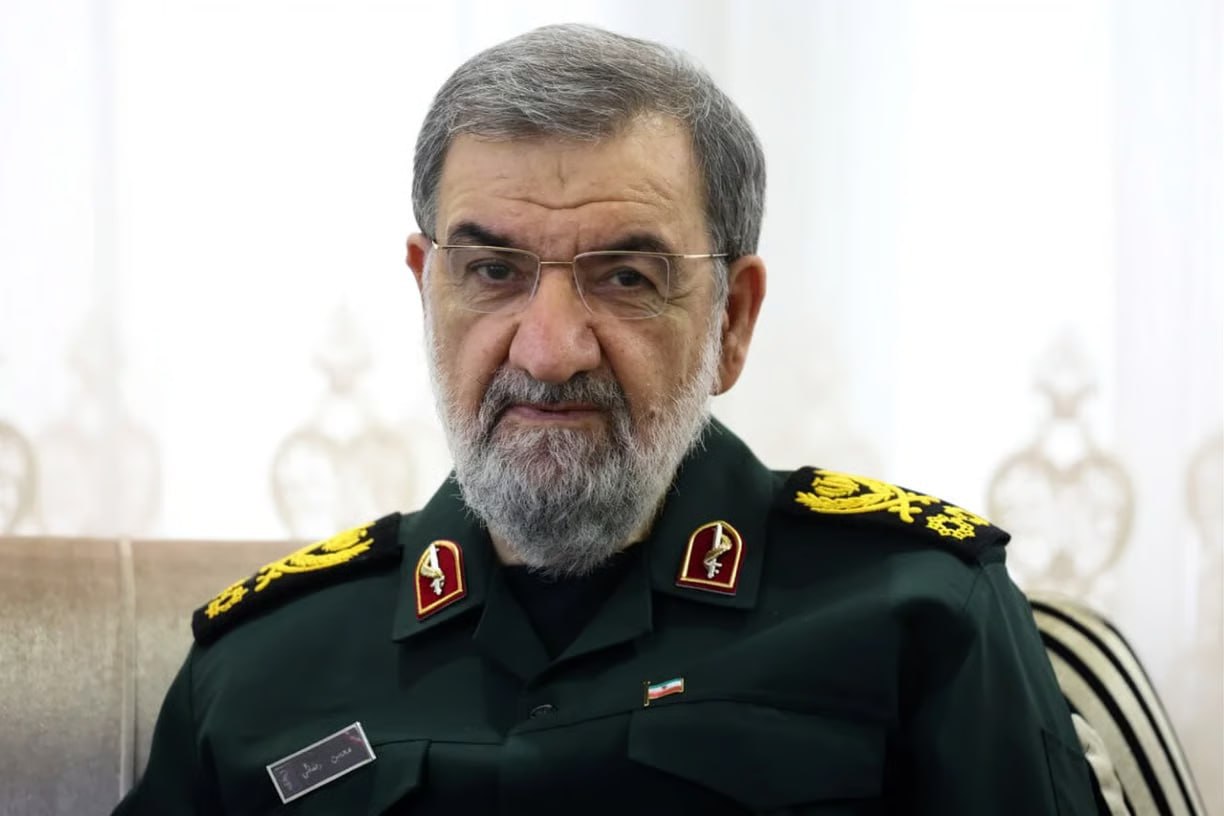
Iran has warned the United States that a renewed military confrontation could extend far beyond the Middle East.
On November 11, 2026, Mohsen Rezaei, secretary of Iran’s Supreme National Security Council, published a warning on X stating that every military base involved in an attack against Iran, from West Asia to Europe, would be considered a legitimate target for Iranian strikes.
He wrote:
“If the US launches another war against Iran, every military base involved in the aggression—from West Asia to Europe—will be a legitimate target for Iran’s lethal strikes.”
He concluded with three emphatic warnings:
“NO SAFE DISTANCE. NO SAFE HAVEN. NO IMMUNITY.”
The statement represents a warning of possible retaliation. It is not confirmation that Iran has selected or attacked any specific European military installation.
Iran says its response will not be limited to neighbouring countries
Rezaei’s warning is significant because it expands the geographical scope of Iran’s stated response to a possible renewed US offensive.
In a separate interview with Lebanon-based Al Mayadeen television, Rezaei said Iran would not restrict its retaliation to nearby American military installations.
He specifically referred to distant US bases, including installations in European countries.
He also warned countries hosting American military forces against cooperating with attacks on Iran.
According to reporting by AFP and RTE, Rezaei said that if American aircraft departed from a distant base to bomb Iran, Tehran would consider that base a target.
He also referred to the possibility of striking certain islands that he said Washington might consider beyond the reach of Iranian missiles.
Why European bases matter
The United States maintains military installations and facilities across Europe.
These installations support different activities, including air operations, logistics, intelligence, communications and military deployments.
If a future US operation against Iran involved aircraft or other military assets operating from European territory, those facilities could become part of the confrontation.
However, Rezaei has not publicly identified a specific list of European bases that Iran intends to attack.
Nor does his statement establish that every American installation in Europe would automatically be involved in a future offensive.
The distinction between a base hosting US forces and a base actually participating in military operations is important.
A warning to countries hosting American forces
Rezaei’s remarks also place pressure on governments that host US military facilities.
Countries allowing American forces to operate from their territory could face difficult decisions if Washington launches another attack against Iran.
They would have to consider their security agreements with the United States, their own national interests and the risk of becoming directly exposed to retaliation.
But the presence of American troops on a country’s territory does not, by itself, establish that the host country has participated in an attack on Iran.
The actual use of a facility, the host government’s role and the circumstances of any military operation would need to be examined separately.
Are military bases automatically legitimate targets under international law?
No. Rezaei’s declaration that every base involved in an attack would be a legitimate target is a statement of Iran’s position, not a final legal determination.
International humanitarian law applies the same targeting rules to all parties in an armed conflict.
Under the principle of distinction, an object can qualify as a military objective only when it makes an effective contribution to military action through its nature, location, purpose or use, and its destruction or neutralisation offers a definite military advantage in the circumstances.
Even when an installation qualifies as a military objective, an attack must comply with proportionality and precaution requirements.
This means:
- Civilian objects cannot be deliberately targeted.
- Attacks expected to cause excessive civilian harm in relation to the anticipated military advantage are prohibited.
- All feasible precautions must be taken to protect civilians.
- Each proposed target requires an assessment of its military role and the likely consequences of an attack.
The same legal standards apply to Iranian attacks and US or Israeli military operations.
The risk of a wider regional war
Iran’s warning comes amid continuing tensions with Washington and disputes over military operations, sanctions, the Strait of Hormuz and nuclear negotiations.
Reuters reported on November 11 that Rezaei had also rejected the idea of transferring Iran’s enriched nuclear material abroad and reiterated Tehran’s position on the country’s nuclear programme.
The warning about European military bases adds another dimension to the confrontation.
If another war begins, the consequences could extend beyond Iran, Israel and the Gulf region. Countries hosting US forces could face increased security risks, while civilian populations near military installations could face the consequences of escalation.
A conflict involving facilities across several regions would also create additional diplomatic and security challenges for NATO members and other US partners.
The central question
Iran is signalling that it wants Washington to understand that geographical distance will not necessarily protect military facilities used in an attack against its territory.
But threats of retaliation must also be judged under international law. No government has an unrestricted right to attack any location simply because it describes that location as connected to an enemy.
The United States cannot claim unlimited freedom to use foreign territory for military operations without considering the consequences for regional and international security.
Equally, Iran cannot declare every American installation a lawful target without establishing that the specific facility qualifies as a military objective under the applicable rules.
The warning is clear: Tehran is threatening to expand the geographical reach of any future retaliation. Whether such strikes would be lawful depends on the circumstances and the target—not simply on the distance from Iran or the nationality of the forces stationed there.
THE WORLD’S UPDATE
Standing with the oppressed. Speaking for the unheard. Seeking truth without fear.
Sources & References
- Mohsen Rezaei – Original statement on X, November 11, 2026
- Anadolu Agency – Iran warns military bases in Europe could be targeted in a new US war, November 12, 2026
- RTE – Iran threatens to strike US bases in Europe if used for attacks, November 11, 2026
- Reuters – Iran will not allow enriched nuclear material to leave the country, November 11, 2026
- International Committee of the Red Cross – Military objectives and the rules governing attacks
- International Committee of the Red Cross – International humanitarian law and the escalating conflict in the Middle East
- International Committee of the Red Cross – Conduct of hostilities and protection of civilians