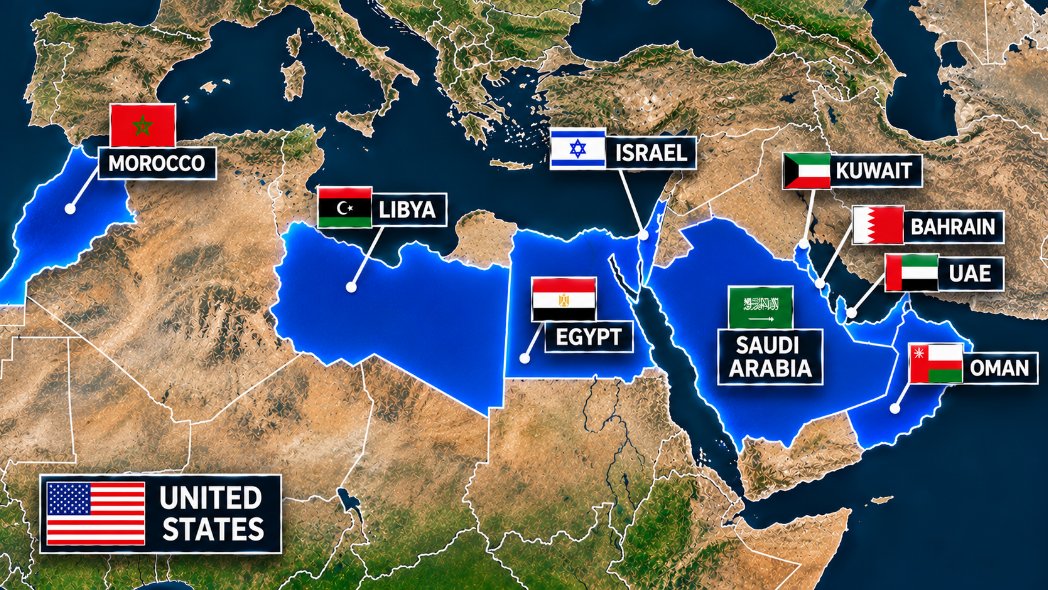
Reports of confidential Israeli-Arab security talks point to growing regional coordination against Iran. A reported ten-country meeting in Abu Dhabi in September 2026 brought together representatives from Israel, the United States and eight Arab countries. But there is an important distinction between security cooperation and a formally established military alliance.
Israel is reportedly deepening security discussions with several Arab governments to coordinate responses to Iran’s military capabilities and regional influence.
The development is significant because some of the countries reportedly involved do not maintain formal diplomatic relations with Israel.
The latest report by Israel’s Channel 14, published through C14, says the discussions are continuing through two parallel channels: direct consultations between Israeli and Arab defence officials, and a US-backed regional security forum.
The report describes the initiative as an effort to coordinate regional defence planning against potential Iranian threats.
The reported ten-country Abu Dhabi meeting
The reported diplomatic and security initiative follows a confidential meeting in Abu Dhabi in September 2026.
According to Channel 14, the expanded meeting involved representatives from:
- Israel
- United States
- Saudi Arabia
- United Arab Emirates
- Bahrain
- Kuwait
- Morocco
- Egypt
- Oman
- Libya
Israeli Prime Minister Benjamin Netanyahu and UAE President Mohammed bin Zayed reportedly participated in the gathering.
Anadolu Agency separately reported the ten-country meeting, citing Channel 14 and an unnamed Emirati official.
The reported discussions focused on regional security, Iran and the possibility of a wider defence framework.
The UAE officially confirmed that Mohammed bin Zayed met Netanyahu in Abu Dhabi. However, its public statement referred to bilateral relations and regional challenges. It did not publicly confirm the participation of all the other countries.
Countries without formal diplomatic ties are part of the reported discussions
One of the most significant aspects of the report is the alleged participation of governments that do not have formal diplomatic relations with Israel.
Saudi Arabia, Kuwait, Oman and Libya are among the countries named in the reported ten-country gathering.
Their reported participation does not necessarily mean they have accepted a formal military alliance with Israel.
It does, however, raise questions about the extent of behind-the-scenes security cooperation taking place in the region.
Separate reporting by Ynet and other media outlets has also described contacts involving regional governments during Netanyahu’s Abu Dhabi visit. The reported lists of participating countries have not been entirely consistent across publications.
Two tracks of security coordination
The latest C14 report describes two parallel channels.
First: Direct security consultations
Israeli defence officials are reportedly holding discreet discussions with representatives of Arab governments, including countries without formal diplomatic relations with Israel.
Second: A US-backed regional security forum
The report describes a regional forum intended to coordinate defence planning, security requirements and possible responses to future threats.
According to C14, discussions include Iranian missile and drone capabilities, freedom of navigation through the Strait of Hormuz and the conditions Arab governments want included in any future agreement between Washington and Tehran.
These details are reported by Channel 14. The full membership, operational arrangements and legal status of the proposed forum have not been publicly established.
This cooperation did not begin in September 2026
Regional security coordination involving Israel, Arab governments and the United States has a longer history.
In October 2025, The Washington Post reported on leaked US military documents showing that Israeli and Arab military officials had participated in meetings and planning exercises facilitated by US Central Command.
The documents described a wider regional security framework involving Israel, Saudi Arabia, the UAE, Bahrain, Egypt, Jordan and Qatar. Kuwait and Oman were also identified as potential partners in the material.
The reporting described cooperation on air and missile defence, intelligence sharing and military coordination.
In September 2026, Axios separately reported that senior military officials from Israel, the United States, Saudi Arabia, the UAE, Bahrain, Kuwait, Qatar, Jordan and Egypt had met in Germany to discuss Iran and regional tensions.
These reports provide important context for understanding the latest Abu Dhabi disclosures.
Is this a formal anti-Iran military alliance?
That remains unconfirmed.
The reported meetings and security discussions suggest closer coordination among several governments. But no publicly verified treaty establishing a ten-country military alliance has been presented in the reports examined here.
There is also no publicly confirmed evidence of a unified command structure, a collective-defence treaty or a binding commitment by every named government to participate in military action against Iran.
Security consultations, intelligence cooperation, shared radar information and an actual military alliance are different levels of cooperation.
They should not be treated as interchangeable.
What does this mean for Iran and the wider region?
If the reported coordination develops further, it could influence the regional balance of power.
A more integrated network of intelligence, radar and air-defence systems could improve the ability of participating governments to detect and respond to missile and drone threats.
It could also deepen the strategic role of the United States in regional security arrangements.
For Iran, the possibility of closer cooperation between Israel and neighbouring Arab governments would create additional security and diplomatic pressure.
But regional governments also have their own interests. Their participation in security discussions does not automatically mean they support every Israeli policy or would agree to take part in a war against Iran.
The position of each government must be assessed separately.
The larger question: Regional security or a new military bloc?
The reported discussions raise a serious question about the future of West Asian security.
Can regional governments build a security framework that reduces the risk of conflict, protects shipping and prevents attacks on civilians? Or will deeper military coordination create another confrontation between competing regional blocs?
Any security arrangement must be judged by its actual objectives, conduct and consequences.
The protection of civilians, respect for sovereignty and freedom of navigation should not depend on political alliances.
The emergence of closer Israeli-Arab security contacts is an important regional development. But the difference between reported cooperation and a formally established military alliance must remain clear.
THE WORLD’S UPDATE
Standing with the oppressed. Speaking for the unheard. Seeking truth without fear.
Sources & References
- C14 – Israel, Arab States Build Secret Front Against Iran, November 12, 2026
- C14 – Ten Countries Joined Netanyahu-Bin Zayed UAE Summit, September 29, 2026
- Anadolu Agency – Netanyahu, UAE president hold expanded meeting with officials from 10 countries, September 30, 2026
- Euronews – UAE confirms president met with Israel’s PM Netanyahu in Abu Dhabi, September 29, 2026
- Ynet – Netanyahu held secret Gulf summit on Iran, Houthis in UAE, sources say
- Axios – US, Israeli and Arab military chiefs held secret meeting on Iran, September 15, 2026
- The Washington Post – Arab states expanded cooperation with Israeli military during Gaza war, files show, October 11, 2025