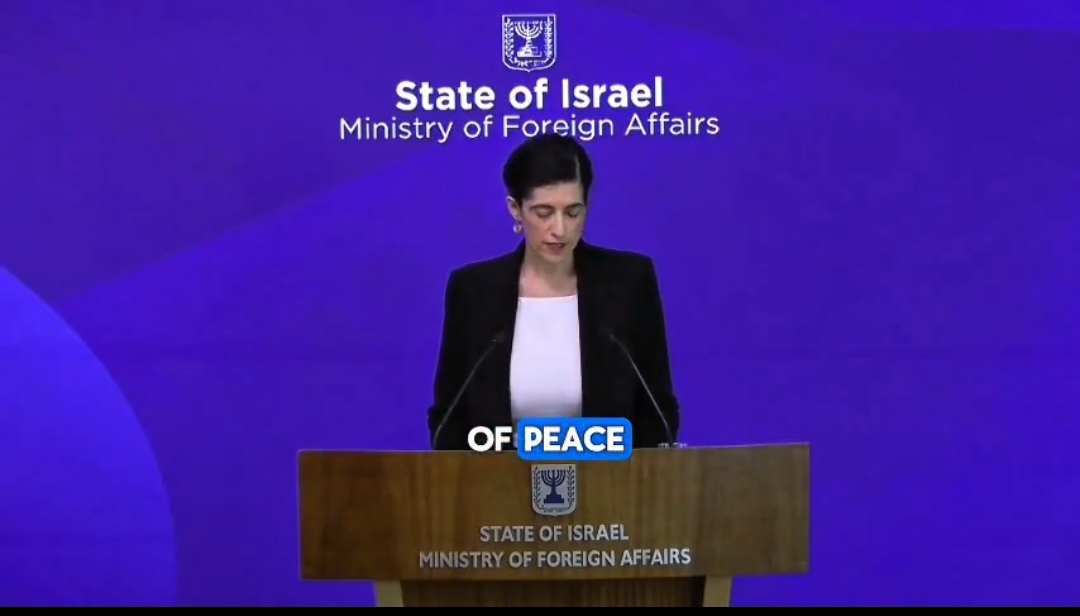
Israel’s Foreign Ministry accuses Hamas of stealing humanitarian aid to strengthen its military organisation. However, reports from the Board of Peace, UNICEF and the United Nations also document restrictions, delays and obstacles affecting humanitarian assistance in Gaza.
Israel’s Foreign Ministry has issued another statement accusing Hamas of stealing humanitarian aid entering the Gaza Strip.
The ministry says Israel is working to facilitate humanitarian assistance, while Hamas allegedly diverts supplies to support its military organisation and maintain control over Gaza’s population.
Its message is direct:
“Hold Hamas responsible. Don’t let Hamas destroy Gaza’s future.”
But a serious examination of Gaza’s humanitarian crisis cannot rely on one government’s account alone.
The question is not simply whether Hamas has interfered with aid. The question is whether Israel is also restricting, delaying or preventing essential assistance from reaching Palestinian civilians.
Aid diversion allegations: What has been documented?
Israel has repeatedly accused Hamas of stealing humanitarian supplies and exploiting aid distribution networks.
There have also been reports of interference with humanitarian operations.
On July 13, 2026, Reuters reported that UN Deputy Special Coordinator Ramiz Alakbarov accused Hamas of obstructing aid operations after armed men entered a food distribution site and assaulted truck drivers at a World Food Programme warehouse.
Hamas denied the allegations and disputed the description of the incident.
This incident deserves investigation. Aid diversion, attacks on humanitarian workers and interference with food distribution are serious violations that must be addressed.
However, evidence of particular incidents does not establish that Hamas is responsible for every aid shortage or every obstacle facing Gaza’s civilian population.
The Board of Peace has criticised Israel’s response
On November 9, the US-backed Board of Peace publicly called on Israel to facilitate more humanitarian supplies into Gaza.
The statement followed severe flooding across displacement camps.
The Board reported that more than 70,000 tents had been flooded. A collapsed sand embankment at a displacement camp in Deir al-Balah also caused multiple deaths.
It called for urgent entry of temporary shelter materials, sanitation equipment, drainage infrastructure and winter supplies.
The Board also said Israel’s response remained insufficient.
This is significant because the criticism came from the very international body associated with overseeing Gaza’s post-war reconstruction.
The Board also criticised Hamas for refusing to disarm. Its statement therefore raised concerns about both Israeli restrictions and Hamas’s refusal to meet the disarmament conditions.
Israel’s own figures need closer examination
The Israeli military says more than 91,000 tents and over 8,200 trucks carrying winter supplies have entered Gaza.
It also says that more than 850 requests covering tens of thousands of trucks have been approved.
But the military acknowledged that around half of those approved requests had not yet been carried out.
Israel attributed the delays partly to logistical and financial difficulties faced by UN agencies and international organisations.
This distinction matters.
Approval of a shipment does not necessarily mean that the shipment has crossed into Gaza. Entry does not necessarily mean that supplies have reached families who need them.
Each stage requires independent verification.
UNICEF says essential repair equipment was rejected
On November 10, Reuters reported that UNICEF said Israel had rejected equipment required to repair Gaza City’s damaged Sheikh Radwan stormwater basin.
According to UNICEF, the agency had spent a year coordinating the repair with Israeli authorities and the Board of Peace.
The damaged basin contains sewage-contaminated water and could overflow during heavy rainfall, threatening nearby streets and displacement camps.
UNICEF warned that the situation creates a preventable risk for children and families.
This raises a direct question for the Israeli government: why should essential equipment for repairing dangerous civilian infrastructure remain blocked?
The mobile homes question
Israel continues to prohibit the entry of mobile homes into Gaza.
These units could provide more substantial protection from rain and winter conditions than temporary tents.
The Board of Peace has specifically called for temporary shelter materials and other winterisation supplies to enter the territory.
Meanwhile, displaced Palestinians continue to face flooding, damaged shelters and inadequate sanitation.
Israel says its restrictions are necessary to prevent military equipment or supplies from reaching Hamas. That security argument must be examined against the actual humanitarian consequences of each restriction.
Security screening cannot become an excuse for indefinite obstruction of essential civilian assistance.
Who is responsible for Gaza’s future?
Hamas must be held accountable wherever credible evidence establishes theft, diversion, attacks on aid workers or interference with humanitarian distribution.
But accountability cannot stop there.
Israel controls critical access routes and maintains restrictions on equipment entering Gaza. Its decisions also have direct consequences for the humanitarian response.
International organisations must be allowed to operate effectively, and the distribution of aid must be independently monitored.
The future of Gaza cannot be determined by competing political statements while displaced families struggle to find shelter, clean water and basic medical care.
Israel’s Foreign Ministry wants the world to hold Hamas responsible.
The international community must also demand answers from Israel about blocked equipment, delayed supplies and restrictions affecting Palestinian civilians.
Gaza’s humanitarian crisis must be investigated through evidence, not propaganda from any side.
THE WORLD’S UPDATE — Standing with the oppressed. Speaking for the unheard. Seeking truth without fear.