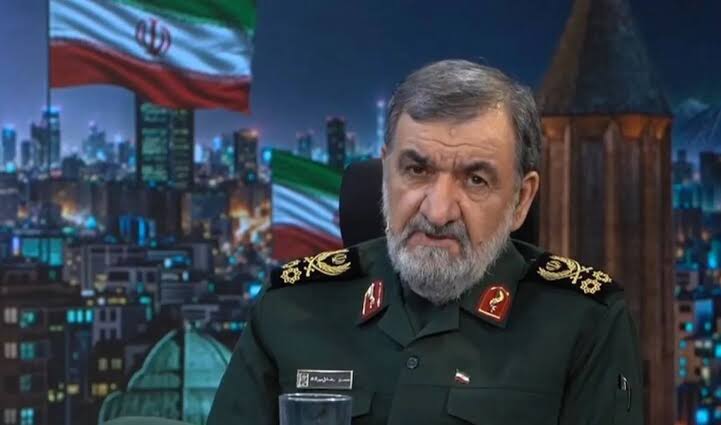
Iran’s Secretary of the Supreme National Security Council, Mohsen Rezaei, has declared that the Iranian nation inflicted a strategic defeat on US President Donald Trump on the battlefield and in the Strait of Hormuz, followed by a political defeat in Washington.
In a post published on X on November 4, Rezaei wrote:
“The Iranian nation handed Trump a strategic defeat on the battlefield and in the Hormuz—and a POLITICAL DEFEAT in Washington. Meanwhile, Americans got stuck with the bill for his war.”
He added a warning directed at any country considering confrontation with Iran:
“Anyone who takes on Iran will pay the price—from the battlefield to their own doorstep.”
WASHINGTON’S POLITICAL SETBACK
Rezaei’s remarks followed the 2026 US midterm elections, in which Democrats secured control of both the House of Representatives and the Senate, dealing a major setback to Trump and the Republican Party.
The election results came amid public dissatisfaction over the war with Iran, rising living costs and higher energy prices. The conflict became a significant issue in the campaign, with voters expressing concern about its financial consequences.
The political impact was also acknowledged within the Republican leadership. Vice President JD Vance attributed the party’s defeat to the war, writing that “the reason we lost is the war”. Trump himself acknowledged that the conflict had contributed to the Republican losses, while continuing to defend his decision to wage it.
THE COST OF WAR FOR AMERICAN HOUSEHOLDS
Rezaei’s reference to Americans bearing the financial burden highlights a central political issue facing the Trump administration: the domestic economic consequences of military conflict.
Higher fuel costs and pressure on household budgets have become part of the debate over the war. The election outcome suggests that foreign-policy decisions cannot be separated from domestic economic concerns when voters judge an administration.
However, the election result should not be attributed to the Iran war alone. Economic conditions, inflation, tariffs and broader dissatisfaction with the administration also influenced voting behaviour.
A STRATEGIC MESSAGE FROM TEHRAN
Rezaei’s statement is both a declaration of confidence and a warning to Washington. By linking the battlefield, the Strait of Hormuz and the US election outcome, Tehran is presenting the confrontation as one in which the consequences extend beyond military operations into international trade, energy security and American domestic politics.
His claim of a strategic defeat in the battlefield and Hormuz represents the Iranian leadership’s assessment; it should not be confused with an independently established military assessment. The political setback, however, is reflected in the Democrats’ capture of both chambers of Congress and the administration’s own acknowledgement that the war contributed to the result.
The message from Rezaei is clear: in Tehran’s view, the price of confronting Iran is not limited to the battlefield. It can also reach the economy and the political establishment at home.
Sources & References
- Mohsen Rezaei’s original statement on X
- Dawn — Iran says it handed Trump a strategic and political defeat
- Reuters — Trump acknowledges Iran war contributed to Republican midterm losses
- Associated Press — Democrats win control of the US House and Senate
- Axios — Trump faces difficult choices over Iran after midterm defeat
THE WORLD’S UPDATE Standing with the oppressed. Speaking for the unheard. Seeking truth without fear.