
Iran’s geographical position, Oman’s call for inclusive Gulf security, US sanctions and naval blockade, and a proposed two-day reopening plan raise wider questions about who should shape the future of one of the world’s most important shipping routes.
DOHA / MUSCAT / TEHRAN | 1 November 2026
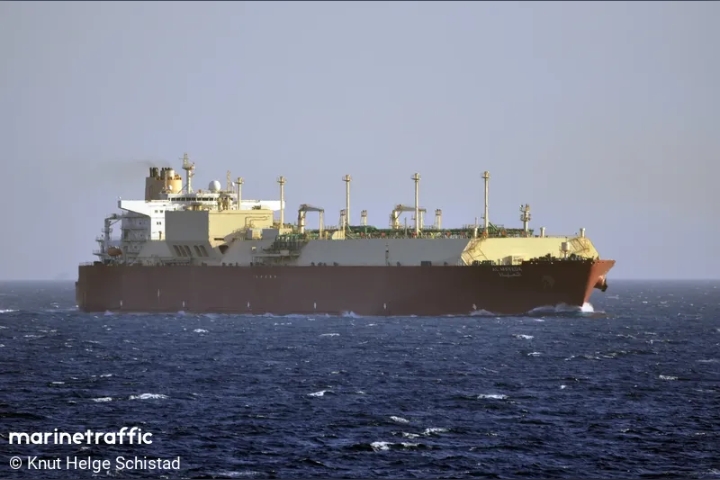
Qatar has strongly condemned an attack on its liquefied natural gas (LNG) carrier AL MAYEDA in the Arabian Gulf, after the vessel was struck by unidentified objects on October 30. The incident has added another layer of uncertainty to commercial shipping in the Gulf, where vessel movements through the Strait of Hormuz have fallen sharply amid the ongoing conflict involving Iran, the United States and Israel.
But the latest incident is not just another maritime security development. It has brought renewed attention to a wider regional question: can the security of the Persian Gulf and the Strait of Hormuz be organised without Iran, a country whose geographical position, coastline and control of the northern maritime route make it a central coastal state?
Recent statements from Oman, official bilateral agreements between Tehran and Muscat, and Iran’s proposal to reopen the Strait within two days if Washington implements its conditions suggest that the future of Hormuz is increasingly becoming a question of regional diplomacy, sovereignty and competing security arrangements.
Qatar confirms attack on AL MAYEDA
Qatar Gas Transport Company, known as Nakilat, confirmed that its LNG carrier AL MAYEDA was hit by unidentified objects while sailing in the Arabian Gulf on Friday evening, October 30.
In its official statement, Nakilat said none of the crew members had been injured and there had been no environmental impact. The vessel remained in a safe and operational condition, while the company continued assessing the impact of the incident in coordination with maritime security authorities.
The company did not identify the objects that struck the vessel. It also did not name a suspected attacker or disclose a confirmed impact location.
On November 1, Qatar’s Ministry of Foreign Affairs issued a separate statement strongly condemning the attack. Doha described the incident as a dangerous act threatening maritime navigation and the security of global energy supplies.
Qatar also said it reserved the right to take all necessary measures, in accordance with international law and the United Nations Charter, to protect its assets, vessels and crews.
The ministry confirmed that the relevant authorities had begun investigations to establish the circumstances of the incident and identify those responsible.
Qatar further warned that attacks on energy carriers could have serious consequences for regional stability, the global economy, the marine environment and water security.
The wording of Qatar’s statement is important. Doha has condemned the attack and reserved its legal rights, but it has not publicly identified the party responsible.
As of November 1, the attacker, weapon and precise location of the impact remain unconfirmed by the official statements.
What the available AIS record tells us
An earlier AIS observation supplied for this investigation recorded AL MAYEDA on October 30 at 20:19 UTC at the following position:
- Latitude: 26.1734° N
- Longitude: 52.8732° E
- Speed over ground: 12.6 knots
- Course over ground: 271°
- Heading: 271°
- Navigation status: Underway using engine
This snapshot indicates that the vessel was moving westward at the recorded time.
However, an individual AIS observation cannot establish the exact time or location of an attack. It cannot show whether the vessel changed speed or course before or after the incident, nor can it identify the weapon or attacker.
The coordinates are in the Arabian/Persian Gulf, west of the Strait of Hormuz. Nakilat’s public statement has not provided a precise attack location. Therefore, the available AIS record must not be presented as proof that AL MAYEDA was struck inside the Strait itself.
A complete historical AIS track, incident coordinates and an official technical assessment would be needed to reconstruct the vessel’s movement and the circumstances of the attack more accurately.
Hormuz shipping movements fall sharply
The AL MAYEDA incident comes at a time when commercial traffic through the Strait of Hormuz is already facing serious disruption.
A November 1 report published by Gulf Times, citing Reuters and vessel-tracking data from maritime intelligence firm Kpler, said that only five commodity vessels transited the Strait on Saturday. No commodity-vessel transit was registered for Sunday in the data available at the time of reporting.
The previous weekend had recorded 31 such transits.
These figures indicate a sharp decline in tracked commercial commodity movements. They do not prove that absolutely no vessel crossed the Strait: ships may travel with their AIS transponders switched off or may otherwise remain outside the tracking data.
The Strait is one of the world’s most important energy chokepoints. Before the current conflict, it carried approximately one-fifth of global crude oil and LNG shipments.
A prolonged disruption therefore affects not only Iran and the Gulf states but also major energy-importing economies across Asia and other regions.
Iran’s geographical position is central to the balance of power
The geography of the Persian Gulf is a major part of the regional security equation.
Iran occupies a substantial part of the northern coastline of the Persian Gulf and has a long coastline extending towards the Gulf of Oman. Its southern ports, islands and maritime approaches give it a strategically important position around the northern side of the Strait of Hormuz.
Bandar Abbas, Qeshm Island and Larak Island are among the important geographical features in this maritime region.
Oman, meanwhile, occupies the southern side of the Strait, including the Musandam Peninsula. The Strait is therefore not exclusively Iranian territory. Iran and Oman are its two principal coastal states, with separate maritime jurisdictions.
This geography creates a strategic reality: any maritime security arrangement in Hormuz must account for both countries.
Iran’s coastline, ports, islands and proximity to the shipping lanes give it a central role in regional maritime security. At the same time, Oman’s geographical position and its territorial waters make its participation equally important.
The International Maritime Organization (IMO) confirms that the existing Traffic Separation Scheme in the Strait was proposed jointly by Iran and Oman and adopted in 1968 to improve navigational safety and reduce collisions.
The IMO’s current operational guidance also distinguishes between two routes:
- Northern route: through Iranian waters, with operational routing responsibility assigned to Iran.
- Southern route: through Omani waters, with operational routing responsibility assigned to Oman.
The IMO says the coastal states are responsible for operational routing and traffic management. This establishes that Iran has an official operational role in the northern route, while Oman retains its role in the southern route.
It does not establish that Oman has transferred its territorial waters or entire maritime authority to Iran.
Oman says Gulf security cannot exclude Iran
One of the most significant recent diplomatic developments came on October 26, when Oman’s Foreign Minister, Sayyid Badr Albusaidi, delivered a lecture titled Inclusive Security in the Gulf at Girton College, University of Cambridge, in the United Kingdom.
His message was unusually direct.
He called for a regional security framework involving all six Gulf Cooperation Council states, Iraq and Iran.
The Omani Foreign Minister said Iran had been systematically excluded from meaningful participation in regional security arrangements for nearly half a century, with negative consequences for Iran and the wider region.
He also challenged the idea that the Arab states of the Gulf and Iran are inherently antagonistic.
One of the most important statements in his lecture was:
“Any Gulf security architecture that doesn’t include them is inherently unstable. It’s structurally unsound.”
The statement reflects Oman’s position that Iran cannot simply be excluded from decisions concerning the security of the Persian Gulf.
Albusaidi called for the eight Gulf states to take collective responsibility for regional security and proposed a non-aggression pact between them as a long-term objective.
He also argued that external partnerships should no longer form the primary basis of the regional security architecture. Instead, regional countries should take the leading role, while external relationships could increasingly focus on economic cooperation and investment.
This is a significant diplomatic position because it questions a security model built primarily around military partnerships with powers outside the region.
It does not mean Oman has rejected all cooperation with the United States or other external partners. Rather, the Foreign Minister’s stated position is that regional states themselves must take primary responsibility for their security.
Did Oman hand over its part of Hormuz to Iran?
The question of how Iran and Oman divide maritime responsibilities deserves particular attention.
There has been speculation that Oman is allowing Iran to manage the wider Strait while maintaining a neutral position in the conflict. However, available official documents do not establish that Oman has handed over its territorial waters or its entire part of the Strait to Iran.
The official record shows something more specific.
On June 23, 2026, Oman and Iran issued a joint statement reaffirming their status as the coastal states of the Strait of Hormuz. Both countries emphasised their sovereignty and sovereign rights over their respective territorial waters.
They agreed to maintain a joint working group between their foreign ministries to discuss the future administration of navigation, maritime services and associated costs.
On August 25, following consultations between the two foreign ministers in Tehran, the countries announced further discussions on a phased framework.
The proposal included:
- A temporary joint navigational corridor through the Strait.
- A joint project to clear mines.
- Negotiations on a permanent navigational corridor.
- Future administration of the Strait.
- Information-sharing and maritime traffic management.
- Cooperation on navigational and security services.
The two countries also stressed the importance of discussions with other Gulf coastal states.
These documents demonstrate growing Iran-Oman cooperation, but they also show that permanent joint administration was still under negotiation.
Why might Oman favour cooperation?
There are strategic reasons why Oman may prefer a cooperative arrangement with Iran rather than a confrontational approach.
Oman has long maintained a diplomatic role between regional and international powers. It has also described its foreign policy as constructive neutrality.
A cooperative arrangement with Iran can help Oman protect its own maritime interests, maintain communication with Tehran and participate in decisions affecting one of the world’s most important shipping routes.
It may also reduce the risk that a confrontation between Iran and Western military powers spills directly into Omani territory and waters.
However, the claim that Oman has handed over control because it fears pressure from the United States, Israel or other Western countries is an interpretation, not an established fact. Oman’s official statements emphasise sovereignty, regional cooperation and shared responsibility.
The documented position is that Muscat wants Iran included in the regional security framework and is negotiating future navigation arrangements with Tehran.
The United States: sanctions and a naval blockade
Iran’s argument about its security cannot be understood without examining the restrictions imposed by Washington.
The United States maintains a comprehensive sanctions regime against Iran. These measures affect financial institutions, oil-related activities, shipping, trade and international financial transactions.
On October 15, 2026, the US Treasury Department announced another action under its Operation Economic Outcast initiative, targeting financial networks and institutions it said were facilitating Iranian sanctions evasion.
Washington says these measures are intended to restrict revenue channels supporting the Iranian government, military and affiliated groups.
Iran, on the other hand, argues that US sanctions place enormous economic pressure on the country and restrict its ability to conduct normal international trade.
There is also a separate issue: the US naval blockade against Iranian ports.
According to a July 13 statement by US Central Command, the United States resumed the blockade against maritime traffic entering and leaving Iranian ports from July 14.
CENTCOM said the blockade applied to vessels travelling to or from Iranian ports and coastal areas, while it would continue supporting maritime traffic for vessels not violating the blockade.
The US military also reported that more than 140 vessels had previously been redirected during the blockade’s earlier implementation.
This distinction matters. Economic sanctions and a naval blockade are different policy measures. The US blockade is officially described as targeting maritime traffic entering or leaving Iranian ports, not as a blanket closure of every international shipping route through the Strait of Hormuz.
Nevertheless, the blockade is a major part of the confrontation between Washington and Tehran.
For Iran, the combination of economic restrictions and a naval blockade is a central issue in negotiations over the future of the Strait.
For Washington, the measures are part of its strategy to pressure Iran and restrict its financial and maritime activities.
The political disagreement is therefore not simply about whether commercial vessels should be allowed through Hormuz. It is also about the wider conditions under which Iran is expected to restore normal navigation while facing sanctions and maritime restrictions.
Iran proposes a two-day plan to reopen Hormuz
A new diplomatic proposal emerged on November 1.
Iranian Foreign Minister Abbas Araghchi told Al Jazeera that Tehran was discussing a plan with Qatari mediators that could reopen the Strait of Hormuz within two days if the United States implemented Iran’s conditions.
According to Araghchi, the proposal envisages the United States implementing a set of measures on the first day, followed by the reopening of the Strait and restoration of navigation on the second day.
He said the proposal had evolved from an earlier Iranian plan after discussions with Qatari mediators.
Araghchi also stated that Iran was prepared for both diplomacy and defence and would not surrender its independence under economic pressure.
The precise details of every measure in the two-day proposal have not been publicly confirmed in the available reporting. It would therefore be premature to describe all Iranian conditions as accepted or agreed.
Reuters reported that Iranian negotiators and Qatari mediators held a third consecutive day of discussions in Doha on November 1. The talks were coordinated through regular contacts with Washington.
However, no final agreement had been announced.
The proposal is significant because it links the reopening of the Strait to a broader diplomatic understanding rather than treating maritime navigation as an isolated issue.
The central question: who should decide Gulf security?
The developments reveal a fundamental disagreement over the future security structure of the Persian Gulf.
Iran argues that it is a major coastal state and cannot be excluded from decisions concerning the security of its own maritime neighbourhood.
Oman has publicly supported an inclusive regional framework, arguing that excluding Iran creates an unstable security system.
The United States continues to use sanctions and a naval blockade as instruments of pressure against Tehran, while maintaining that it supports the movement of vessels not violating the blockade.
Qatar, meanwhile, has condemned the attack on AL MAYEDA and called for an investigation, while reserving its rights under international law and the UN Charter.
These positions raise a difficult but necessary question: can international navigation remain secure if the countries that physically border and manage the Strait are excluded from the central security decisions?
At the same time, the rights of commercial vessels, the safety of seafarers and the interests of other Gulf countries cannot be ignored.
Iran’s sovereignty over its territorial waters, Oman’s sovereignty over its own waters and the internationally recognised rules governing passage through straits must all be considered. The legal debate over transit passage is particularly complex because Iran signed the UN Convention on the Law of the Sea but has not ratified it and has maintained objections to parts of its transit-passage regime.
The existence of international navigation rights does not remove the sovereignty of coastal states. Equally, coastal sovereignty does not automatically settle every question about the passage of foreign commercial ships.
A durable arrangement will therefore require both coastal-state cooperation and clear protections for international navigation.
What remains unconfirmed
Several important questions remain open as of November 1:
- Who or what struck AL MAYEDA on October 30?
- What was the precise location of the incident?
- What technical damage did the vessel sustain?
- Will the Iran-Oman temporary navigation corridor become operational?
- Will Washington agree to the measures demanded by Tehran?
- Can Qatar’s mediation produce a final agreement?
- Will tracked commercial shipping movements through Hormuz return to normal?
No available official statement identifies the attacker responsible for the AL MAYEDA incident. The vessel’s AIS observation does not establish the impact location. The Iran-Oman joint statements confirm negotiations on navigation management, not a transfer of Omani territorial control to Iran. And the two-day reopening proposal remains under discussion, not an implemented agreement.
Conclusion: Gulf security requires regional participation
The attack on AL MAYEDA demonstrates how vulnerable commercial energy shipping remains during the current conflict. Qatar’s condemnation and its call for an investigation underline the need to protect civilian vessels, crews and the marine environment.
But the wider diplomatic picture is equally important.
Oman’s Foreign Minister has openly argued that a Gulf security structure excluding Iran cannot be stable. Official Iran-Oman statements show that both coastal states are discussing joint navigation arrangements, while the IMO recognises their separate operational responsibilities over the northern and southern routes.
At the same time, US sanctions and the naval blockade remain central obstacles in negotiations with Tehran.
The future of Hormuz will not be determined by geography alone, nor by military pressure alone. It will depend on whether the countries of the region can negotiate a system that respects sovereignty, protects commercial navigation and prevents the Strait from becoming a permanent theatre of confrontation.
For the international community, the challenge is not simply to demand that Iran reopen the Strait. It is also to address the wider conflict, the restrictions imposed on Iran, the security concerns of neighbouring states and the protection of every commercial vessel using the waterway.
The Persian Gulf cannot have lasting security through the exclusion of one of its principal coastal states. Nor can that security be achieved at the expense of the lawful rights and safety of other countries and their commercial ships.
Sources & References
Qatar and the AL MAYEDA incident
- Nakilat — Official confirmation of the AL MAYEDA incident, 30 October 2026
- Qatar News Agency — Qatar condemns attack on LNG carrier, 1 November 2026
- Qatar News Agency — Qatar Gas Transport Company announces vessel attack, 1 November 2026
Oman, Iran and regional security
- Oman Ministry of Foreign Affairs — Minister’s full lecture on inclusive Gulf security, 26 October 2026
- Oman Ministry of Foreign Affairs — Minister calls for collective regional security, 26 October 2026
- Oman Ministry of Foreign Affairs — Joint statement between Oman and Iran, 23 June 2026
- Oman Ministry of Foreign Affairs — Iran-Oman consultations on future Hormuz navigation, 25 August 2026
Maritime navigation and geography
- International Maritime Organization — Strait of Hormuz shipping routes and operational guidance
- International Maritime Organization — Strait of Hormuz and the Middle East maritime situation
- United Nations Treaty Collection — Iran-Oman maritime boundary agreement, 2015
Shipping movements and diplomacy
- Gulf Times / Reuters — Shipping slows through Strait of Hormuz after tanker attacks, 1 November 2026
- Al Jazeera — Araghchi discusses two-day plan to reopen Hormuz, 1 November 2026
- Reuters — Iran and Qatari mediators hold third day of talks, 1 November 2026
US sanctions and blockade
- US Central Command — Resumption of naval blockade against Iranian ports, 13 July 2026
- US Department of the Treasury — Operation Economic Outcast, 15 October 2026
- US Treasury — Official Iran sanctions programme and recent actions
THE WORLD’S UPDATE
Sabse sach, sabse pahle.
Leave a Reply