
WASHINGTON / MIDDLE EAST | November 1, 2026
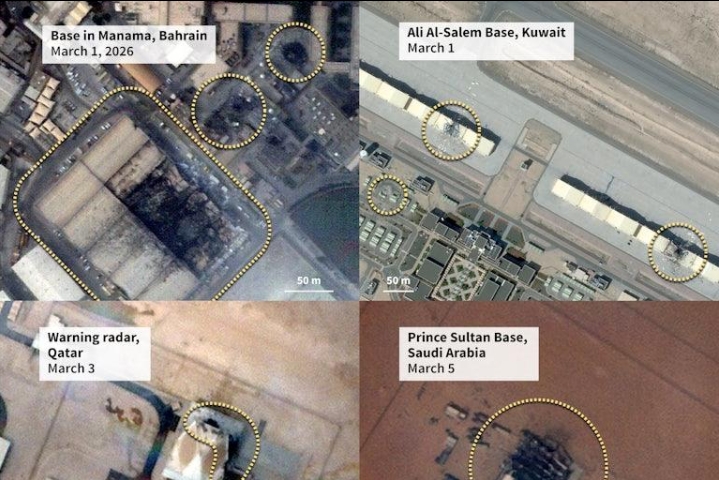
An extensive investigation by The Associated Press (AP), based on satellite imagery and interviews with regional officials, has revealed the scale of damage inflicted on US military infrastructure across the Middle East during the eight-month conflict with Iran.
The investigation found that more than 115 drone and missile strikes claimed by Iran or Iranian-backed groups had damaged or destroyed structures at 26 US military bases and other sites housing American equipment through August 2026.
The findings provide a broader picture of the damage to American military infrastructure than has been publicly acknowledged by US authorities.
According to AP, the strikes caused billions of dollars in equipment damage, affecting early-warning radars, air-defence systems, aircraft facilities, warehouses, communications equipment, fuel infrastructure and accommodation buildings.
Iran initially targeted early-warning and air-defence systems
One of the most significant findings of the AP investigation concerns the reported sequence of Iranian attacks.
According to the satellite imagery analysis, Iran initially focused on early-warning systems and facilities designed to detect incoming missiles and drones, alongside aircraft hangars.
Subsequent strikes affected warehouses, troop accommodation, communications infrastructure, fuel facilities and other military installations.
Early-warning radars and air-defence systems are critical components of US military protection in the region. Damage to these systems can complicate the detection and interception of incoming threats.
The AP investigation suggests that the attacks affected not only individual buildings but also infrastructure supporting the operation and protection of American military bases.
Kuwait suffered particularly extensive damage
Kuwait emerged as one of the hardest-hit locations in the investigation.
According to AP, Ali Al Salem Air Base was struck at least 30 times. Camp Buehring also suffered extensive damage.
The investigation identified damage to buildings and military infrastructure across several installations.
Separately, an Iranian attack on Port Shuaiba in March killed six US soldiers, according to the report.
The findings highlight the exposure of US military facilities in countries hosting American forces and equipment.
Bahrain and other regional facilities also affected
Satellite imagery reviewed by AP showed extensive damage at Naval Support Activity Bahrain.
An image captured on July 23 showed damage involving satellite communications infrastructure and warehouses.
The investigation also documented damage to aircraft-related facilities, communications systems and other structures at multiple locations across the region.
These facilities support the US military’s regional operations, including communications, logistics, surveillance and force protection.
US reportedly relocated military assets from the Persian Gulf
The damage has reportedly affected the American military footprint in the region.
Two regional officials familiar with the situation told AP that the United States had moved significant military assets out of the Persian Gulf.
These included aircraft, air-defence systems, communications equipment and other infrastructure essential to base operations.
The reported relocation raises questions about the future deployment and protection of American military assets across the region.
US Central Command declined to provide detailed information about damage to bases and equipment, citing operational security.
The limited public disclosure has made independent satellite imagery analysis particularly important for understanding the consequences of the conflict.
What satellite imagery reveals — and what it cannot establish
AP’s investigation is significant because it uses satellite imagery from multiple providers and interviews with four regional officials who had been briefed on the damage or had direct knowledge of the affected facilities.
However, some distinctions remain important.
The figure of more than 115 strikes refers to attacks claimed by Iran or Iranian-backed groups. The investigation independently examined and verified physical damage through satellite imagery, but this does not mean every individual strike, its precise attribution or the full operational consequences were independently established.
The report also does not establish that every damaged facility was completely disabled or that all damage translated into a lasting loss of military capability.
Nevertheless, the imagery provides evidence that the conflict inflicted substantial physical damage on American military infrastructure in the region.
A wider challenge for US military infrastructure
The findings raise questions about the vulnerability of fixed military installations to comparatively inexpensive drones and missiles.
Large military bases depend on interconnected systems: radar, air defence, communications, aircraft maintenance, fuel storage and logistics.
Damage to several parts of this infrastructure can create operational complications even when a base remains functional.
The investigation also comes as Washington considers its next steps in the conflict and Tehran warns of retaliation if further attacks are launched against Iran.
Any renewed confrontation could expose military facilities across the region to additional strikes and create further pressure on the US military’s regional posture.
THE BIGGER PICTURE
The AP investigation offers an important contribution to public understanding of the Iran-US conflict.
For months, the public discussion of the war has largely focused on military announcements, missile interceptions and official statements. Satellite imagery now provides a more detailed view of the physical damage to American facilities.
The findings do not, by themselves, establish that the US military has lost its ability to operate in the Middle East. But they do show that American bases and equipment across the region were not immune to Iranian attacks.
The scale of the reported damage, the relocation of military assets and the limited public disclosure from US authorities make independent verification essential.
The same standard must apply to all sides: military claims should be examined against evidence, and damage to military infrastructure should not be confused with proof of a decisive strategic outcome.
Sources & References
- Associated Press – Iran targeted US air defenses then hit aircraft and buildings on Middle East bases, AP analysis finds (October 31, 2026)
- ABC News – Full Associated Press investigation and satellite imagery findings
- The Washington Post – Iran has hit far more US military assets than has been reported, satellite images show (May 6, 2026)
- The Wall Street Journal – Methodology behind its investigation of damage to US bases
THE WORLD’S UPDATE
Sabse sach, sabse pahle.
Leave a Reply