
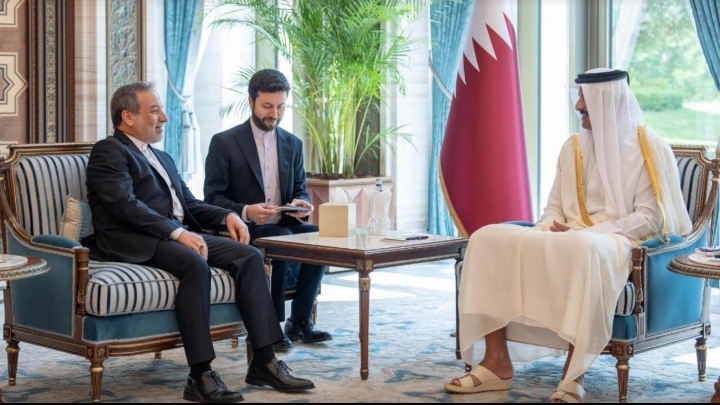
DOHA / TEHRAN / WASHINGTON — November 1, 2026
Iranian negotiators have held discussions with Qatari mediators in Doha for a third consecutive day as diplomatic efforts intensify to prevent a renewed outbreak of fighting between Iran and the United States following the November 3 US midterm elections.
According to Reuters, the discussions are focused on finding a possible path towards ending the eight-month conflict involving Iran, the United States and Israel. Qatar is facilitating communication between Tehran and Washington, with the latest negotiations following more than 12 hours of discussions between Iranian and Qatari representatives in Tehran on Friday.
The diplomatic activity comes amid continuing military tensions and uncertainty over whether Washington could resume military operations against Iran.
Trump has not ruled out further military action
US Secretary of State Marco Rubio said on Saturday that President Donald Trump had not made a decision on whether to launch additional strikes against Iran.
Rubio indicated that the US administration preferred a diplomatic solution but retained the option of military action.
Trump has also described the negotiations as productive and said the United States would not attack Iran before the November 3 midterm elections. However, he has not ruled out military action afterwards.
The statements indicate that diplomatic engagement is continuing alongside the possibility of renewed military escalation.
Iran’s seven-day proposal and the Strait of Hormuz
A central issue in the negotiations is Iran’s proposal for reopening the strategically important Strait of Hormuz.
According to Reuters, Tehran has been advocating a seven-day plan since September. The proposal reportedly calls for Washington to lift its blockade of Iranian ports, unfreeze Iranian assets and approve an Iranian-backed arrangement for passage through the Strait of Hormuz.
Iran has linked the reopening of the waterway to the fulfilment of its conditions.
Foreign Minister Abbas Araghchi has said that Iran’s proposal is the only plan currently on the table for reopening the strait.
Qatar has also presented a separate seven-day confidence-building proposal under which Washington and Tehran would take reciprocal steps before moving towards broader negotiations. However, a senior Iranian official told Reuters that Tehran did not consider that proposal satisfactory.
JD Vance’s letter adds another diplomatic channel
Another development is a letter sent by US Vice President JD Vance to senior Iranian security official Mohsen Rezaei.
The correspondence has reportedly been viewed as an attempt to explore the possibility of restarting negotiations.
According to reporting by The Guardian, Washington is seeking early commitments concerning Iran’s highly enriched uranium, alongside discussions about sanctions relief and reopening the Strait of Hormuz.
However, major disagreements remain over the sequence of concessions, sanctions, nuclear commitments and guarantees that any agreement would be implemented.
Trump has publicly played down the significance of the letter, saying it was connected to discussions about allowing medical supplies into Iran.
Iran warns against renewed attacks
Tehran has warned that any renewed US or Israeli attack would trigger retaliation.
Iranian officials have maintained that the country will defend its national security and that any settlement must address the broader conflict rather than simply reopening the Strait of Hormuz.
The continuing military tensions have also raised concerns among neighbouring Gulf countries, particularly those hosting US military facilities.
Why the Strait of Hormuz matters
The Strait of Hormuz is one of the world’s most strategically important maritime routes. A prolonged disruption to shipping through the waterway could affect international oil supplies, energy prices and global trade.
The conflict has already created significant uncertainty in energy markets and shipping operations.
A diplomatic agreement could therefore have consequences well beyond the Middle East, particularly for countries dependent on imported oil and gas.
No final agreement announced
Despite the continued diplomatic contacts in Doha, there has been no announcement of a final agreement between Washington and Tehran.
The two sides continue to disagree over sanctions, Iran’s nuclear programme, military operations and the conditions required to restore normal maritime traffic through the Strait of Hormuz.
For now, Qatar’s mediation represents an ongoing diplomatic effort to prevent another escalation. Whether these discussions can produce a durable settlement remains uncertain.
THE WORLD’S UPDATE
Sabse sach, sabse pahle.
Sources & References
- Reuters – Iranian negotiators in Doha to continue talks to end the US-Iran war, November 1, 2026
- Reuters – Iranian envoys meet Qatari mediators as threat looms of US strikes after midterms
- The Guardian – JD Vance letter may offer last chance to avert fresh conflict between US and Iran, October 29, 2026
- Reuters – Iran receives US feedback on seven-day trust-building plan, September 30, 2026
Leave a Reply