
THE WORLD’S UPDATE | Independent Geopolitical Investigation
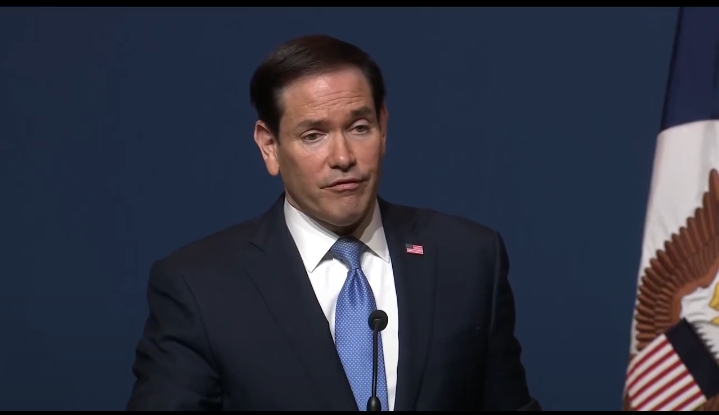
US Secretary of State Marco Rubio has described the Russia–Ukraine conflict as an extremely deadly and destructive war, highlighting attacks on Kyiv’s energy infrastructure, civilian deaths and the reported monthly loss of 20,000 Russian soldiers.
In a press briefing published by the US Department of State on its official X account, Rubio said:
“We’re trying to stop a very deadly war.”
He described how Kyiv faces devastating attacks against its energy infrastructure every night, alongside an increasing number of civilian deaths. He also stated:
“Even on the Russian side, you’re seeing 20,000 Russians killed a month.”
Rubio further warned that every month the war continues, the destruction increases and Ukraine faces a longer and more difficult process of rebuilding its economy and energy infrastructure.
These remarks present Washington as concerned about the human cost of the war and the need to end it. However, they also raise a broader question about the relationship between American diplomatic messaging and its military policy towards Ukraine.
The military assistance question
The United States has provided substantial military assistance to Ukraine since Russia launched its full-scale invasion in February 2022.
According to a Congressional Research Service report updated on 31 August 2026, the United States had committed more than $68.2 billion in defence articles and services to Ukraine between February 2022 and June 2026.
The report also documents continued assistance under the Trump administration, including previously committed deliveries, foreign military sales and programmes in which NATO partners finance the procurement of American defence equipment for Ukraine.
The current policy is not identical to the large-scale assistance programmes of 2022–24. The CRS report says significant new congressional funding has not been made available since April 2024, although assistance and military sales have continued through other channels.
This distinction matters: military assistance is not one single category. It includes direct transfers, procurement, training, financing and weapons sales funded by partner countries.
Nevertheless, the record establishes that American military support for Ukraine has not simply disappeared.
The geopolitics of sympathy
Rubio’s reference to Russian soldiers being killed every month deserves particular examination.
When a senior American official publicly highlights the deaths of soldiers from an opposing country, the message can reach beyond diplomatic audiences. It can also reach ordinary citizens in Russia.
A Russian citizen hearing an American official discuss the deaths of thousands of Russian soldiers may begin asking questions:
- Why are so many Russian soldiers dying?
- Is the war serving Russia’s national interests?
- Should the Russian government reconsider its military policy?
- How long should Russian families continue bearing the human cost?
Such questions can contribute to public debate, criticism of government policy and, under certain circumstances, protests or domestic political pressure.
This is the wider significance of geopolitical narratives: statements about casualties, suffering and peace can influence how people understand a conflict and evaluate their own governments.
However, the fact that a statement can influence public opinion does not establish that this was its intended purpose. Evidence of a deliberate American strategy to destabilise the Russian government would be needed to make that conclusion.
Peace messaging and military policy: a contradiction worth examining
Washington’s public message emphasises stopping the war and reducing human suffering. At the same time, the United States has maintained military-assistance channels for Ukraine.
American officials may argue that helping Ukraine defend itself is compatible with seeking peace, because military support can strengthen Ukraine’s negotiating position and deter further attacks.
Critics may question whether continued weapons supplies prolong the conflict, increase its human cost or make a negotiated settlement more difficult.
These competing arguments deserve examination rather than being treated as settled facts.
The central question is whether Washington’s diplomatic objectives, military assistance and public messaging are working towards the same outcome.
EDITOR’S ARGUMENT: Sympathy as a geopolitical narrative
The public expression of sympathy for an opposing country’s soldiers can have a political impact beyond the immediate humanitarian message.
When a foreign leader repeatedly highlights the deaths of another country’s soldiers, ordinary citizens may begin questioning their government’s decisions. They may demand explanations, oppose the continuation of the war or call for a change in policy.
This is a possible consequence of geopolitical messaging and public diplomacy.
The question for Washington is therefore not simply whether it wants the war to end. It is also how that stated objective aligns with its military assistance, strategic interests and public communication.
The United States has a record of supporting Ukraine militarily. It also has a diplomatic message that stresses the human cost of the conflict, including Russian military deaths.
THE WORLD’S UPDATE asks: Is this simply humanitarian diplomacy, a strategy to influence public opinion, or a combination of both?
The available public evidence establishes the contrast between American peace messaging and continued military assistance. It does not, by itself, prove that Washington’s intention is to destabilise the Russian government.
That question deserves further investigation through official strategy documents, internal communications where available, policy decisions and independently verified evidence.
Conclusion
The human cost of the Russia–Ukraine war cannot be reduced to a competition between political narratives. Ukrainian civilians facing attacks, Russian soldiers being killed and families on both sides experiencing loss are part of the same devastating conflict.
But public statements by powerful governments must be examined alongside their actions.
If a government says it wants to stop a war, the public has a legitimate right to ask how its military policies contribute to that objective.
THE WORLD’S UPDATE — Sabse sach, sabse pahle.
Leave a Reply